








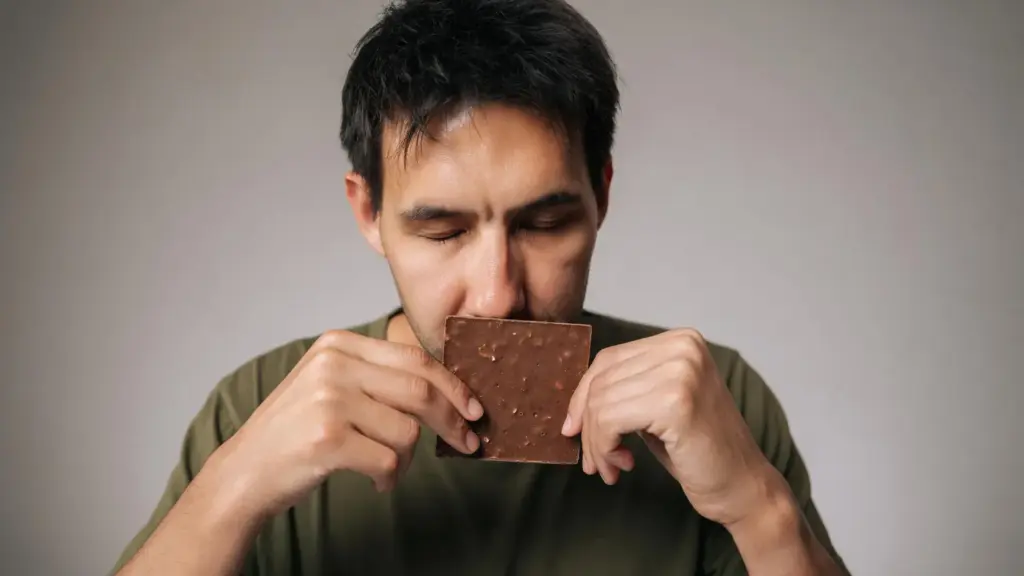
A grueling leg day at the gym is often defined by the familiar struggle of pushing through the final, burning repetitions while fatigue sets in. However, a surprising new study suggests that the key to unlocking better athletic performance might not be found in a shaker bottle or a pre-workout supplement, but rather in the air we breathe. According to research published in the journal Frontiers in Physiology, exposure to the scent of chocolate before and during resistance training can significantly boost an athlete’s repetition count without making the workout feel any more arduous.
This fascinating intersection of sensory perception and physical exertion provides a fresh perspective on how the brain’s olfactory system—our sense of smell—interacts with our physical capabilities. By simply inhaling the aroma of dark or milk chocolate, participants in a controlled study were able to push themselves further, suggesting that our physiological output is deeply linked to the psychological cues we receive from our environment.
The Science of Scent and Strength
The study was spearheaded by Dr. Mohamed Nashrudin bin Naharudin, an assistant professor at the Faculty of Sports and Exercise Science at the University of Malaya. His team sought to investigate a relatively unexplored phenomenon: whether the brain’s deep-seated associations with food could be leveraged to alter performance during resistance exercise.

"Exposing moderately trained men to chocolate odors right before and between sets of resistance exercise significantly increased their overall training volume without increasing their perceived exertion," Dr. Nashrudin explained. "Seeing a substantial increase in repetitions without the athletes feeling like they were exerting themselves any harder is a fascinating psychobiological outcome."
The researchers recruited 23 healthy men in their early to mid-20s, all of whom maintained a moderately active training regimen. To ensure that the participants were primed to respond to food-related stimuli, the study required them to fast for at least 10 hours prior to the exercise session. The men were divided into three distinct groups, each exposed to a specific scent sample: a liquified dark chocolate containing 90% cocoa, a liquified milk chocolate containing 60% cocoa, or a control sample consisting of plain water.
The exercise protocol centered on leg extensions, a classic movement that targets the quadriceps and requires consistent effort through a full range of motion. Researchers monitored the performance of the participants both before and during the training session. Simultaneously, they tracked subjective metrics—such as hunger, fullness, and the desire to eat—to determine how the olfactory stimulation was affecting the participants’ metabolic state.
Distinct Responses to Dark and Milk Chocolate
The findings revealed that the two types of chocolate did not produce identical effects, highlighting the complexity of how different scent profiles influence the brain. The 90% dark chocolate aroma, in particular, exerted a profound influence on the participants’ appetite signals. Compared to both the water control and the milk chocolate condition, the dark chocolate scent was consistently associated with lower levels of hunger, a diminished desire to eat, and a reported sense of satiety or fullness. It appeared that the dark chocolate aroma successfully tricked the body into an anticipatory state of having consumed a rich, satiating food, even though no calories had been ingested.
The milk chocolate, however, followed a different psychological path. While participants consistently rated the milk chocolate scent as more pleasant than both the dark chocolate and the water, it did not significantly alter their hunger levels. Instead, the milk chocolate seemed to act more as a mood enhancer, creating a positive sensory environment that allowed the participants to perform better without necessarily suppressing their appetite.
The performance gains were measurable and, for fitness enthusiasts, quite significant. "Sniffing a 90% dark chocolate odor added about 18 more repetitions to participants’ leg extensions, while a 60% milk chocolate odor added about nine repetitions compared to the water control," Dr. Nashrudin noted. This suggests that while both scents provided an ergogenic—or performance-enhancing—effect, the darker, more intense profile of the 90% cocoa had a more potent impact on the participants’ capacity to endure the exercise.
How Smell Influences the Brain
The mechanism behind these results likely lies in what psychologists call "learned associations." From childhood, humans are conditioned to link specific smells with the consumption of food. These aromas serve as sensory markers, signaling to the brain that nutrients are on the way. Over time, these signals become so deeply ingrained that the mere presence of the aroma can trigger the brain and body to prepare for the digestive process.
Dr. Nashrudin and his team believe that by providing these cues, they were able to bypass the typical fatigue signals that usually prompt an athlete to stop mid-set. By shifting the athlete’s perception from a state of hunger or depletion to one of satisfaction or pleasure, the brain may be lowering the "perceived exertion" threshold.
"The dark chocolate scent serves as a learned cue for a rich, bitter, and highly satiating food, which essentially tricks the system into an anticipatory state of fullness," Dr. Nashrudin explained. "Conversely, the sweeter milk chocolate scent acts more like a hedonic reward cue, enhancing training volume by creating a highly pleasant sensory environment rather than by shifting basic metabolic hunger signals."
This suggests that the brain can be "primed" for work through olfactory stimuli. Because the participants were in a fasted state, the fact that they could perform at a higher capacity upon smelling the chocolate indicates that the brain’s anticipatory response to food may be enough to produce measurable physiological changes, even in the absence of actual food intake.
Understanding the Limitations
While these results offer an intriguing look at the future of performance-enhancing techniques, the researchers are careful to emphasize that the biological pathways remain somewhat speculative. The study was a behavioral observation; it did not measure blood hormone levels or conduct real-time neural imaging, meaning the exact biological mechanism—whether it is dopamine-driven reward, blood glucose anticipation, or some other pathway—remains to be confirmed in future research.
There are also inherent limitations to the study design. The researchers noted that the intensity of the chocolate aromas may have varied slightly between samples, and because the control condition used odorless water, it is possible that participants were aware of when they were in the experimental group, potentially introducing a minor degree of bias. Furthermore, the study was relatively small and limited to healthy, young men. Whether these results would hold true for women, older adults, or athletes with varying levels of training experience is a question that requires broader, more diverse studies to answer.
Beyond Chocolate: The Future of Olfactory Research
The question that naturally follows this research is whether chocolate possesses a unique quality that triggers these effects, or if the same results could be achieved with other familiar, high-reward food scents.
"We don’t think chocolate is entirely unique, though it is a food cue with incredibly strong, universally recognized reward associations," Dr. Nashrudin concluded. It is possible that other foods with strong, positive associations—perhaps vanilla, coffee, or even savory spices—could elicit similar performance boosts. The key appears to be the familiarity and the emotional response associated with the scent.
For an olfactory cue to be effective, the user likely needs to find the odor appealing. If an athlete finds the scent repulsive or indifferent, the psychological shift required to increase training volume is unlikely to occur. As research continues to explore this niche, it may eventually lead to a better understanding of how athletes can utilize their environment—beyond just the weights they lift or the clothes they wear—to break through performance plateaus. For now, the study provides a compelling, if delicious, incentive to rethink the sensory environment of the gym.