








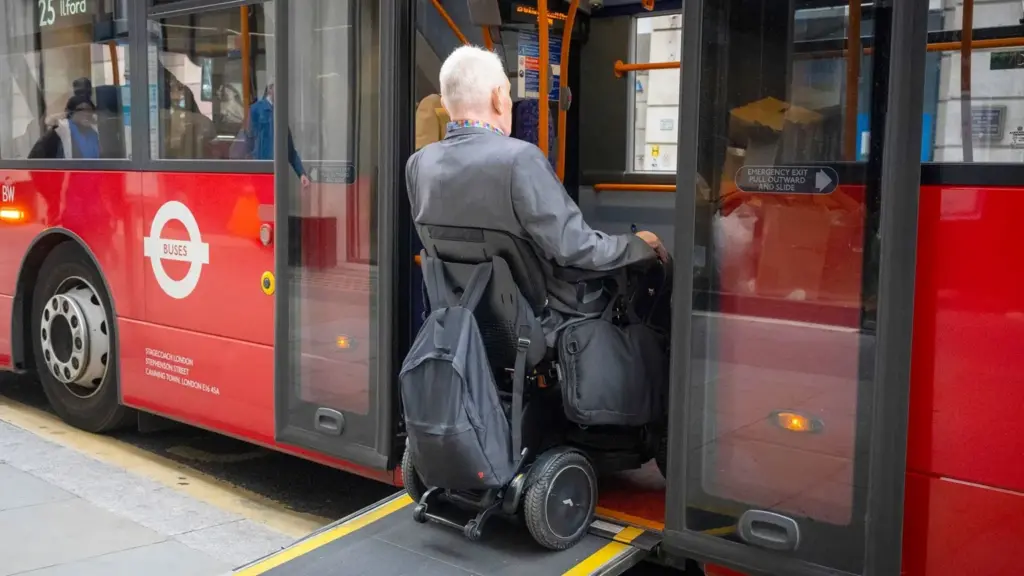
Starting April 1, disabled people across England will be able to travel by bus for free at any time of day, marking a major transformation in public transportation accessibility and daily mobility for an estimated one million citizens nationwide.
Previously, the nationwide concessionary travel scheme restricted free bus passes to off-peak hours on weekdays, specifically between the hours of 09:30 and 23:00. This long-standing temporal limitation created significant barriers for pass holders trying to build stable routines, effectively making it difficult or financially burdensome to commute to standard morning jobs, arrive early for professional commitments, or attend late-night events, cultural gatherings, and social engagements. By removing these time limits entirely, the government is turning the national bus pass into a true full-time lifeline, ensuring that disabled individuals have equal access to economic and social opportunities regardless of the hour.
The landmark policy follows a successful trial period implemented within Greater Manchester’s integrated public transport network, known locally as the "Bee Network." The positive outcomes observed during this regional pilot provided policymakers with the operational confidence and empirical backing needed to roll out the reform on a national scale. Furthermore, the decision responds directly to years of persistent campaigning and advocacy by leading disability rights organizations across the country, most notably Scope and Transport for All. For years, these groups have highlighted how peak-time travel restrictions disproportionately penalized disabled workers and students, forcing them to pay out of pocket during morning rush hours or restrict their movements entirely.

Advocates have widely celebrated the government’s move, praising it as a crucial step toward eliminating an unfair "postcode lottery," where the practical utility and validity of concessionary passes historically depended on fragmented local council rules and regional funding disparities. Despite the widespread praise, disability organizations emphasize that this reform represents only one step in a broader journey toward a fully inclusive transport ecosystem. Campaigners have noted that eligibility requirements across various local authorities still require significant streamlining and broader standardization to ensure that vulnerable residents do not face arbitrary administrative hurdles when trying to access their travel rights.
To secure the long-term viability and make the program permanent, the ambitious £60 million scheme is being jointly funded through the Department for Transport and the Department for Work and Pensions. Government officials have framed the reform not merely as a transit update, but as an essential workforce participation and cost-of-living initiative. This investment aligns closely with existing national transit measures designed to ease financial pressures on the public, such as the nationwide £2 single-fare cap. Moreover, the policy successfully brings England in line with neighboring constituent nations, matching similar 24/7 concessionary transit programs that have already been operating successfully for years in Scotland and Wales.
Global Takeaways: How Other Countries Can Make Accessible Commuting Possible
Making daily commuting accessible, equitable, and financially viable for disabled citizens requires a sophisticated combination of thoughtful policy design, reliable digital systems, and targeted public investment. As nations around the world grapple with aging populations, urbanization, and the need to reduce carbon emissions through public transit adoption, the United Kingdom’s latest reform offers a compelling case study in bridging the gap between social equity and mobility infrastructure. Observers of international transit policy are closely examining how England managed to execute this nationwide shift, focusing heavily on the underlying conditions that make such large-scale systemic changes achievable.
Why Was the UK Able to Do It?
The ability of the United Kingdom to enact this comprehensive reform stems from a combination of centralized policy frameworks, established statutory concessionary travel frameworks, and sustained political pressure from organized civil society. Because the national government already operated a baseline concessionary bus travel scheme, authorities did not need to build a new administrative apparatus from scratch. Instead, they were able to leverage existing smartcard and pass distribution channels, coordinate directly with regional transit authorities, and allocate dedicated Exchequer funding to compensate bus operators for the removal of peak-time restrictions. The precedent set by devolved administrations in Scotland and Wales also created a domestic benchmark, proving that 24/7 accessible transit was both financially sustainable and operationally feasible within the British Isles.
Does It Depend on Existing Infrastructure?
The success of free and unrestricted transit passes depends heavily on the physical and technological maturity of the underlying public transport network. Free travel policies alone cannot deliver true accessibility if the physical environment remains hostile to disabled commuters. Universal mobility relies fundamentally on infrastructure that is both physically accessible and technologically integrated.
This means that bus fleets must feature reliable low-floor designs, functional wheelchair ramps, audible and visual next-stop announcements, and standardized priority seating areas. Furthermore, bus stops and transit interchanges must be properly maintained with dropped curbs, adequate lighting, and real-time passenger information displays that cater to individuals with sensory impairments. Without these foundational elements embedded across both urban and rural routes, even the most generous financial concessions lose their practical value for passengers with mobility, visual, or cognitive differences.
What Is Needed to Make Commuting Affordable for People with Disabilities?
Delivering genuine affordability and accessibility for disabled commuters requires a multi-layered approach that addresses both direct transit costs and the broader systemic barriers that influence travel behavior. First, national governments must establish consistent, universal eligibility criteria that prevent regional fragmentation and ensure that a pass issued in one municipality is seamlessly honored nationwide without bureaucratic friction. Second, authorities must provide adequate, ring-fenced financial compensation to transit operators to ensure that expanding free access during peak hours does not lead to service cuts or reduced route frequencies in underserved areas.
Third, concessionary policies must be paired with integrated ticketing systems that allow seamless modal transfers between buses, trains, and light rail networks without financial penalty. Finally, ongoing consultation with disability advocacy groups and direct users is essential to identify emerging bottlenecks, refine digital booking or pass-renewal platforms, and ensure that public funds are targeted where they can maximize independence and economic participation for disabled citizens.