






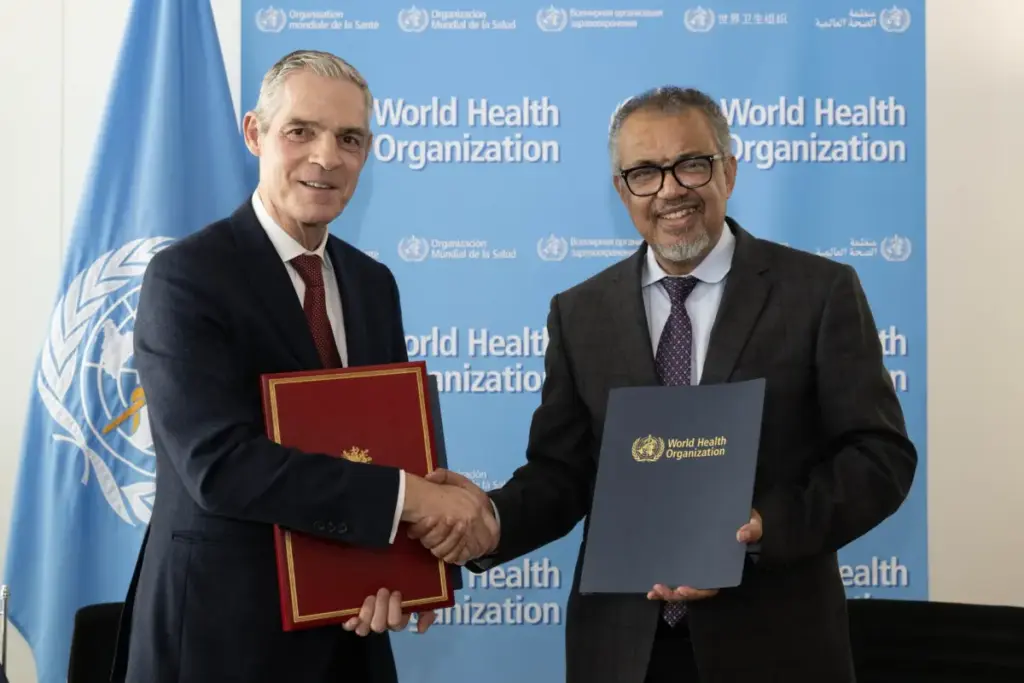
GENEVA – In a significant boost to international public health and humanitarian response efforts, the Government of France has committed €24 million to the World Health Organization (WHO). The formal partnership was sealed on the afternoon of October 17, 2024, during a high-level signing ceremony held at the WHO headquarters in Geneva.
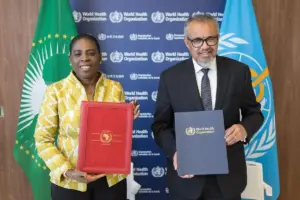
His Excellency Mr Jérôme Bonnafont, Permanent Representative of France to the United Nations in Geneva, met with WHO Director-General Dr Tedros Adhanom Ghebreyesus to execute a package of seven vital contribution agreements. The substantial financial injection comes directly through the French Ministry of Europe and Foreign Affairs, reinforcing a longstanding and strategic alliance between Paris and the global health agency.
The new funding is channeled through the existing France–WHO Framework Agreement, which spans from 2020 to 2025. This overarching framework serves a dual purpose: it provides a robust strategic alignment between French foreign policy priorities and the core mandates of the WHO, while simultaneously establishing the necessary legal, administrative, and financial mechanisms required to operationalize and accelerate joint healthcare initiatives around the globe.
A standout feature of this latest funding package is a generous €4.5 million allocation delivered as fully flexible voluntary funds via the Core Voluntary Contributions Account (CVCA). Unlike tightly earmarked grants, fully flexible funding is considered the gold standard in international philanthropy and development assistance. It allows the WHO the administrative agility to deploy resources rapidly where they are needed most, bridge critical funding gaps, and respond to unforeseen global health emergencies without bureaucratic delays.

Beyond the core voluntary contribution, the remaining funds are earmarked to fortify several of the WHO’s most critical operational areas, tackling some of the most complex and persistent health challenges facing the international community today. The agreements direct targeted support toward non-communicable diseases (NCDs), the development of innovative urban health labs, and the advancement of the "One Health" approach—an integrated, unifying mechanism that aims to sustainably balance and optimize the health of people, animals, and ecosystems.
Furthermore, the funding reinforces rapid emergency response capabilities by injecting crucial capital into the WHO Contingency Fund for Emergencies (CFE). In an era marked by increasingly frequent humanitarian crises and climate-induced shocks, the CFE allows the WHO to release funds within 24 hours of a crisis to initiate life-saving interventions before dedicated appeals are fully funded.
Specific active emergencies also feature prominently in the new agreements. The French contribution will directly back the WHO’s ongoing medical and humanitarian response in Gaza, address acute and resurgent cholera outbreaks in vulnerable regions, and sustain vital mental health support programs for populations affected by the conflict in Ukraine.
In addition to programmatic and emergency support, France has recommitted its backing to the WHO emergencies centre located in Lyon. This specialized hub plays an indispensable role in global health security, serving as a frontline engine for epidemiological preparedness, surveillance, and rapid response to emerging infectious diseases and potential epidemic threats.

During the signing ceremony, Ambassador Jérôme Bonnafont took the opportunity to underscore the philosophical and strategic underpinnings of France’s enduring commitment to multilateralism and global health stewardship. He emphasized that France remains deeply dedicated to supporting the World Health Organization in its tireless efforts to confront critical health threats across borders. According to the Ambassador, these seven new agreements are a direct reflection of shared national and international priorities, chief among them the promotion of global health equity, swift and effective emergency management, and the systemic strengthening of healthcare infrastructures worldwide.
Dr Tedros Adhanom Ghebreyesus warmly received the delegation and expressed profound gratitude on behalf of the organization. He praised the French Government for its steadfast support, continued institutional partnership, and visionary leadership in the realm of global health diplomacy. The WHO Director-General noted that this injection of €24 million will empower the organization to address a diverse spectrum of health threats with greater resilience, ranging from the silent epidemic of non-communicable diseases to the volatile dynamics of acute humanitarian emergencies. Ultimately, Dr Tedros stressed, this collaboration helps save countless lives and protects the planet’s most vulnerable and marginalized populations.
France has consistently positioned itself as a vocal and active advocate for a fully and flexibly financed WHO. In recent years, Paris has provided critical leadership and financial backing toward the enhancement of assessed contributions, which form the predictable backbone of the organization’s budget. Demonstrating this commitment beyond bilateral agreements, France is also serving as one of the key co-hosts for the WHO’s inaugural Investment Round. This major resource-mobilization initiative is designed to secure predictable, sustainable, and flexible funding streams to drive the organization’s core work under the Fourteenth General Programme of Work, covering the 2025–2028 period—a strategic blueprint that was officially approved by the World Health Assembly earlier in 2024.
The formal conclusion of the signing ceremony marks yet another significant milestone in the strong, enduring partnership between the World Health Organization and France. As global health landscapes grow increasingly complex and interconnected, this renewed financial and strategic cooperation reinforces a shared, unwavering commitment to building a healthier, safer, and more resilient world for all communities.