








When was the last time you were handed a complex problem with no instruction manual? Think of taking on a demanding new job in which nobody explains the institutional workflow, or experiencing a medical mystery within your own body when it suddenly behaves in an unwelcome or unpredictable way. In both scenarios, you are left to navigate the unknown without a definitive guide to show you the correct path forward.
Consider an even more acute, universally recognized problem: a newborn baby who will not stop crying in the middle of the night. How did you solve it in the moment?
Chances are, your solution did not involve demanding absolute proof or running a randomized controlled trial before taking action. Instead, you tried a method and watched closely for the outcome. You discovered that rocking the infant helped a little, while softly singing to them helped a great deal. You intuitively kept what seemed to work and discarded what did not. If you had insisted on absolute certainty before you made a move, the baby would still be crying.

This messy, humble, and incremental way of learning is not a failure of logic. In reality, it is how true learning actually works. Yet, a large part of the modern scientific establishment has spent more than a century pretending otherwise, favoring rigid frameworks over adaptive discovery.
The Verdict Habit
Most formal research is conducted through a lens that resembles a courtroom trial rather than an exploratory journey. The standard approach assumes that nothing is happening—that a new medical treatment does nothing, or that an intervention has zero effect. Researchers enforce strict rules allowing no outside assumptions, warning that prior expectations will compromise the purity of the data. Essentially, you must assume you know nothing at all.
Researchers then gather empirical data and ask a single binary question: Is this specific result strong enough to force me to abandon the baseline assumption that nothing is operating except pure chance? If the answer is yes, the finding is declared real, published, and celebrated. If the answer is no, the finding goes into the wastebin, often dismissed as a null result.
This is a profoundly legalistic mentality. The defendant—the hypothesis—is presumed innocent, and the individual research study functions as a trial. The resulting verdict is binary and final. Every single trial starts as though the jury’s memory has been completely wiped clean. What was learned in previous iterations simply does not count. The forty studies that came before do not prove a thing on their own. Consequently, a treatment that genuinely helped some people under specific circumstances gets filed away as ineffective simply because it failed to clear an arbitrary average threshold for the general population.
Finding the Submarine
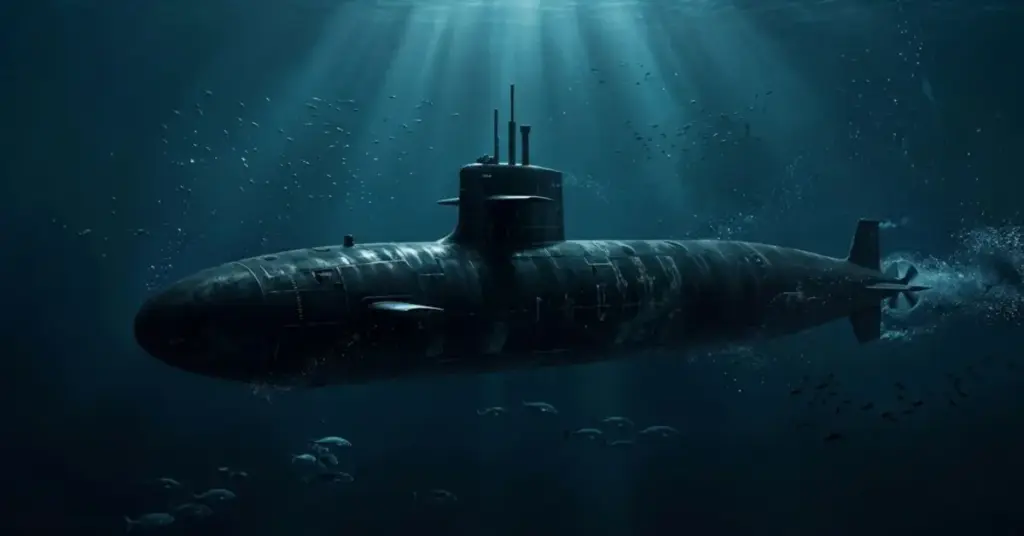
A vastly different approach to uncertainty has proven successful in some of history’s most critical high-stakes searches. In May 1968, the American nuclear submarine USS Scorpion vanished in the Atlantic Ocean with 99 people on board, leaving behind a vast expanse of water and virtually no definitive clues.
The United States government handed this seemingly impossible problem to U.S. Navy chief scientist John Craven. He had only a single search ship at his disposal. Instead of waiting for absolute certainty, Craven did precisely what a parent does with a crying baby, only with significantly more methodological rigor.
He divided the search area of the ocean into a grid of numbered squares. He then asked veteran submarine commanders to review the available data and guess which numbered square contained the sunken vessel. Where might it have gone down, and why? He even let them place informal bets on their various scenarios, sometimes wagering bottles of scotch on their operational theories.
Every time the search ship swept a particular square and found nothing, that empty square was not treated as a failure or a dead end. Instead, the negative result lowered the probability for that specific square and correspondingly raised the statistical probability for the remaining ones. The map shifted dynamically, and the expert votes changed in response. The ship then searched where the updated map indicated it should look next.
In late October, following this iterative process of updating their working hypothesis against reality, the search team found the submarine resting on the ocean floor about 460 miles southwest of the Azores.
The exact same operational philosophy later solved the mystery of Air France Flight 447, which crashed into the Atlantic Ocean between Rio de Janeiro and Paris in 2009. After two years of conventional searching turned up virtually nothing, a team of mathematicians took those early empty passes and treated every failed search area as a valuable clue rather than a final verdict. They redrew the probability map based on cumulative information. Using this adaptive model, the subsequent search located the primary wreckage of the plane within a single week.
These searchers understood a fundamental truth: the submarine and the plane were somewhere in that ocean. They did not discard an entire search effort simply because a specific grid sector turned up empty. They started with their best informed guess, allowed reality to push that guess around, and got a little less wrong with every passing day.
Just a Little Bit of Science
Statisticians have engaged in a long and sometimes bitter philosophical debate about whether scientific inquiry should function like a courtroom trial or a Bayesian search. Translating this debate into overly technical jargon often obscures the core issue, keeping people from realizing that they already intuitively know the correct answer from their own lived experience.
The search methodology approaches knowledge as a continuous map of how confident we are in our working guesses. Old evidence stays woven into the fabric of the map, and new evidence moves the markers. A study that finds "nothing" still tells you something meaningful about where not to look. Disagreement is permitted, and two people who hold different hypotheses can still pool their findings to refine the collective picture.
Conversely, the verdict-based model produces stark winners and losers. An idea is formally convicted or acquitted, leading academic fields to spend decades relitigating settled questions instead of making practical progress.
Human beings are not biological clones. What helps your neighbor may fail to help you, and what worked for your health last year may no longer work for you today. A sweeping verdict about an abstract statistical average cannot tell you what you need in your unique circumstances. However, a map that you keep continuously updating for this specific person, in this exact life, certainly can.
The way you figured out how to soothe your crying baby is fundamentally the same way a skilled clinician figures out a complex client. If we are wise enough to embrace this adaptive mindset, we can make meaningful progress across all fields of human endeavor.
Where This Lands
Society is currently navigating a period defined by large, moving, and unfamiliar challenges, including global climate shifts, fractured communities, and rapidly evolving technologies. Nobody holds a comprehensive instruction manual for these systemic problems. Waiting for absolute proof before taking any action is a recipe for standing still while the water rises around us. Pretending to possess certainty when we are entirely in the dark is like driving off a cliff with misplaced confidence.
The alternative is much humbler. Make your best educated guess. Articulate it clearly. Act upon it, and allow the resulting consequences to reshape and refine that guess. Treat the strategies that did not work as informative clues rather than wasted efforts. Pool all the working maps together.
That is how you soothe a crying baby, and that is how you find a lost submarine in the vast expanse of the open ocean. By tackling complex problems one grid square at a time, we might just find our way through the difficulties we currently face. You already know how to do this because you have been practicing it your entire life. The only truly new step required of us now is to stop apologizing for it.