


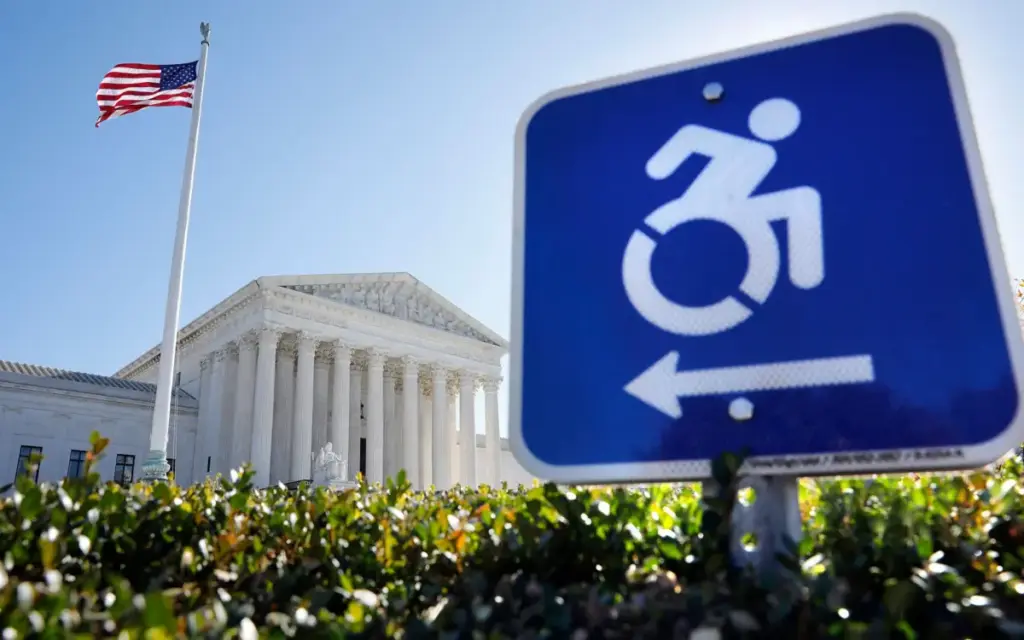
The United States Supreme Court is set to hear a high-stakes legal battle next week that disability rights advocates warn could fundamentally upend decades of progress for individuals with disabilities. At the center of the controversy is a major church-and-state dispute that poses profound questions about the limits of religious freedom, the responsibilities of private entities receiving public funds, and the legal framework that guarantees equal access for students with special needs.
The upcoming oral arguments in the case, known formally as St. Mary Catholic Parish v. Roy, stem from a legal challenge brought forward by the Archdiocese of Denver, several Catholic schools, and a group of parents in Colorado. The plaintiffs took direct issue with the strict non-discrimination requirements embedded within Colorado’s flagship universal preschool program. While the state’s publicly funded preschool initiative is open to participation by private and religious schools, those institutions must agree to adhere to specific state guidelines. Crucially, participating schools must pledge not to discriminate against families or prospective students based on a variety of protected characteristics, including race, sexual orientation, gender identity, and disability status.
The Catholic schools filed a lawsuit arguing that these mandated protections—particularly those safeguarding LGBTQ families and individuals—infringe upon their deeply held religious beliefs and violate their First Amendment rights. The core of their legal strategy relies on what they perceive as exemptions and inconsistencies within the state’s regulatory enforcement.

To support their argument that the state applies its non-discrimination mandates selectively, the schools pointed to specific features within the algorithm utilized by the state to match students with participating schools. Among these features is a built-in preference designed to ensure that students with disabilities are successfully placed in environments capable of providing the necessary services called for in their individualized education programs, commonly known as IEPs.
In their petition urging the Supreme Court to take up the case, representatives for the Catholic schools articulated their grievance with the state’s approach. They argued that the Colorado Department of Early Childhood consistently treats the mandate not as a strict, unyielding obligation, but rather as a flexible provision. According to the petition, this flexibility allows the state to take into consideration all kinds of other important interests—such as helping children with disabilities and prioritizing historically discriminated against communities—while simultaneously refusing to grant similar accommodations or exemptions for sincere religious exercise.
The fundamental legal question before the nation’s highest court is whether state governments can legally impose anti-discrimination requirements on private religious schools that choose to accept public money, or whether such regulatory stipulations improperly infringe upon the constitutional First Amendment rights of those religious institutions.
However, as the high court prepares to weigh these constitutional claims, a chorus of prominent disability advocacy organizations has raised alarms, warning that a ruling in favor of the Catholic schools could carry catastrophic consequences for the entire architecture of disability law. The underlying concern stems from the specific legal arguments deployed by the schools. By challenging the state’s IEP-matching preference as an instance of selective enforcement, the plaintiffs are effectively arguing that Colorado’s proactive efforts to ensure equal educational opportunities for students with disabilities constitute a form of discrimination against students without disabilities.
Legal experts and advocates emphasize that this line of reasoning strikes at the very heart of what disability rights legislation is designed to achieve. The entire purpose of modern civil rights laws protecting individuals with disabilities is to recognize that true equality requires more than merely treating everyone identically; it often requires targeted measures to level an uneven playing field.
Peter Talkington, a staff attorney at the Disability Rights Education and Defense Fund, known as DREDF, elaborated on the broader societal implications of the schools’ legal theory. He noted that the law guarantees people with disabilities fundamental provisions such as special education, reasonable accommodations, and accessible physical infrastructure specifically to ensure an equal opportunity to participate in all aspects of society—opportunities that individuals without disabilities automatically and routinely enjoy. Talkington warned that if the Supreme Court ultimately agrees with the arguments put forth by the Catholic schools, foundational disability rights like special education, reasonable accommodations, and accessible infrastructure could themselves be legally challenged as "discrimination" against people without disabilities, thereby effectively erasing decades of hard-fought disability progress.
Reflecting the gravity of the situation, DREDF joined forces with 12 other prominent disability advocacy organizations to file an official amicus curiae brief. The coalition formally urged the Supreme Court to reject the Catholic schools’ argument. Within the brief, the organizations contend that the IEP-matching preference embedded within Colorado’s universal preschool program does not constitute an arbitrary form of preferential treatment or unconstitutional discrimination. Instead, they argue, the mechanism merely ensures compliance with federal mandates under the Individuals with Disabilities Education Act, alongside the state’s compelling interest in guaranteeing equal educational opportunity.
Further expanding on the legal and practical realities of supporting students with special needs, Shira Wakschlag, senior executive officer for legal advocacy and general counsel at The Arc of the United States—an organization that participated in the amicus brief—highlighted the fundamental misunderstanding reflected in the plaintiffs’ arguments. Wakschlag pointed out that disability laws universally recognize that students with disabilities may frequently require specific accommodations or specialized services that other students simply do not need.
To illustrate the point, Wakschlag offered everyday examples of educational equity in practice. A student who relies on a wheelchair may require a mechanical lift to board a school bus that other students can easily enter by climbing stairs. Similarly, another student may require specialized assistive technology, targeted reading instruction, or related therapeutic services to engage with the curriculum. Providing those tailored supports is not about granting unfair privileges, but rather about allowing students with disabilities to access the exact same educational opportunities as their non-disabled peers. Treating those necessary measures as a form of preferential treatment, Wakschlag cautioned, demonstrates a fundamental misunderstanding of the basic principles underlying disability law.
As the legal teams prepare their final arguments, court watchers and education policy experts note that the implications of the case extend far beyond the borders of Colorado or the specific context of universal preschool. The outcome could establish a significant legal precedent regarding the intersection of religious liberty and public funding obligations nationwide.
A formal decision from the Supreme Court in St. Mary Catholic Parish v. Roy is not expected until sometime next year.