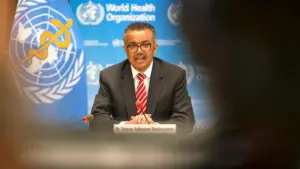





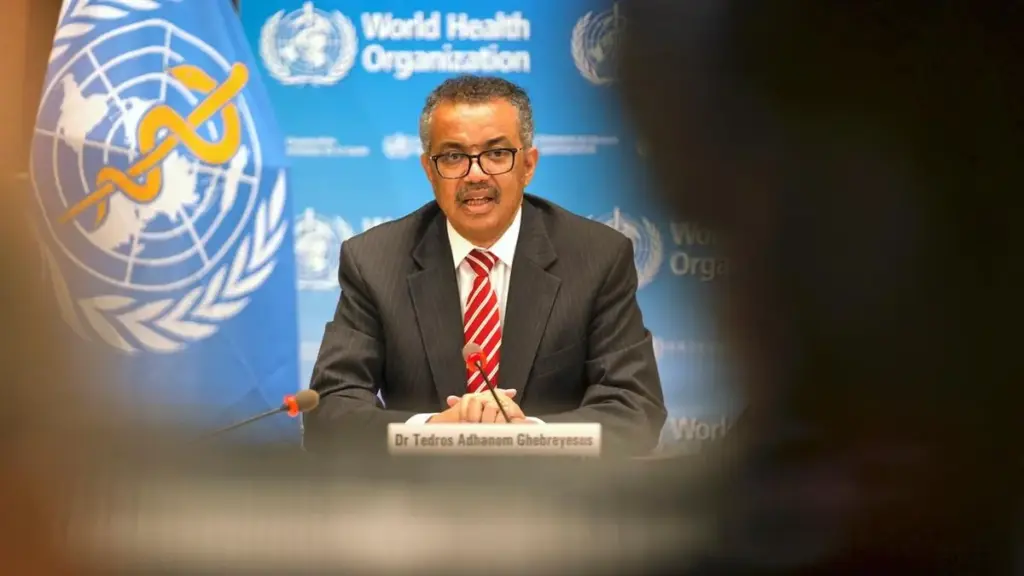
The head of the global health agency
announced today the official establishment of the Independent Panel for Pandemic Preparedness and Response (IPPPR), a high-level body tasked with conducting a comprehensive evaluation of the world’s collective response to the COVID-19 pandemic.
Addressing WHO Member States during a virtual briefing, Director-General Dr. Tedros Adhanom Ghebreyesus revealed that the newly formed panel will be co-chaired by two globally prominent figures: former Prime Minister of New Zealand Helen Clark and former President of Liberia Ellen Johnson Sirleaf. Both leaders bring extensive international and domestic governance experience to the critical role. Prime Minister Clark previously led the United Nations Development Programme (UNDP) and steered New Zealand through various national challenges, while President Sirleaf is a Nobel Peace Prize laureate renowned for her leadership in Liberia, including navigating the country through the harrowing West African Ebola epidemic.
Operating entirely independently from the World Health Organization’s administrative structure, the two co-chairs will now take the lead in selecting additional panel members. They will also curate an independent secretariat to provide administrative and analytical support throughout the evaluation process.
"Prime Minister Clark and President Sirleaf were selected through a process of broad consultation with Member States and world experts," Dr. Tedros said in his formal remarks to the delegates. "I cannot imagine two more strong-minded, independent leaders to help guide us through this critical learning process."
The creation of the IPPPR fulfills a mandate established earlier this year at the historic 73rd World Health Assembly held in May. During that virtual gathering, Member States overwhelmingly adopted a landmark resolution calling upon the WHO to initiate an independent, impartial, and comprehensive evaluation to examine the lessons learned from the international health sector’s response to the novel coronavirus outbreak.
Dr. Tedros emphasized that the unprecedented scale of the crisis demands an equally unprecedented level of introspection and accountability from the global community. "This is a time for self-reflection, to look at the world we live in and to find ways to strengthen our collaboration as we work together to save lives and bring this pandemic under control," he stated. "The magnitude of this pandemic, which has touched virtually everyone in the world, clearly deserves a commensurate evaluation."
To ensure that the panel’s work remains transparent and moves forward with appropriate urgency, Dr. Tedros outlined a comprehensive timeline for reporting and review. He has proposed that a Special Session of the WHO Executive Board be convened in September to review the panel’s early progress and organizational framework. Following that check-in, the panel is scheduled to present an interim report in November at the resumed session of the World Health Assembly.
The evaluation process will continue into the new year. In January 2021, the WHO Executive Board will hold its regular session, providing another opportunity for member nations to discuss the panel’s ongoing work and preliminary findings. Finally, in May 2021, at the next regular meeting of the World Health Assembly, the independent panel will deliver its full, substantive report detailing its final conclusions and recommendations for the future.
Alongside the new IPPPR, Dr. Tedros noted that the Independent Oversight and Advisory Committee for the WHO Health Emergencies Programme will continue its existing oversight work, ensuring that ongoing operational responses are monitored concurrently with the broader historical evaluation.
Looking beyond the immediate horizon of the current public health crisis, the WHO Director-General stressed that the evaluation must serve as a catalyst for broader systemic preparedness. He warned that humanity must not only focus on subduing the current coronavirus wave but must also fortify global systems against future microbial threats and chronic planetary challenges.
"Even as we fight this pandemic, we must be readying ourselves for future global outbreaks and the many other challenges of our time such as antimicrobial resistance, inequality, and the climate crisis," Dr. Tedros said. "COVID-19 has taken so much from us. But it is also giving us an opportunity to break with the past and build back better."