








ROME — Global hunger has continued its worrisome upward trajectory, driven by conflict, economic slowdowns, climate extremes, and now the compounding disruptions of the COVID-19 pandemic. According to an authoritative new United Nations study published today, tens of millions of people have joined the ranks of the chronically undernourished over the past five years, while billions more struggle to afford the nutritious foods required to maintain a healthy lifestyle.
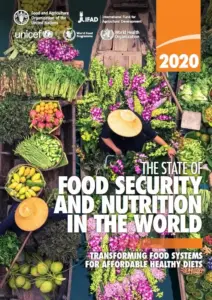
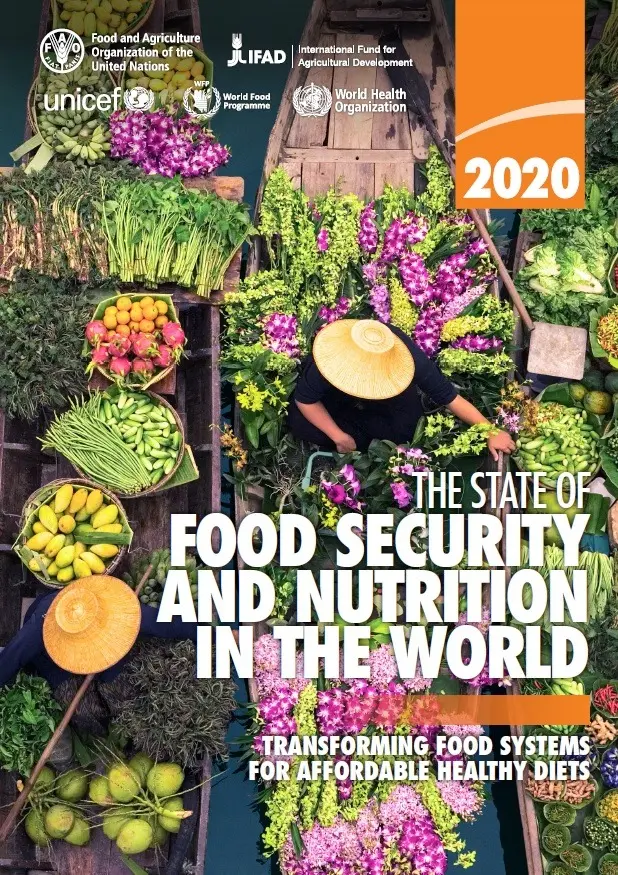
The latest edition of The State of Food Security and Nutrition in the World estimates that approximately 690 million people went hungry in 2019. This figure represents an increase of 10 million people compared to 2018 estimates and an alarming rise of nearly 60 million people over a five-year period. Furthermore, the comprehensive global study warns that the economic fallout from the COVID-19 pandemic could push an additional 130 million to 132 million people into chronic hunger by the close of 2020, potentially throwing global ambitions to achieve Zero Hunger by 2030 drastically off-course.
The flagship report is produced annually as a collaborative effort by five specialized United Nations agencies: the Food and Agriculture Organization (FAO), the International Fund for Agricultural Development (IFAD), the United Nations Children’s Fund (UNICEF), the UN World Food Programme (WFP), and the World Health Organization (WHO).

In a joint foreword to the publication, the executive heads of these five institutions delivered a sobering assessment of the world’s current trajectory. Writing on behalf of FAO Director-General Qu Dongyu, IFAD President Gilbert F. Houngbo, UNICEF Executive Director Henrietta H. Fore, WFP Executive Director David Beasley, and WHO Director-General Tedros Adhanom Ghebreyesus, the leaders warned that five years after the international community committed to eradicating hunger, food insecurity, and all forms of malnutrition, the world remains severely off-track to achieve these critical objectives by the target date of 2030.
The Hunger Numbers Explained
The latest edition of the report incorporates critical data updates for China and 12 other highly populous nations—including Bangladesh, Colombia, Ecuador, Ethiopia, Mexico, Mongolia, Mozambique, Nigeria, Pakistan, Peru, Sudan, and Thailand. These updates, particularly concerning parameters that measure inequality in food consumption within societies, have led to a substantial downward revision of historical global hunger estimates, placing the baseline at 690 million.
Despite the technical adjustment in absolute numbers, the underlying trend remains unmistakable and deeply concerning. When researchers revised the entire historical hunger data series back to the year 2000 using these updated parameters, the conclusion remained identical: after steadily diminishing for decades, chronic hunger slowly began to rise in 2014 and has continued its upward climb ever since.
Geographically, Asia remains home to the greatest absolute number of undernourished people, accounting for 381 million individuals. Africa ranks second with 250 million undernourished people, followed by Latin America and the Caribbean with 48 million.
While the global prevalence of undernourishment—defined as the overall percentage of hungry people within the world population—has remained relatively stable at 8.9 percent, the absolute numbers have steadily climbed since 2014. This statistical reality indicates that over the past five years, the growth of global hunger has paced right alongside overall population growth.
However, these global averages mask significant and widening regional disparities. In proportional terms, Africa stands out as the hardest-hit continent and is moving in the wrong direction at an accelerating pace. An estimated 19.1 percent of Africa’s population is currently undernourished, a rate that is more than double the prevalence found in Asia (8.3 percent) or in Latin America and the Caribbean (7.4 percent). Based on current trajectories, the report projects that by the year 2030, Africa will be home to more than half of all chronically hungry people on the planet.
The Pandemic’s Staggering Toll
Even as long-term progress against hunger was already stalling, the onset of the COVID-19 pandemic has dramatically exposed and intensified the vulnerabilities embedded within global food systems. These systems encompass the entire array of activities, infrastructure, and processes that affect how food is produced, processed, distributed, marketed, and ultimately consumed.
While researchers note it is still too early to fully quantify the long-term impact of national lockdowns, border closures, and other aggressive public health containment measures, the report offers stark preliminary projections. Driven by the severe global economic recession triggered by the pandemic—which is projected to cause a global Gross Domestic Product contraction ranging between 4.9 and 10 percent—at least an additional 83 million people, and potentially as many as 132 million, are expected to experience hunger by the end of 2020.
In contexts where the pandemic intersects with pre-existing crises, acute flare-ups of hunger may cause these numbers to escalate even further. This sudden and massive setback casts profound doubt on the international community’s ability to realize Sustainable Development Goal 2, which calls for the complete eradication of hunger, food insecurity, and malnutrition.
Unhealthy Diets, Food Insecurity, and Malnutrition
Addressing the global food crisis requires looking far beyond mere caloric sufficiency. Overcoming hunger and malnutrition in all its forms—which includes undernutrition, micronutrient deficiencies, overweight, and obesity—demands that individuals, particularly growing children, have consistent access to safe, diverse, and nutritious foods.
Yet, a primary barrier blocking millions of families from achieving proper nutrition is the prohibitive cost of nutrient-dense foods alongside the low economic affordability of healthy diets. The report presents compelling evidence demonstrating that maintaining a healthy diet costs significantly more than the international extreme poverty threshold of US$ 1.90 per day.
According to the findings, even the least expensive healthy diet globally costs roughly five times the price of simply filling an individual’s stomach with cheap starches. Nutrient-rich foods—such as fresh dairy, fruits, vegetables, and protein sources from both plant and animal origins—remain the most expensive food groups across every region of the world.
Consequently, an estimated 3 billion people or more cannot afford to purchase a healthy diet. In sub-Saharan Africa and southern Asia, this economic barrier affects a staggering 57 percent of the population. However, no region of the world is entirely spared, with significant affordability gaps documented even in North America and Europe.
This widespread dietary inadequacy has severe health consequences. In 2019, between a quarter and a third of all children under the age of five—totalling 191 million worldwide—suffered from stunting or wasting, meaning they were dangerously too short or too thin for their age. Simultaneously, another 38 million children under five were classified as overweight. Among the adult population, rates of overweight and obesity have continued to climb, transforming into a global health crisis in its own right.
A Call for Comprehensive Action
The report argues that the global community can reverse these negative trends by enacting a structural transformation of food systems. Factoring in long-term sustainability considerations, the study models the impact of a global shift toward healthy diets, analyzing alternative dietary patterns such as flexitarian, pescatarian, vegetarian, and vegan options.
The research calculates that transitioning to healthy diets would generate enormous societal savings that would almost entirely offset the health-care costs associated with unhealthy diets, which are projected to reach US$ 1.3 trillion annually by 2030. Furthermore, the diet-related social costs of greenhouse gas emissions, estimated at US$ 1.7 trillion annually, could be cut by up to 75 percent through such a shift. While the report acknowledges that some lower-income developing nations may temporarily experience rising carbon emissions as they work to meet vital domestic nutrition targets, the net global effect remains overwhelmingly positive.
To achieve this transformation, the study urges governments and international stakeholders to implement targeted interventions across the entire food supply chain, improve the local food environment, and reform the political economies that dictate public expenditure, investment, and trade policies.
Recommended policy actions include mainstreaming nutrition objectives directly into agricultural strategies; working aggressively to reduce cost-escalating inefficiencies throughout food production, storage, transport, distribution, and marketing, including minimizing food loss and waste; supporting local small-scale agricultural producers to help them grow and market more nutritious foods while securing their access to markets; prioritizing the nutritional needs of children as the most vulnerable demographic; fostering behavioral change through targeted public education and communication; and embedding nutrition deeply within national social protection systems and long-term investment strategies.
The executive heads of the five participating United Nations agencies concluded the report by reaffirming their collective commitment to supporting this momentous transition, pledging to ensure that future food system reforms unfold in a manner that remains sustainable for both humanity and the planet.