




By Jorn Bettin
In the current Aotearoa New Zealand Autism Guideline, the very existence of an authentic Autistic culture is not mentioned with a single word. Despite incremental improvements in how neurodivergence is framed in modern policy documents, understanding Autistic people and Autistic culture remains a secondary concern. Civil society activists and child rights defenders from around the world are now joining together to create the Rights-Centric Education network to challenge these systemic oversights. For many within the community, navigating an unyielding, hypernormative culture is frequently compared to living life in "Hard Mode," emphasizing just how far society has to go before Autistic culture achieves the widespread acceptance and visibility currently afforded to LGBTQIA+ communities.
A few days ago, a closer examination of the latest edition of the Aotearoa New Zealand Autism Guideline revealed a glaring omission. While the comprehensive document explicitly highlights the importance of incorporating ethnic minority cultures, the existence of an intersectional Autistic culture—operating much like the vibrant subcultures that exist within LGBTQIA+ communities—is entirely absent. There are, admittedly, major improvements in the updated guideline, particularly since advocates launched a sustained campaign toward a comprehensive ban on Applied Behaviour Analysis (ABA) and all related forms of conversion therapy. However, the document’s primary focus remains firmly centered on managing and modifying so-called "behaviours of concern."
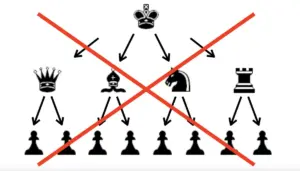
This prevailing clinical approach places all the social pressure squarely on either altering the intrinsic behavior of the Autistic individual or modifying their immediate micro-environment at home, in educational settings, and in the workplace. Experience demonstrates that this framework is woefully inadequate for preventing hypersensitive Autistic individuals from becoming overwhelmed, depressed, and ultimately disillusioned with life in a hyper-normative, hyper-busy industrialized society. Modern societies offer only a heavily restricted number of socially acceptable life paths for Autistic people, and the few healthy alternatives that might genuinely be viable remain economically out of reach for the vast majority of the population.
Within the span of the 400-plus-page Aotearoa New Zealand Autism Guideline, specific passages starkly illuminate the underlying ideology. One prominent paragraph notes that Autistic children and young people will need to be taught the unwritten rules of school life, such as what to do, where, when, and with whom. These rules tend to fluctuate depending on the changing circumstances, and Autistic children typically struggle to generalize what they have learned to different, novel situations. Even Autistic students with less obvious support needs may fail to grasp intuitive social cues that others process effortlessly.
This framing strikes at the very heart of the systemic problem embedded in modern institutions. It frames the issue strictly in terms of individual Autistic deficits, leaning heavily on the familiar and convenient pathology paradigm. In reality, society operates within a deeply troubled framework where no truly consistent set of unwritten rules truly governs school or workplace life. These rules are not only highly context-specific, but the appropriate context is routinely dictated by entrenched authorities who reserve the right to alter both written and unwritten rules at any moment, usually to protect their own positions of social dominance.
Reflecting on decades of lived experience, an alternative Autistic philosophy emerges—one centered on collaborative niche construction. This concept describes creative collaboration committed to nurturing life, minimizing suffering beyond the human realm, and operating under the conscious constraints of human cognitive and emotional limits, as well as the strict biophysical limits of the Living Earth. By contrast, the hidden rules of industrialized societies promote anthropocentric progress, defined as creative collaboration driven by relentless competition and unconstrained by ecological or human boundaries.

While children are explicitly taught to share and be kind, the actual reactions encountered in hierarchical social environments incrementally teach the unwritten rules of powered-up civilizations. Official autism guidelines rarely spell out these harsh realities because doing so would expose the dehumanizing house of cards upon which modern civilization rests. Autistic culture fundamentally rejects the unwritten rules of these hierarchical systems. Historically, individuals exhibiting these traits were recognized as philosophers operating outside the mainstream, holding unusual life paths that occasionally collided with dominant authorities, yet they were not pathologized.
The dominant parenting, education, and indoctrination systems frequently traumatize and break the spirit of young Autistic individuals. This institutional trauma fosters internalised ableism, after which modern society blames the victims for their resultant behaviors of concern. The profound trauma inflicted by these hidden rules is omitted from mental health guidelines and diagnostic manuals alike.
The latest Aotearoa New Zealand Autism Guideline serves as a prime example of how positive language and a behavior-centric approach can successfully skirt around fundamental political and social problems. While Autistic people are now granted some recognition of agency and self-determination, professional authorities and caregivers retain the dominant perspective in assessments and judgments. It cannot be emphasized enough that while Autistic ways of being are wonderfully diverse, this diversity does not negate the reality of Autistic culture. Autistic people form vital communities and require immersion in a healthy Autistic culture to truly thrive. The cognitive dissonance inflicted by the hidden rules of powered-up civilizations is literally killing people, a tragedy laid bare by stark mental health and suicide statistics.
Parallel research highlights the broader societal context of these struggles. Reports from organizations like the UK-based Independent Committee Against Restraint and Seclusion (ICARS) reveal alarming realities regarding the use of restraints and seclusion in institutional settings. Similar data gathered by school-level activists in Australia aligns closely with global participatory research into the cultural and psychological safety of neurodivergent children.
In response, civil society activists and child rights defenders from around the globe have established the Rights-Centric Education network. This coalition aims to implement a long-overdue United Nations proposal for a Rights-Based Quality Assurance System in schools, starting with a declaration demanding that educational practices be overhauled to respect, protect, and fulfill child rights. Founders of the network emphasize that compulsory education emerged in the 1700s when children were viewed as chattel, a dynamic that has stubbornly persisted despite superficial shifts in social perceptions.
We still have a long way to go until Autistic culture achieves the societal acceptance currently enjoyed by gay and lesbian culture. Replacing the words "Autistic" and "autism" in the latest New Zealand guideline with "gay and lesbian" would instantly spark widespread public outrage. The struggles faced by the Autistic community closely mirror those of transgender communities, though neurodivergent individuals lag even further behind in gaining broad societal acceptance.
The psychological concept of mirroring is frequently oversimplified into superficial verbal and non-verbal expressions of emotion, signaling mere attentiveness rather than genuine shared understanding. True mirroring requires comparable lived experiences that yield similar emotional states. Autistic people prioritize feeling genuinely understood over simply being listened to. Within a psychologically safe environment defined by mutual trust, communication serves as a tool for mutual learning and assistance—an innate human impulse clearly visible in toddlers before socialization alters their behavior.

In a transactional society dominated by mutual mistrust, however, naive attempts at offering compassion often backfire. This dynamic sits at the core of the Double Empathy Problem documented by Autistic scholar Damian Milton, where Autistic motivations are routinely misunderstood, and Autistic individuals struggle to account for the competitive logic framing neurotypical interpretations. Consequently, isolated and traumatized Autistic individuals lacking a supportive ecology of care may develop defensive behaviors mirroring those of other highly traumatized populations.
These systemic dynamics profoundly shape Autistic life paths, particularly regarding whether individuals buy into surrounding cultural narratives. Given the daily reality of the Double Empathy Problem, Autistic people naturally resist swallowing mainstream cultural narratives wholesale. Many individuals who discover supportive neurodivergent communities become passionate social and environmental advocates. Others experience severe burnout driven by the cognitive dissonance imposed by hypernormative societies and the hidden rules of industrial systems.
While prominent thinkers debate the long-term trajectory of human civilization and ecological collapse, many in the Autistic community focus on minimizing human and non-human suffering at a human scale. This commitment to local, life-affirming ecologies of care stands in direct opposition to the toxic framing of homo economicus as immutable human nature. Grounding evolutionary processes in collaborative niche construction rather than cutthroat competition aligns closely with indigenous knowledge systems and ancient philosophies that view the planet as a regenerative system of relationships.
Healthy Autistic collaborative niche construction represents an evolutionary process of reducing cognitive dissonance through omni-directional sensing and learning, flourishing only within de-powered, life-affirming environments. As online commentators frequently note, navigating a hypernormative culture often feels like playing a complex video game on Hard Mode.
The Autistic Collaboration community continues to grow organically, at a human pace and scale, built upon trusted relationships and self-organizing groups dedicated to intersectional mutual aid. As communities prepare for upcoming initiatives like the NeurodiVerse Days of Intersectional Solidarity, the focus remains firmly fixed on cultivating the generative potential of trusted relationships and fostering authentic spaces where neurodivergent individuals can live, collaborate, and thrive together.