



The human nervous system is not static; our individually unique sensitivities develop and evolve dynamically over the course of our lives, shaped profoundly by our environments. Yet, comprehensive new findings from participatory research conducted by the Autistic Collaboration Trust and sponsored by S23M reveal an alarming reality regarding psychological safety in contemporary society. According to the data, 85 percent of neurodivergent adults often or always feel overwhelmed and misunderstood, while over 60 percent frequently feel disrespected and unsafe.

These striking statistics underscore a fundamental premise of the research: our overall sense of wellbeing is not merely an internal psychological trait, but is directly determined by the alignment—or misalignment—between our unique sensitivity profiles and the ecology of care in which we are embedded.

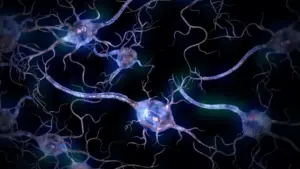
Development and Evolution of Human Nervous Systems
The research points out that large-scale, anonymous social environments—often referred to as "super-human" scale societies—are inherently traumatizing. They rely heavily on abstract laws and social norms formulated in complete ignorance of individual sensitivity profiles and specific life circumstances. Consequently, legal frameworks and broad social rules can never serve as a substitute for trustworthy, caring, and loving relationships.


As human societies have scaled up into massive industrial civilizations, they have increasingly mirrored the dynamics of cults. All non-egalitarian social environments, regardless of their size, tend to prioritize the perpetuation of hierarchical structures of coercive power and violence over human and non-human wellbeing. Modern corporations and nation-states, from this perspective, differ from smaller cults only in their sheer scale.

Cults vs. Healthy Cultural Organisms
In contrast to large-scale anonymous societies, small, human-scale social environments minimize interactions between people who know nothing about one another. Healing and thriving depend heavily on collaborative niche construction—a process where individuals commit to nurturing shared understanding and de-powered ecologies of care within egalitarian settings.

When social ecologies are healthy and human-scale, they allow individuals to develop a positive, accepting relationship with their own sensitivity profiles. The laws and social norms that emerge organically in these environments are closely attuned to specific local contexts rather than being dictated by abstract institutions in distant administrative centers. Empires and large civilizations, conversely, typically rely on myths of cultural superiority, which include the normalization of institutionalized forms of violence, bullying, and neglect.

The Reality of Internalised Ableism
The extent to which people consciously experience their social environment as a traumatizing cult depends heavily on their level of internalized ableism and their capacity to maintain cognitive dissonance over months, years, and decades. This capacity, in turn, traces back to individual sensitivity profiles.

Participatory research shows that many autistic and intersectionally marginalized people experience the dominant culture as intensely traumatizing. In a hypernormative civilization, marginalized populations routinely face the direct impacts of internalized ableism. Conversely, individuals who consider themselves culturally "well-adjusted"—having successfully internalized the behavioral patterns of homo economicus—tend to experience the dominant culture as relatively safe.

Cultural and Psychological Safety in Workplace Settings
Global survey results regarding workplace environments highlight a stark divide between non-marginalized employees and those from marginalized backgrounds. While non-marginalized workers generally experience typical workplace cultures as "normal" and safe, employees from marginalized segments report feeling significantly less secure and welcome.

The survey data reveals that over 40 percent of employees are often or always afraid to be their authentic selves when interacting with superiors, while more than 25 percent harbor the same fear when engaging with peers.

When breaking down the data by demographics, the contrast becomes even sharper. Among employees who consider themselves culturally well-adjusted, more than 90 percent are entirely at ease when interacting with peers, though over 20 percent report some tension when engaging with their bosses.

The picture changes dramatically for marginalized and neurodivergent employees. Among those identifying with one or more marginalized segments, over 50 percent are frequently afraid to be authentic with superiors. For neurodivergent employees specifically, the figures are even more pronounced: 70 percent are often or always afraid to be authentic around superiors, and over 40 percent feel the same way around peers. These findings demonstrate that internalized ableism is an undeniable and pervasive reality in modern workplaces.

The Neurodivergent Childhood Experience in Our Civilisation
The experience of facing internalized ableism begins early in life, deeply embedded within hierarchical family structures and conventional educational institutions.

Among neurodivergent children surveyed, 90 percent report being frequently afraid to express their authentic selves at school, while nearly 70 percent experience this fear within their own families. Furthermore, over 90 percent of neurodivergent children often feel overwhelmed and misunderstood, more than 80 percent feel disrespected, and over 70 percent feel unsafe.

As a direct consequence, more than 70 percent of neurodivergent children develop a persistent distrust of family members, friends, and classmates. Approximately 80 percent resort to emotional detachment as a survival mechanism. Mental health impacts are similarly severe, with over 90 percent experiencing frequent anxiety and 80 percent reporting chronic feelings of depression.

The Adult Neurodivergent Experience in Our Civilisation
These challenging dynamics continue seamlessly into adulthood, permeating all aspects of daily life unless individuals consciously choose to step away from the hypernormative trajectory of modern civilization.

However, the ability to opt out depends entirely on being embedded in a healthy ecology of care—a supportive network that can take decades to establish. For a large portion of the population, this remains out of reach. Among neurodivergent adults, 70 percent remain afraid to be authentic at work, nearly 60 percent feel this way within their families, and over 45 percent feel unsafe being authentic among friends.

Overall, 85 percent of neurodivergent adults frequently feel overwhelmed and misunderstood, and over 60 percent feel disrespected and unsafe. To cope, more than 35 percent maintain a constant distrust of family and friends, and over 60 percent rely on emotional detachment. Over 80 percent experience chronic anxiety, and 50 percent struggle regularly with depression.

The Human Sense of Agency
Human agency is fundamentally a human-scale phenomenon that emerges organically from de-powered dialogues within trustworthy relationships. However, because most neurodivergent individuals lack access to healthy, trustworthy relationships, their opportunities for genuine de-powered dialogue remain severely limited.

In healthy cultures, agency is understood as a collaborative, community-level experience rather than an isolated individual attribute. When operating in non-coercive environments, autistic learning styles naturally avoid over-imitation, thereby reducing unnecessary cultural complexity. The competitive, individualistic sense of agency championed by economic ideology is increasingly viewed by researchers as a myth that contradicts our scientific understanding of human cognition and relational ecology.

Cognitive Dissonance and Rediscovering Faith in Humanity
An individual’s overall sense of wellbeing is dictated by the health of their surrounding ecology of care, their sensitivity profiles, and their ability to navigate cognitive dissonance. Human emotional limits are as real and immutable as the laws of physics. While culturally well-adjusted individuals often maintain a seemingly endless capacity for cognitive dissonance to fit into the global mono-cult, intersectionally marginalized individuals frequently experience the sharp, cracking edges of this systemic toxicity.

Recognizing these immutable human-scale limitations offers a pathway toward intersectional solidarity and healing on the margins of society. By cultivating small, nurturing ecologies of care that extend beyond human networks, individuals can rediscover their faith in humanity and connect with the broader, healing cycles of life. The diverse sensitivity profiles found within the neurodivergent community act as a cultural immune system, pointing the way back toward life-affirming cultural organisms.

To support this ongoing cultural shift, the Autistic Collaboration Trust and S23M continue to maintain research initiatives, gathering vital baseline data on psychological safety, intersectional experiences, cognitive dissonance, and healthcare accessibility through ongoing anonymous public surveys.