




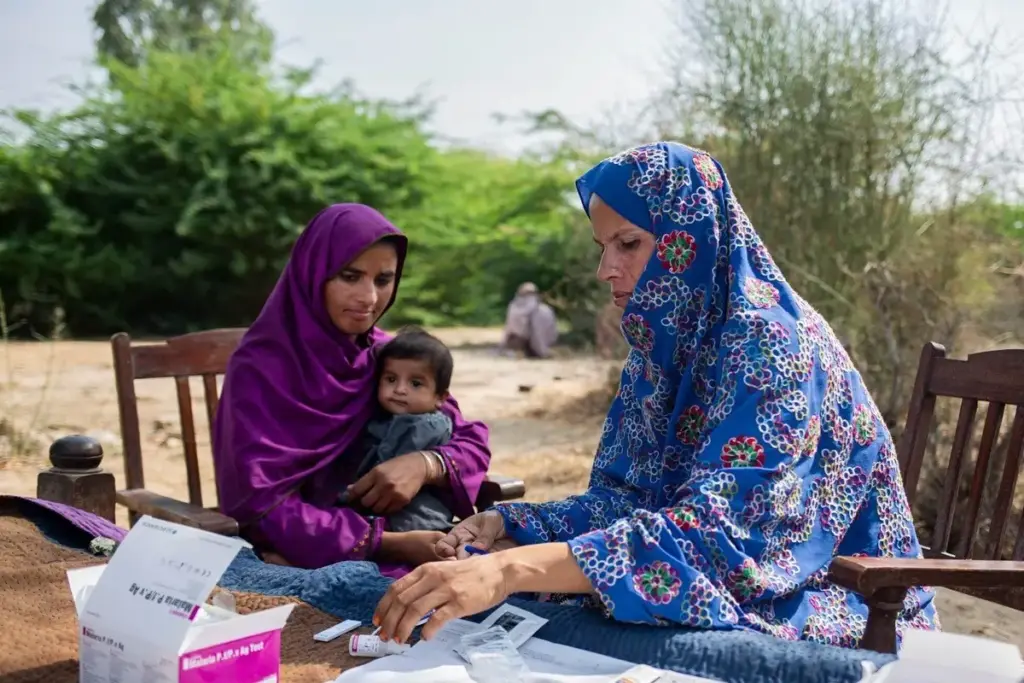
As the global community marks World Health Day on April 7, the World Health Organization (WHO) has launched a powerful advocacy campaign titled “My health, my right.” The initiative serves as a clarion call to action, reminding nations and individuals alike that access to quality healthcare is not merely a policy goal or a developmental ambition—it is a fundamental human right that must be guaranteed to everyone, everywhere.
The campaign centers on the premise that the right to health encompasses far more than the mere absence of disease. It calls for universal access to a comprehensive spectrum of necessities: quality health services, accurate and timely health information, and education. Furthermore, the WHO emphasizes that true health is inextricably linked to the conditions in which people live, work, and grow. This includes the availability of safe drinking water, clean air, nutritious food, decent housing, and stable environmental conditions, all within a society free from discrimination.
However, as the international community observes this day, the gap between these ideals and the reality on the ground remains stark. Across the globe, the path to universal health is being obstructed by a recurring cycle of political inaction, a chronic lack of accountability, and insufficient funding. These systemic failures are frequently exacerbated by pervasive social issues such as intolerance, stigma, and discrimination. The impact of these challenges is not distributed equally; it falls heaviest upon the most vulnerable and marginalized populations. Whether it is those living in extreme poverty, individuals forcibly displaced from their homes, the elderly, or those living with disabilities, the lack of a robust right-to-health framework serves as a multiplier of their existing hardships.
While deep-seated injustice and bureaucratic inertia are the primary drivers of this global failure, contemporary crises are intensifying these violations to an alarming degree. The world is currently witnessing a period of unprecedented instability. Armed conflicts are leaving behind trails of physical destruction, profound mental distress, and preventable deaths, shattering the fragile health infrastructures that communities depend on for survival. Simultaneously, the global climate crisis has emerged as one of the most significant threats to public health in the twenty-first century. The reliance on fossil fuels not only drives global warming but directly compromises the right to breathe clean air. In turn, the resulting climate instability—manifesting as extreme weather events—threatens the well-being of entire populations and places an unsustainable strain on the services required to meet basic human needs.
The urgency of the situation is reflected in the stark statistical reality of our time. Everyone deserves access to quality, timely, and appropriate health services without the threat of financial ruin or social exclusion. Yet, the data remains sobering: in 2021, approximately 4.5 billion people—more than half of the global population—remained without coverage for essential health services. This massive segment of humanity is left exposed to the threats of preventable disease and the devastating impact of health emergencies. Even for those who do manage to access medical care, the experience is often marred by economic catastrophe. Roughly 2 billion people face severe financial hardship due to out-of-pocket health costs, a situation that has steadily deteriorated over the past two decades, pushing families deeper into poverty.
Addressing this disparity requires a significant shift in global investment. To effectively expand coverage and achieve the goal of universal health access, it is estimated that an additional US$ 200–328 billion is required annually to scale up primary healthcare in low- and middle-income countries. While this figure may appear daunting, it represents only about 3.3% of the projected national GDPs of these regions. Moreover, history proves that progress is entirely possible when there is sufficient political will. Since the year 2000, 42 countries across every income level and geographic region have successfully improved both the coverage of their health services and the level of protection they provide against catastrophic health spending. These success stories serve as a blueprint, proving that with dedicated leadership and structural reform, the trajectory of global health can be shifted.
“Realizing the right to health requires governments to pass and implement laws, invest, address discrimination and be held accountable by their populations,” said WHO Director-General Dr. Tedros Adhanom Ghebreyesus. The Director-General’s remarks underscore that the work of the WHO is a collaborative effort, involving governments, international partners, and local communities, all working in concert to ensure the highest attainable standard of health as an inalienable right for every person.
The right to health is firmly enshrined within the WHO Constitution, and at least 140 countries around the world have explicitly recognized this right within their own national constitutions. Yet, the WHO warns that formal recognition is merely the first step. Legal status alone cannot provide medicine, build clinics, or train healthcare workers. This is why the organization is actively working to support nations in legislating the right to health across all sectors, ensuring that human rights are integrated into the core of health policies and programs. The ultimate objective of this support is to make health services not only available but also accessible, affordable, and responsive to the specific needs of the diverse populations they serve. By increasing community participation in health decision-making, the WHO aims to foster systems that are as transparent as they are effective.
On this World Health Day, the WHO is issuing a comprehensive call to action. It urges governments to move beyond rhetoric and make the meaningful investments necessary to scale up primary healthcare. This involves ensuring total transparency, holding institutions accountable for their performance, and guaranteeing that individuals and communities are involved in the decision-making processes that affect their lives. Because the right to health is fundamentally interdependent with other human rights, this campaign also encompasses critical calls to action in fields as varied as finance, agriculture, environmental protection, justice, transport, labor, and social affairs.
The defense of health rights has never been solely a top-down endeavor. Individuals, local communities, and civil society organizations have long been the primary defenders of their own right to health. By breaking down societal barriers and advocating for equity, these groups have consistently pushed the needle forward. As part of this year’s campaign, the WHO is encouraging members of the public to take an active role in knowing, protecting, and promoting their own health rights. This includes asserting their claims to safe and quality care, demanding an environment free from discrimination, and upholding their rights to privacy, confidentiality, information, bodily autonomy, and full participation in their own healthcare decisions.
As the world looks toward the future, the message remains clear: the right to health is a fundamental cornerstone of a stable and prosperous society. By addressing the root causes of inequity and fostering a global commitment to inclusive healthcare, the international community can move closer to a reality where “my health, my right” is not an aspiration, but a lived experience for everyone.