







For speech-language pathologists, educators, and parents, the journey toward clear articulation is often defined by a series of significant hurdles. Among the most formidable of these challenges is the /r/ sound. Widely recognized in the field of speech therapy as one of the most difficult phonemes to master, the /r/ sound presents unique obstacles that often frustrate both the instructor and the student. Unlike many other sounds that rely on visible tongue placement or clear airflow patterns, the /r/ is notoriously elusive, requiring precise coordination of the tongue, jaw, and lips in a way that is difficult to demonstrate and even harder for a child to replicate.
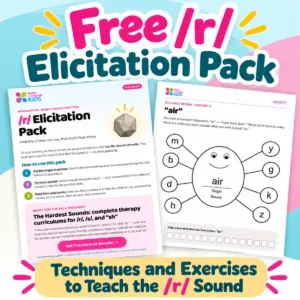
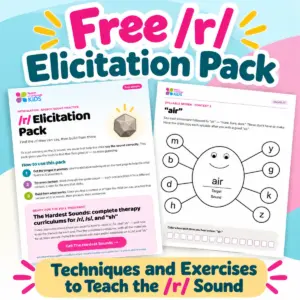
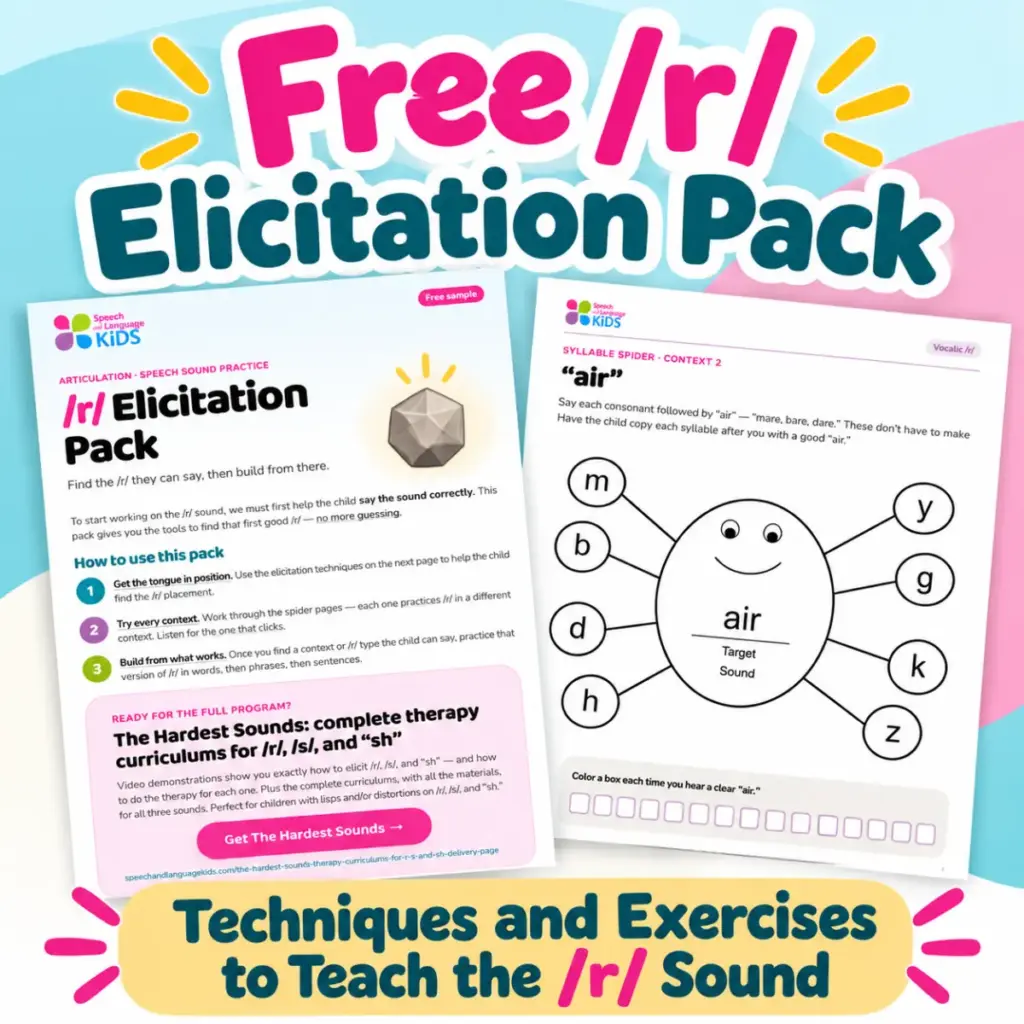
To address this persistent challenge, a new educational resource has been released: the Free /r/ Elicitation Pack. This initiative aims to provide practitioners and families with the tools necessary to demystify the sound and implement effective elicitation strategies. By focusing on the foundational stage of speech therapy—where a child must learn to produce a consistent, isolated sound before moving on to syllables, words, and sentences—the pack seeks to bridge the gap between clinical theory and practical application.
The Challenge of Articulation: Why the /r/ Sound is Different
The difficulty inherent in the /r/ sound stems primarily from its anatomical complexity. In speech therapy, the goal of elicitation is to guide the student’s articulators—the tongue, teeth, lips, and palate—into the correct configuration to produce the target sound. While sounds like /p/ or /m/ allow for a clear visual model, the /r/ sound is produced deep within the oral cavity. The tongue must be positioned with specific tension and placement, often involving a "bunching" or "retroflex" technique that is largely invisible from the outside.

Because the child cannot see what the therapist is doing, and because the therapist cannot easily see what the child is doing inside their mouth, the learning process often becomes a game of trial and error. This can lead to significant discouragement for children and teens, who may spend months attempting to find the right tongue shape without success. The frustration is compounded by the fact that the /r/ sound is highly sensitive to the surrounding sounds in a word. A child might learn to produce the sound in isolation, only to find that it disappears or distorts when placed in a word like "red" or "car."
The new elicitation pack emphasizes that the primary objective is not to force a child to speak in full sentences immediately, but rather to establish a "solid" /r/ in isolation. By isolating the sound, the therapist can focus entirely on the physical placement of the tongue and the quality of the sound, removing the distractions of rhythm, sentence structure, and vocabulary.

Integrating Elicitation Techniques into Daily Practice
The resource, which includes both a video demonstration and a suite of worksheets, offers a structured approach to this isolation phase. The video component is particularly vital, as it allows practitioners to observe the subtle techniques that experts use to cue the sound. Rather than relying solely on verbal instructions, which can be confusing for younger children, these strategies focus on kinesthetic cues and visual feedback.
The materials provided in the elicitation pack are designed to be flexible, acknowledging that every student responds differently to various prompts. Some children may respond well to imagery—such as imagining the tongue as a "bunch" of muscle—while others may require tactile feedback to understand where their tongue should be resting. The pack serves as a repository for these diverse approaches, ensuring that if one method fails to yield results, the instructor has a variety of alternatives at their disposal.
For parents working with their children at home, this resource provides a much-needed roadmap. Many parents find themselves at a loss when they notice their child struggling with articulation, often unsure if they are providing the right guidance or if they are inadvertently reinforcing incorrect habits. By following the standardized exercises outlined in the pack, parents can support the work being done in clinical settings, ensuring that the practice remains consistent across different environments.
Expanding the Scope: The "Hardest Sounds" Curriculum
While the /r/ sound is frequently cited as the most difficult to remediate, it is rarely the only sound causing issues for a child in speech therapy. Often, the same physiological challenges that hinder the production of /r/ also affect other complex phonemes, specifically the /s/ sound and the "sh" sound. Recognizing that speech therapy is rarely a one-dimensional process, the developers of the /r/ Elicitation Pack have integrated these findings into a broader, more comprehensive framework known as the "Hardest Sounds" curriculum.
This extended curriculum is designed for those who have mastered the basics and are ready for a more rigorous, long-term plan. The curriculum covers the /r/, /s/, and "sh" sounds, providing a systemic approach that moves from the initial elicitation stage all the way through to generalization—the process of using these sounds correctly in everyday conversation.

The inclusion of the /s/ and "sh" sounds in this program is significant, as these are often grouped with the /r/ sound as the "trifecta" of articulation difficulties. Each of these sounds requires a high degree of control over airflow and tongue placement. The "sh" sound, for instance, requires a precise rounding of the lips and a specific groove in the tongue, while the /s/ sound requires a narrow channel for air to pass through. When a child struggles with one of these sounds, they are often dealing with similar issues of tongue lateralization or poor air control, making a unified approach to all three highly effective.
Bridging the Gap Between Therapy and Home Support
A key theme in the release of these materials is the importance of consistency. Speech therapy is not merely a weekly appointment; it is a developmental process that requires constant reinforcement. The developers emphasize that for children and teens to overcome the physical habits associated with incorrect articulation, they must engage in frequent, short bursts of practice.
The "Hardest Sounds" curriculum is structured to support this, offering materials that are accessible enough for home use while remaining robust enough to serve as a backbone for professional therapy sessions. This dual-use approach is designed to empower parents to become active partners in their child’s progress. By providing clear, actionable worksheets and logical progressions, the curriculum removes the guesswork that often leads to "therapy burnout," where both the parent and child feel overwhelmed by the lack of visible progress.
As the field of speech-language pathology continues to evolve, the focus is increasingly shifting toward these types of practical, evidence-based resources that prioritize accessibility. By moving away from abstract terminology and toward concrete, exercise-based learning, practitioners are finding that they can help students achieve success faster and with less frustration.
The release of the /r/ Elicitation Pack and the accompanying curriculum marks a significant step forward in providing clarity for one of the most persistent challenges in speech therapy. Whether a child is struggling with the subtle tongue placement of the /r/ or the complex airflow requirements of the /s/ and "sh" sounds, the move toward structured, easy-to-understand guidance is a welcomed development for the families and professionals dedicated to helping them find their voice. By providing the tools to turn an "impossible" sound into an achievable goal, these resources continue to demonstrate that with the right approach, even the most difficult articulation hurdles can be cleared.