







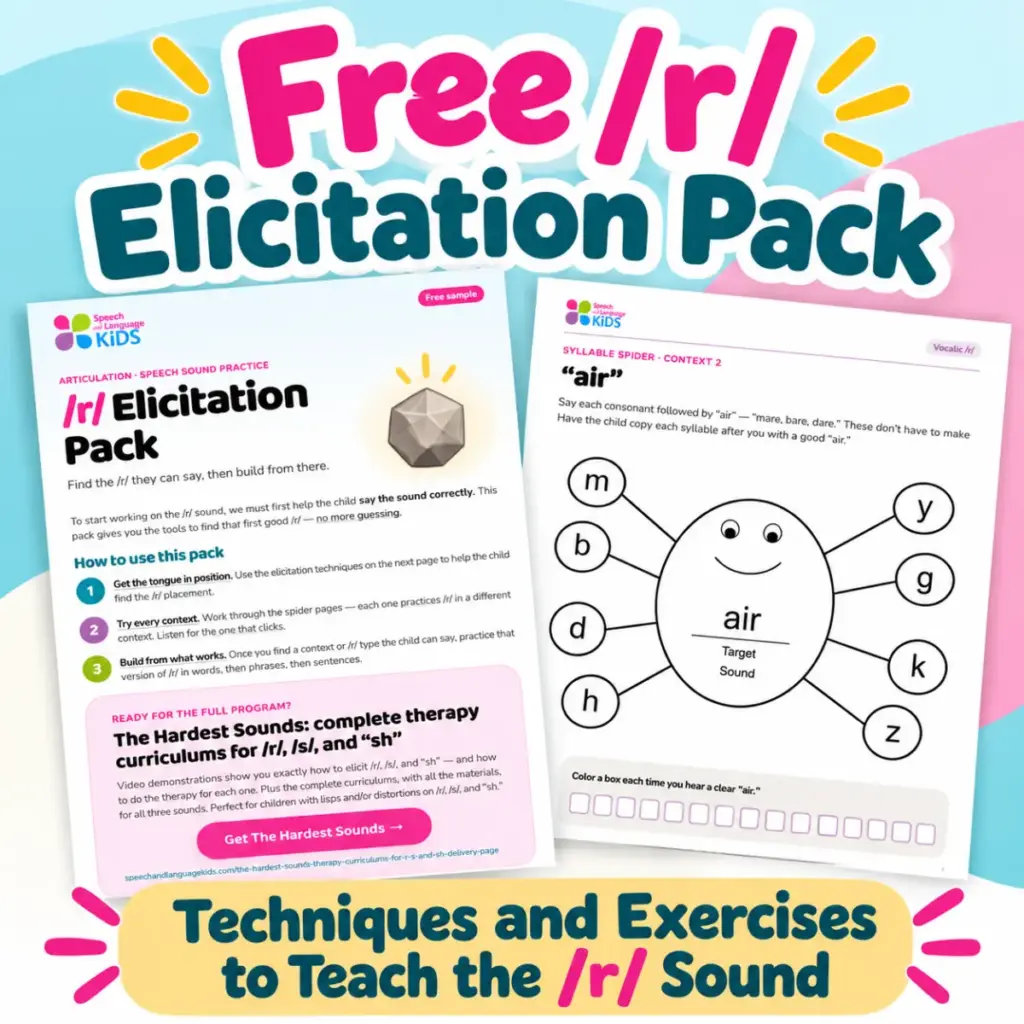
For speech-language pathologists, educators, and parents alike, few obstacles in the world of articulation therapy are as persistent or as complex as the /r/ sound. Often cited as one of the most challenging phonemes to master, the /r/ sound requires a level of articulatory precision that can be notoriously difficult to explain, demonstrate, and achieve. In response to these ongoing challenges, a new free "Elicitation Pack" has been released, providing a suite of specialized techniques and exercises designed to help children and teenagers navigate the complexities of this elusive sound.
The difficulty inherent in the /r/ sound is primarily physical. Unlike sounds that are produced with visible lip or tongue movements—such as the /p/ or /m/—the /r/ is produced deep within the oral cavity. Its articulation is largely hidden, making it exceptionally difficult for a child to observe and mimic. Furthermore, the position of the tongue, which must be perfectly placed to achieve the correct resonance, is often described as nuanced and highly individual. This lack of visual feedback creates a significant barrier in traditional speech therapy, where the standard "watch me and repeat" method often falls short.
Bridging the Gap in Articulation Therapy
The release of the new elicitation materials addresses a critical phase in the speech therapy process: the initial establishment of the sound. Before a child can be expected to produce the /r/ in complex words, phrases, or conversational speech, they must first be able to produce it in isolation. This foundational step is known as elicitation. Without a solid baseline for the sound, attempts to move toward word-level practice can be frustrating for the student and ineffective for the clinician.

The newly available resources emphasize that successful therapy for the /r/ sound requires a departure from standard repetitive drilling. Instead, the focus is shifted toward helping the child or teen develop an internal map of where their articulators—specifically the tongue and the soft palate—need to be. By providing specialized exercises, these materials aim to guide the student toward that "aha" moment when they finally achieve the correct acoustic output.
Central to these resources is a pedagogical approach that favors sensory feedback. Because the sound is so difficult to see, the provided techniques encourage clinicians and parents to find creative ways to help the student feel the sound within their own mouth. This includes exploring various tongue placements and shapes, as well as utilizing specific vocalization strategies that can trigger the /r/ resonance naturally.

A Comprehensive Approach to Speech Development
The introduction of this elicitation pack is part of a broader effort to standardize and simplify the process of teaching the "hardest sounds" in the English language. In addition to the /r/, speech professionals have long identified the /s/ and the "sh" sound as significant hurdles in a child’s linguistic development. These sounds, like the /r/, require precise air management and structural positioning that may not come naturally to every learner.
To address this, there has been an increasing demand for structured, curriculum-based approaches that move beyond isolated worksheets. By integrating the /r/ elicitation techniques into a more comprehensive framework—often referred to as a "Hardest Sounds" curriculum—the goal is to offer a roadmap that carries a student from the very first attempt at sound production all the way to mastery in everyday conversation. This structured approach is particularly vital for those working at home, where parents often feel ill-equipped to provide the specific technical guidance required for articulation correction.
The curriculum is designed to be versatile, serving both professional speech-language pathologists who need a reliable, evidence-based system, and parents who are looking for professional-grade guidance to supplement their child’s therapy. By providing a consistent method for teaching these three specific, high-difficulty sounds, the program seeks to reduce the duration of therapy and improve long-term outcomes for students who might otherwise struggle for years with persistent articulation errors.
The Evolution of Speech Therapy Techniques
The shift toward these more targeted, specialized tools reflects a broader evolution in the field of speech-language pathology. As understanding of the mechanics of speech grows, so too does the complexity of the tools used to teach it. Digital resources, including video demonstrations and interactive worksheets, are now becoming standard, allowing for a more dynamic learning experience.
The inclusion of video content, for instance, allows for a level of clarity that was previously impossible to achieve through text alone. When a clinician can demonstrate the exact tongue placement required for a crisp /r/ on screen, it provides the visual reference that the sound itself lacks. This multisensory approach—combining visual modeling, written instructions, and auditory feedback—is essential for students who learn in different ways.

For many families, the struggle to correct a sound like the /r/ can become a source of significant anxiety. It is not uncommon for students to lose confidence when they cannot produce a sound that their peers have mastered. By breaking the process down into manageable, achievable goals, these new materials aim to restore that confidence. The focus is not just on the mechanics of the mouth, but on the psychological aspect of learning a difficult skill.
Future Directions for Articulation Training
As the field continues to refine these methods, the emphasis remains on accessibility. The availability of high-quality, free resources ensures that geography and socioeconomic status do not become barriers to receiving effective speech support. By democratizing access to professional-level elicitation techniques, the community of speech therapists and educators is working to ensure that every child, regardless of their background, has the tools they need to communicate clearly and effectively.
The "Hardest Sounds" curriculum, which builds upon the foundation of the /r/ elicitation pack, represents a significant step forward in this mission. It offers a bridge between the clinical setting and the home, creating a collaborative environment where the student feels supported throughout their journey. As these resources gain traction, the hope is that the persistent frustrations associated with the /r/, /s/, and "sh" sounds will become a thing of the past for a new generation of learners.
Ultimately, the mastery of these complex sounds is more than just a matter of clear speech; it is a matter of academic success, social interaction, and personal development. By providing the specific, actionable techniques required to conquer the /r/ sound, these new initiatives are helping to unlock the potential of students everywhere, one sound at a time. Through a combination of rigorous methodology, creative demonstration, and structured guidance, the process of articulation therapy is becoming more efficient, more effective, and more accessible than ever before.