








Core ideas within Buddhist and Daoist spiritual traditions are deeply reflective of the commonalities found across many human-scale indigenous cultures. A compassionate framework of love as vulnerable, mutual knowing is remarkably compatible with a panpsychic relational philosophy. Ultimately, everyone wants their experiences to be taken seriously. We are embodied spirits, compelled to make sense of this world, and we can only truly do so in good company.
Life
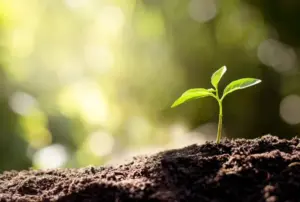
Life creates conditions conducive to life, as sustainability expert Janine Benyus famously observed. This simple yet profound definition hints strongly at the fact that the dynamic process of life consists of complex feedback loops. Life is entirely relational, sacred, cyclical, fleeting, compostible, nested, regenerative, and it forever remains a mystery for all participants.
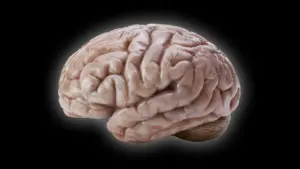
At spatial and temporal scales relevant to biological and ecological systems, the smallest feedback loops emerge between molecules, resulting in the mind-boggling complexity found in cell biology and the molecular genetic code. These feedback loops scale up progressively to the largest interactions between bioregional terrestrial and marine ecosystems within Gaia. Widely popular anthropocentric conceptions of consciousness, by contrast, at best generalize to animals with brains, while excluding all other feedback loops in living systems that contribute to the lived experiences of consciousness at much smaller and larger scales.


Powered-up, or positive, feedback loops are those in which, over time, more information accumulates in some living cells or beings than in others. Such powered-up feedbacks are always temporary phenomena relative to the life spans of the living entities involved. Human bodies grow to a certain scale and remain intact for a lifetime, during which all molecular feedback loops are maintained in a balanced, de-powered state, sustained by external energy from living food and leaving building blocks ready for new life. Similarly, healthy social relationships remain intact when maintained in a de-powered state through shared experiences, producing cultural outputs that integrate naturally into local ecologies of care.
A universe conceptualized entirely in terms of dynamic feedback and learning loops naturally leads to a panpsychic philosophy where consciousness is omnipresent across all scales. This perspective aligns closely with Eastern traditions such as Buddhism and Daoism, inviting humanity to move past anthropocentric viewpoints and recognize the cultural biases inherent in modern industrialized notions of intelligence and success.
Spirits
Buddhism, also known as Buddha Dharma, is an ancient Indian philosophical tradition based on the teachings of the Buddha, a wandering teacher from the 5th or 6th century BCE. Today, it represents the world’s fourth-largest religion, with over 520 million followers globally. The Buddhist focus on minimizing suffering, or dukkha, corresponds directly to the active desire of hypersensitive neurodivergent individuals to minimize cognitive dissonance, while highlighting the societal problems that arise when cultures normalize high levels of unresolved cognitive dissonance over extended periods.

Similarly, Taoism, or Daoism, is a diverse philosophical and religious tradition indigenous to China that emphasizes harmony with the Tao—an enigmatic process of transformation underlying reality. Taoist virtues such as effortless action, naturalness, simplicity, compassion, frugality, and humility align closely with neurodivergent sensitivity profiles. These teachings serve as a timeless critique of anthropocentric empire-building, echoing the themes of egalitarian hunter-gatherer societies and the use of humor to subvert hierarchical control.
Love, as conceptualized through these traditions and thinkers like Vandana Shiva, is the fundamental force connecting all living entities. The microorganism giving life to the plant, and the bee pollinating the flower, demonstrate a beautifully interconnected world. When cultures force individuals into abstract, transactional relationships with super-human institutions, the capacity for genuine, trust-based relationships with living beings diminishes. Recognizing this dynamic allows us to view institutional collapse not as a catastrophe, but as the natural expiration of an invalid social license.
Sensitivity Profiles
All humans possess unique sensitivity profiles shaped by neurological baselines and lived experiences within specific ecological contexts. This is particularly true for hypersensitive neurodivergent individuals, many of whom navigate traumatic experiences in a social world that frequently marginalizes, pathologizes, and criminalizes non-conformity. Research shows that a significant majority of neurodivergent adults frequently feel overwhelmed, misunderstood, disrespected, and unsafe, with their overall wellbeing depending directly on the alignment between their sensitivities and their surrounding ecologies of care.

Diagnostic criteria for conditions like autism are deeply entangled with symptoms of complex trauma. While neurodivergent individuals exhibit uncommon baseline sensitivities from birth, the modern hypernormative industrial world piles on layers of chronic stress. Consequently, separating inherent neurodivergence from trauma responses is frequently impossible. Simplistic medical models focused on decontextualized individuals often fail intersectionally marginalized populations, signaling an urgent need for intersectional solidarity beyond rigid diagnostic labels.
Unbalanced relational feedback loops generate cognitive dissonance, experienced as a dis-ease that demands resolution. Suppressing cognitive dissonance over long periods leads to mental, spiritual, and physical illnesses. Hypersensitive individuals often possess a conscious awareness of this dissonance and feel compelled to resolve it, whereas others may tolerate it indefinitely while suffering its hidden biological toll.
Culture Co-Evolution
Major evolutionary milestones in the history of Gaia possess deeply co-evolutionary characteristics, illustrated by the emergence of biological cells and multi-cellular organisms. Cell biology demonstrates the complementary roles of abstract symbol systems and semantics, pointing to evolutionary processes driven by ecological interaction rather than isolated species competition. Semi-permeable cell membranes provide a model for co-evolution that Gaia has tested for billions of years.

Cultural co-evolution at human scales relies on collaborative niche construction rather than wasteful, head-to-head competition. Egalitarian hunter-gatherer societies have practiced these collaborative priorities for hundreds of years, successfully minimizing conflict and prioritizing omni-directional learning. By examining these historical models, along with insights from thinkers like Pyotr Kropotkin and Eduardo Kohn, contemporary researchers can better design digital communication and collaboration tools that support human-scale ecologies of care for the future.
The Human Spirit Within Gaia
Humans evolved to make sense of the world at human scales, relying on open-source heritage and collaborative niche construction rather than centralized hierarchies. Radical egalitarianism forms the architectural foundation of human adaptive intelligence, differing fundamentally from other primates through complex capacities for language and culture. Defining normal or adaptive behavior at the level of the atomized individual is fundamentally flawed in societies dominated by the myth of homo economicus.
As modern societies navigate cultural metamorphosis, recognizing internalised ableism becomes essential. Detached from evolutionary roots and surrounded by institutionalized corporate spectacles, individuals often struggle to find authentic connection. However, by shifting away from extractive economic models and toward life-affirming ecologies of care, communities can begin to heal.

Reviving trust in humanity requires moving beyond the competitive frameworks that normalize isolation, self-hate, and guilt. As cooperative models gain renewed global prominence—highlighted by initiatives like the UN International Year of Cooperatives—communities have an opportunity to build better, more equitable structures. By embracing the wisdom of human-scale relationships, Buddhist and Daoist principles, and the enduring resilience of Gaia, humanity can chart a sustainable path forward through the coming decades.