






In a significant development for the field of neurology, a team of researchers at the University of Birmingham has identified a promising new pathway to mitigate harmful inflammation within the human brain. By focusing on a specific receptor that is already targeted by existing pharmaceutical compounds, the study suggests that we may be on the cusp of repurposing current drugs to treat a wide array of debilitating neurological and psychiatric conditions.
The research, recently published in the journal Brain and spearheaded by Professor Nicholas Barnes, highlights the P2X7 receptor as a primary driver of neuroinflammation. When this receptor is effectively blocked, the inflammatory response within human brain tissue is significantly curtailed. This discovery offers a glimmer of hope for patients suffering from conditions where chronic inflammation is believed to be a major contributing factor, including Alzheimer’s disease, Parkinson’s disease, traumatic brain injury (TBI), depression, and psychosis.
Blocking a Key Driver of Brain Inflammation
Neuroinflammation is a complex biological process that, while intended to protect the brain, often spirals into a damaging state that contributes to the progression of numerous diseases. To better understand how to intervene in this process, Professor Barnes and his team conducted a series of rigorous investigations using both live cultures of human brain cells and actual slices of brain tissue harvested during necessary neurosurgical procedures.
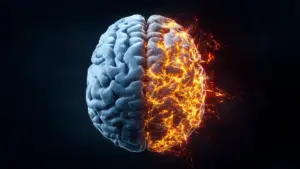
At the heart of their study was the P2X7 receptor. In the context of brain health, this receptor acts as a sort of "alarm" system that helps trigger inflammatory signaling. The team observed that when P2X7 receptors are activated, they promote the release of cytokines—small, powerful proteins that regulate the body’s immune and inflammatory responses. In a healthy brain, this signaling is tightly controlled. However, in the context of disease or injury, this response can become overactive, leading to a cascade of inflammation that causes neuronal damage.
By employing a specific antagonist to block the P2X7 receptor, the researchers found that the inflammatory response in human brain tissue dropped significantly. This finding is critical because it suggests that the inflammatory process is not necessarily an inevitable outcome of brain injury or degeneration, but rather a process that can be interrupted and potentially managed with the right pharmacological tools.
"This exciting discovery marks a major step toward repurposing existing therapeutics to combat neuroinflammation at its source," Professor Barnes noted. "The identification of this receptor could have far-reaching implications for some of the most debilitating and widespread brain disorders such as Alzheimer’s disease, Parkinson’s, and multiple sclerosis, or inflammation-linked psychiatric conditions like schizophrenia and depression."
Studying the Brain’s Immune Cells
A substantial portion of this research focused on microglia, the resident immune cells of the central nervous system. These cells act as the brain’s first line of defense, constantly surveying the environment for threats. When injury or disease occurs, microglia coordinate the brain’s inflammatory response. However, studying these cells has historically been one of the most difficult challenges in neurobiology.
Once removed from the unique chemical and structural environment of the living brain, microglia typically lose their defining characteristics and cease to function as they would in vivo. This rapid decline in viability has long hindered researchers’ ability to conduct high-precision studies on human immune cells. To circumvent this, the Birmingham team developed an innovative method for converting human peripheral monocytes—a type of white blood cell—into cells that closely mimic the behavior of microglia.
This conversion process is particularly compelling because it appears to mirror a cellular transformation that has recently been identified as occurring naturally within the human brain during the aging process. By starting with human peripheral monocytes collected from standard blood samples, the researchers were able to create a scalable, virtually unlimited platform for studying microglial biology.
"Studying human microglia has long been a major challenge: once removed from their native brain environment, they rapidly lose their defining characteristics, likely due to the absence of critical regulatory signals," explained Professor Barnes. "Our approach involved the use of monocyte-derived microglia, which provide a powerful, scalable, and virtually unlimited platform for studying human microglial biology with unprecedented precision."
Using this novel model, the team was able to witness how these cells respond to various inflammatory signals. Most importantly, when the researchers applied the P2X7 receptor antagonist, they were able to directly interfere with the inflammatory signals released by the microglia as the cells underwent stress, damage, or death. This demonstrated that the P2X7 pathway is a central regulator of the inflammatory cascade, regardless of the initial trigger for the cell death.
From Lab Models to Human Brain Tissue
While the development of the monocyte-derived microglia platform provided the initial evidence of the P2X7 receptor’s role, the team recognized that laboratory models are only the first step. To ensure the findings held true in the complex reality of human anatomy, the researchers transitioned their experiments to human brain tissue collected during neurosurgical procedures.
The ability to bridge the gap between lab-grown cells and actual patient tissue is a hallmark of high-impact medical research. The results were consistent: the P2X7 antagonist successfully suppressed the inflammatory response in the human brain tissue slices, mirroring the success seen in the cell cultures. This successful translation from a laboratory model to human tissue is a significant milestone that strengthens the case for moving toward clinical applications.
For conditions like traumatic brain injury, where the initial physical impact is often followed by a secondary, prolonged wave of inflammation that causes the bulk of the long-term cognitive damage, this discovery could be transformative. Similarly, for neurodegenerative diseases, where inflammation is thought to be a constant, low-level engine of destruction, the ability to safely block that engine with existing drugs could fundamentally change the treatment landscape.
The next stage of this research is now being mapped out. The team is looking toward the development of clinical trials, specifically targeting patients with neurodegenerative conditions and those suffering from TBI. These are areas where medical science has long struggled to provide effective pharmacological interventions, leaving patients with limited options to halt the progressive damage caused by neuroinflammation.
"Having identified the response in the human monocyte-derived microglia, this provided the impetus to translate these findings with human brain obtained following neurosurgical procedures," Professor Barnes said. "This successful translation means the next stage for this research is the development of clinical trials in patients with neurodegenerative conditions and patients with TBI, where there are currently no effective pharmacological treatments to reduce the neuroinflammation and the arising damage."
As the scientific community looks to the future, the prospect of repurposing existing medications—drugs that have already undergone safety testing for other purposes—could significantly accelerate the timeline for bringing new treatments to the clinic. By targeting the P2X7 receptor, researchers may finally have a viable strategy to quiet the brain’s inflammatory response, potentially shielding patients from the long-term devastation of some of the most complex conditions in modern medicine. The findings from the University of Birmingham represent not only a scientific achievement in understanding the cellular mechanisms of the brain but also a pragmatic roadmap for future therapeutic intervention.