



When a disaster strikes—whether it is an earthquake shaking the ground, a wildfire choking a region with smoke, or a global health emergency shutting down schools—the immediate physical damage is usually what first captures global attention. However, the psychological aftermath lingers long after the emergency responders leave, deeply affecting the mental health of vulnerable populations. Among those most profoundly impacted are children and adolescents, whose developmental years are frequently disrupted by crises.
Indices and scales are inevitably examined for the mental health and psychological impacts of disasters. Researchers continually look for ways to quantify and understand how young people process trauma, cope with ongoing uncertainty, and bounce back from adversity. A recent effort focusing on secondary school students in Indonesia provides a fresh framework for this kind of evaluation.
A paper by four Indonesian researchers titled “Development and validation of the Student Social Resilience Scale for Disasters (SSRD) among adolescents in disaster-prone areas” was published in the journal BMC Psychology. The study offers a nuanced look at how young people measure their own resilience, blending personal capability with community and environmental support systems.

Detailing the Research
The study’s sample comprised 800 randomly selected secondary school students aged 15 to 18, balanced by gender across Indonesia. These participants were given the newly developed Student Social Resilience Scale for Disasters, which comprises 28 distinct statements. Students had to rank each statement on a Likert scale ranging from 1 to 5, indicating how closely the statements mirrored their personal experiences and beliefs.
The statements were carefully adapted to be relevant for this study’s specific cultural and geographic context and were translated into Indonesian, the official language of the country. Ensuring linguistic and cultural appropriateness is a critical step in psychometric research, preventing misunderstandings that could skew data.
For instance, the scale’s original, general English statement of “My friends stand by me during difficult times” was adapted into Indonesian to mean “My friends are always ready to help and be with me in emergencies.” Similarly, the statement “Spiritual beliefs are a source of strength for me” was tailored to read, “My spiritual beliefs are a source of strength in my daily life and give me the strength to face emergencies.” These subtle shifts help ground abstract concepts of resilience into the tangible realities that teenagers face during crises.
The primary goal of the study was to validate the Student Social Resilience Scale for Disasters, and the authors concluded that they successfully did so. Of particular importance was the process of adapting the original scale for disaster contexts, demonstrating that such modifications are both possible and necessary to ensure that psychological tools remain relevant for specific topics.
An additional, vital aspect confirmed by the research is that resilience in disaster situations is rarely about the individual alone, nor is it dictated solely by the surrounding social situation. Instead, personal traits, community structures, and contextual factors influence students’ disaster resilience in tandem, creating a web of support that dictates how well an adolescent recovers.
Thinking Beyond the Study
While the Indonesian study provides valuable insights, it also opens up broader questions about how modern society defines and categorizes vulnerability. One immediate question is why the study focuses specifically on “disaster-prone areas,” as stated in the title, the abstract, and throughout the paper.
The paper’s location of Indonesia certainly features numerous natural hazards due to its geographic positioning along major tectonic plates and weather corridors. Yet, this situation reflects a broader global truth: in many ways, everywhere is disaster-prone, and disasters happen everywhere.
In fact, the paper uses the term natural disasters without critique, even though Indonesian disaster researchers have long been world leaders in adopting the fundamental axiom from disaster science that disasters are not truly natural. Hazards like earthquakes, heavy rains, and volcanic unrest are natural phenomena, but disasters are largely human-made outcomes driven by exposure, vulnerability, and a lack of preparedness.
From this perspective, any school and any student in the world could be affected by environmental disruptions. This can take many forms, whether it is a volcanic eruption grounding commercial flights across an entire continent—as occurred in Europe in 2010—a severe drought leading to water restrictions across a major metropolitan city, or a distant vegetation fire making it difficult to breathe through thick smoke and particulate matter hundreds of kilometers away.
Furthermore, every school in the world was significantly affected by the COVID-19 pandemic from 2020 through 2023, along with the extensive public health measures implemented to manage it. Examples included the prolonged closure of schools and recreational facilities, as well as students and staff isolating for days when they contracted the virus. A study published last year in the journal Current Psychiatry Reports by two American authors, E. Felix and J.G. Green, detailed the profound mental health impacts experienced by United States students returning to the classroom after COVID-19-related closures.
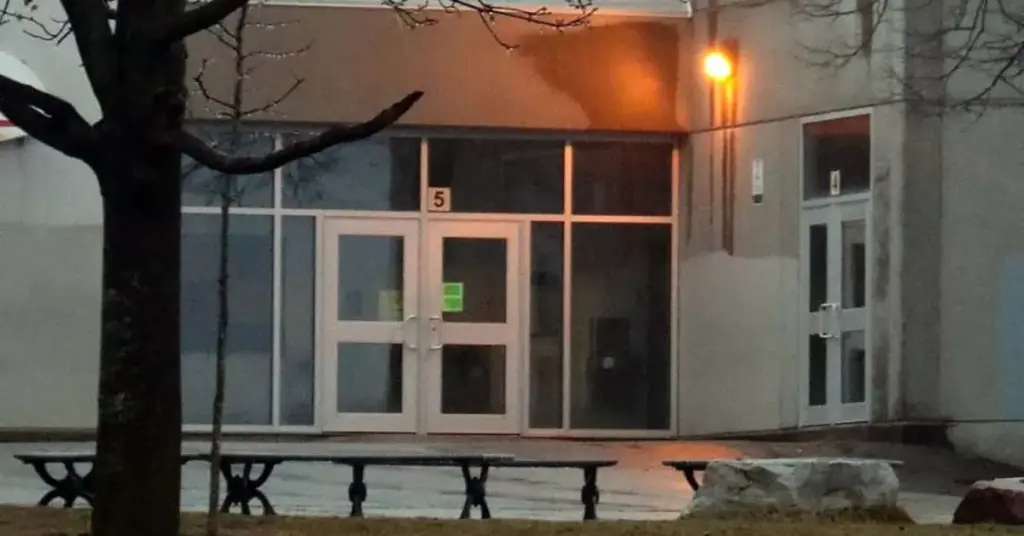
The fundamental disaster-proneness of all schools is also tragically demonstrated by acts of violence. Recent years have seen massacres in schools located in places as diverse as the rural town of Tumbler Ridge in British Columbia, Canada, and the capital city of Thailand, Bangkok. Today, no place seems entirely immune from this form of devastating human-made disaster.
Beyond the geographic and contextual definitions of disasters, researchers must also grapple with the methodological tools they use. Likert scales certainly have their place in psychological research, but their known limitations must be acknowledged and actively overcome. Long-documented difficulties associated with Likert scales include questions regarding the reliability and consistency of respondents over time, alongside technical limitations of many statistical procedures in handling ordinal data.
Cultural biases can also quietly intrude upon survey results. An implicit structural assumption in any standard Likert scale is that the psychological distance is precisely the same between each choice on the scale. However, different individuals and different cultures might view the distances between each number differently, depending on how the central option—often presumed to be neutral—is weighed in comparison to more absolute options at the outer ends, such as 1 and 5.
Lessons From the Study
Despite these inherent challenges, no single study can cover every aspect of a complex psychological phenomenon, and the Indonesian paper provides important lessons that can be applied far beyond its immediate geographic borders. The value of the research lies not just in the numerical data it generated, but equally in the thoughtful process of collecting that data.
First, the authors make an excellent point by pushing back against research that examines only individual traits or only community aspects of resilience. No matter how “resilience” is formally defined, the power of the scale used in this study is that it successfully bridges these two realms, contextualizing the individual within their broader social environment.
Second, the detail and specificity of the 28 statements ensure that student respondents are prompted to actively consider the issues being mentioned. Whether or not respondents tick the boxes consistently or robustly across every metric, simply asking teenagers to contemplate statements such as “I am always open with my family or caregivers about my feelings and concerns” means they are encouraged to reflect on their own communication habits. They might begin to look at practical ways to better express their feelings and concerns with their family or caregivers, potentially fostering greater openness in their daily lives.
Ultimately, resilience is not merely a numerical score determined by the quick completion of a survey. It is an ongoing, dynamic process that brings together individuals, the people surrounding them, and their intersecting social and environmental contexts—precisely the reality that this latest research captures and reinforces.