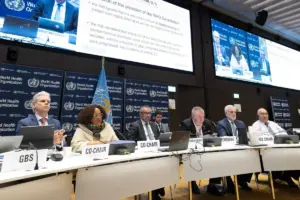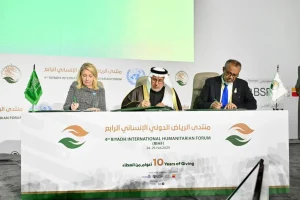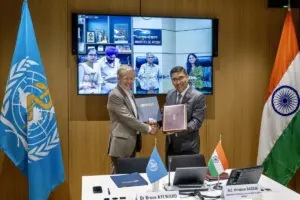



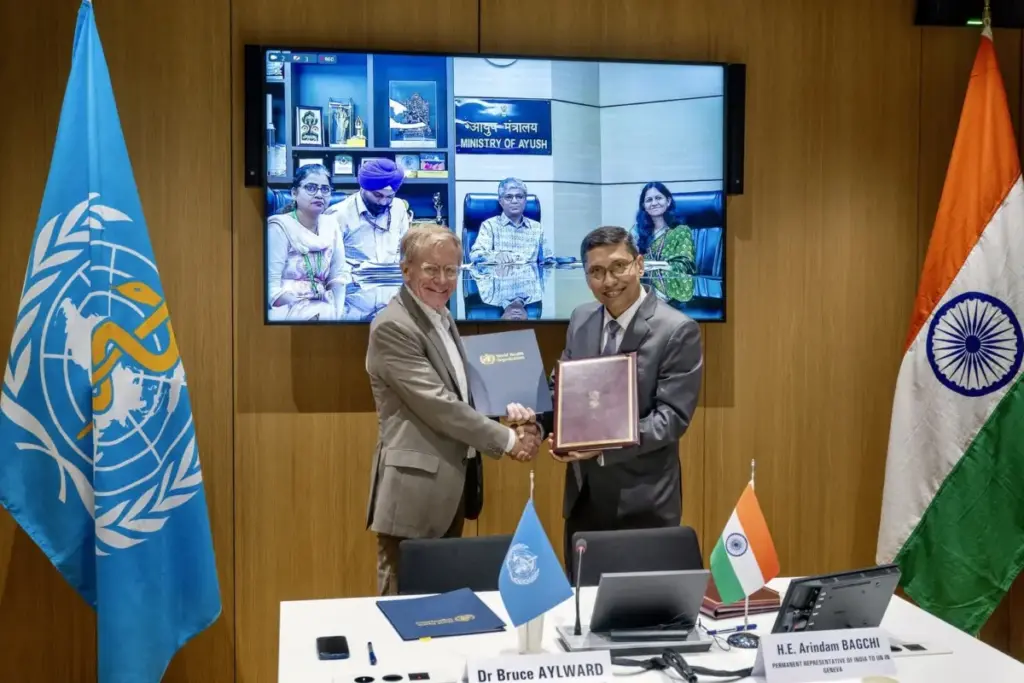
In a significant move to bridge the gap between ancient healing wisdom and modern medical science, the Government of India has formally pledged US$ 85 million to support the World Health Organization’s (WHO) Global Traditional Medicine Centre. The commitment, spanning a decade from 2022 to 2032, was solidified at a signing ceremony in Geneva, marking a pivotal moment in the global effort to integrate traditional practices into mainstream healthcare systems. This substantial financial infusion is designed to catalyze a cross-sectoral program of work aimed at strengthening the evidence base for traditional medicine, ultimately providing policymakers and practitioners with the robust data needed to ensure public safety, efficacy, and accountability in traditional medicine use.
For billions of people across the globe, traditional medicine is not merely an alternative; it is the primary source of health and well-being. From herbal remedies and acupuncture to holistic therapeutic practices, these systems are deeply embedded in the cultural fabric and daily lives of communities worldwide. By formalizing support for the WHO Global Traditional Medicine Centre, India is positioning itself as a leader in a burgeoning global movement that seeks to reconcile these age-old practices with the rigorous, evidence-based requirements of 21st-century medicine. The funding will specifically target the development of comprehensive policies, standardized practices, quality-assured products, and the monitoring of public use, creating a cohesive framework that allows countries to harness the potential of traditional medicine safely and effectively.
This US$ 85 million contribution is part of a broader, landmark US$ 250 million investment from the Government of India, initiated in 2022 to establish the WHO Global Centre of Traditional Medicine in Jamnagar, India. This larger investment has already facilitated the creation of the Centre’s interim premises and provided the capital necessary for the construction of a new, permanent facility. Beyond the bricks and mortar of the Jamnagar hub, the investment is designed to scale up the WHO’s internal capacity, enabling its various technical divisions and regional offices to collaborate more effectively. By fostering this spirit of global solidarity, the initiative ensures that traditional medicine is not treated as a siloed interest, but as an integral component of the WHO’s overarching mission to achieve health for all. Furthermore, a portion of this funding is earmarked for the WHO’s Investment Round, supporting the organization’s core operational work through the 2025–2028 period.
Dr. Bruce Aylward, Assistant Director-General of the Universal Health Coverage and Life Course division at the WHO, lauded the development as a timely intervention. "India’s commitment and leadership in expanding the evidence-based contribution of traditional medicine to the health and well-being of all people and the planet comes at an opportune moment," Dr. Aylward stated during the ceremony. He emphasized that traditional medicine, when properly integrated into national health systems, serves as a vital tool for reaching marginalized populations who often lack access to conventional medical care. "Integration of traditional practice and knowledge is critical to achieving health for all," he added, underscoring the potential for these systems to act as a bridge toward universal health coverage.
The sentiment was echoed by high-ranking Indian officials, who viewed the signing of the agreement as the fruition of a long-standing collaborative vision. Vice Minister Vaidya Rajesh Kotecha, Secretary of the Ministry of Ayush, described the agreement as a "major milestone" toward achieving the shared objectives set forth by India’s Prime Minister, Shri Narendra Modi, and WHO Director-General Dr. Tedros Adhanom Ghebreyesus. The establishment of the Jamnagar Centre is seen as the realization of a strategic goal to provide a focal point for international cooperation on traditional medicine, ensuring that the benefits of this research are shared equitably among all WHO Member States.
Ambassador Arindam Bagchi, Permanent Representative of India to the UN and other International Organizations in Geneva, reaffirmed India’s long-term dedication to the project. "India remains committed to supporting WHO in its work to strengthen traditional medicine systems globally for achieving universal health coverage and serving the entire humanity, especially through this Global Centre in Jamnagar," Ambassador Bagchi noted. He stressed that the Centre is designed to benefit all nations, acting as a collaborative engine that brings together diverse stakeholders to improve health outcomes on a global scale.
The WHO Global Traditional Medicine Centre, currently led by Director a.i. Dr. Shyama Kuruvilla, operates as a sophisticated knowledge hub. Its mandate is organized around five interconnected pillars: research and evidence-based clinical validation; the integration of traditional medicine into primary health care and universal health coverage frameworks; the protection and exploration of Indigenous knowledge and biodiversity; the application of digital health technologies to traditional practices; and the facilitation of international collaboration, notably through the biennial WHO Global Traditional Medicine Summit.
The impact of this collaborative effort has already begun to manifest. In August 2023, the inaugural WHO Global Traditional Medicine Summit took place in Gujarat, India. The summit was a watershed event, resulting in the "Gujarat Declaration," a landmark multistakeholder action agenda that sets the roadmap for the future of the field. Building on this momentum, the international community is already looking toward the next summit, scheduled for November 2025. This event is expected to follow the highly anticipated launch of the 2025–2034 Global Strategy for Traditional Medicine, which is slated for presentation at the 78th World Health Assembly in May 2025.
India’s support for this initiative is not a recent development but rather the culmination of years of partnership with the WHO. In 2023, India signed a significant five-year agreement to bolster the technical work of the WHO’s Traditional, Complementary and Integrative Medicine (TCI) unit. This unit serves as the backbone for much of the organization’s regulatory and technical guidance. Currently, the TCI unit is working closely with Member States to develop the new 2025–2034 global strategy, ensuring that it addresses the real-world needs of health systems globally. Through its publications, the TCI unit provides essential benchmark documents and standardized terminologies, which are critical for clinicians and policymakers looking to incorporate traditional medicine into national health strategies without compromising on safety or quality.
The synergy between the Jamnagar-based Centre and the TCI unit is central to the "One WHO" approach. By coordinating closely across headquarters, regional, and country offices, these teams work to ensure that the multisectoral agenda on traditional medicine is cohesive and effective. A cornerstone of this coordination is the regular meeting of the WHO Technical Expert Network, which facilitates the exchange of high-level knowledge, research findings, and policy insights.
As the world continues to face complex health challenges, the integration of traditional, complementary, and integrative medicine into the global health landscape represents a shift toward more inclusive and holistic care. With the sustained financial support and strategic partnership provided by the Government of India, the WHO is well-positioned to lead this transition. By focusing on scientific rigor and evidence-based integration, the Global Traditional Medicine Centre aims to ensure that the wisdom of the past can effectively inform the medical practices of the future, ultimately enhancing the lives of billions and contributing to a more resilient and equitable global health system. The coming decade, defined by the implementation of the new global strategy and the expansion of the Jamnagar facility’s work, will be critical in determining the long-term role of traditional medicine in achieving the ultimate goal of health for all.