







Two individuals diagnosed with clinical depression may share the same medical label, yet their lived experiences can exist on opposite ends of the psychological spectrum. One person might find themselves trapped in a cycle of persistent, racing thoughts and paralyzing anxiety, while another may grapple with the lingering shadows of past trauma or the complexities of substance abuse. For decades, clinicians and researchers have wrestled with this clinical heterogeneity, asking a fundamental question: Do these vastly different symptom profiles reflect underlying differences in how the brain functions?
A groundbreaking study led by researchers at the University of Helsinki has finally provided a compelling answer. The investigation, which analyzed the neural architecture of hundreds of participants, uncovered a striking reality: depression is not a singular, monolithic biological condition. Instead, individuals receiving the same diagnosis may exhibit dramatically different patterns of brain activity, with some showing hyper-connectivity between regions while others display a marked reduction in functional communication.
The Scope of the Challenge
Depression stands as one of the most significant public health challenges of the modern era. According to data from the World Health Organization (2025), approximately 332 million adults—or roughly 5.2% of the global adult population—are currently living with the condition. In Finland, the impact is particularly acute, as depression serves as the leading individual cause for both extended sick leave and the granting of disability pensions.

Despite its prevalence, the biological "signature" of depression has remained elusive. This diagnostic ambiguity has long hindered the development of personalized medicine. When a patient enters a clinic, the current standard of care often involves a trial-and-error approach to medication and psychotherapy. Because the biological drivers of a patient’s symptoms are often unknown, finding the right intervention can be a lengthy, frustrating, and often ineffective process. The Helsinki team’s findings suggest that the reason for this diagnostic difficulty lies in the fact that we have been looking for a single answer to a multifaceted biological problem.
Identifying the Five Profiles
To peel back the layers of this complexity, the research team conducted a large-scale study involving 263 participants diagnosed with major depressive disorder, alongside a control group of 75 healthy individuals. By utilizing advanced neuroimaging, the researchers examined "functional connectivity"—a measure of how closely the activity in different brain regions is synchronized.
The analysis revealed five distinct, recurring clusters of brain activity. These clusters were defined by how brain networks coordinate and at what frequencies they communicate. Crucially, the researchers found that these neurological patterns were not random; they were intrinsically linked to the specific symptoms that patients reported.
The first group identified by the researchers exhibited relatively strong connectivity between various brain regions. This physiological profile was associated with a cluster of severe symptoms, including intense depression, chronic anxiety, and a debilitating tendency toward rumination—the repetitive, intrusive dwelling on negative thoughts or past distress. These individuals also reported a significantly reduced ability to function in their day-to-day lives.
In stark contrast, the second group displayed a pattern characterized by weak communication between brain regions. Perhaps counterintuitively, this group reported the mildest symptom profiles of the five, suggesting that, in the context of depression, "weaker" connectivity does not necessarily correlate with the most severe clinical outcomes.
The third group demonstrated a more widespread pattern of reduced connectivity across substantial portions of the brain. This group was marked by a high prevalence of symptoms associated with post-traumatic stress disorder (PTSD), suggesting that trauma may fundamentally alter brain network efficiency in a way that differs from standard major depressive disorder.
The fourth group presented a complex, mixed profile. These individuals showed a combination of unusually strong connections in some neural pathways alongside weaker connections in others. This heterogeneity was associated with a particularly difficult set of challenges, including more severe depressive episodes, higher rates of substance abuse, and lower overall psychological well-being.
Finally, the fifth group showed the most intense connectivity of all—the strongest synchronization between brain regions observed in the study. In this cohort, substance abuse was a prominent issue, while symptoms related to trauma were notably less pronounced than in other groups.
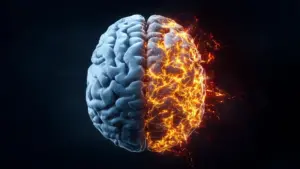
"What was particularly interesting was the contrasting patterns of brain activity found under the umbrella of the same depression diagnoses," says Director Satu Palva of the Neuroscience Center at the University of Helsinki. "In some individuals, the functional connectivity between brain regions was stronger than usual, while in others it was weaker."
Precision Measurement: The Role of MEG
To capture these subtle, rapid neural changes, the research team utilized magnetoencephalography (MEG). This sophisticated imaging technique detects the faint magnetic fields generated by the brain’s electrical activity. Unlike functional magnetic resonance imaging (fMRI), which tracks slower, blood-oxygen-level-dependent changes, MEG provides millisecond-level precision.
Because the brain communicates through rapid electrical pulses, this temporal resolution is essential for understanding how networks coordinate. As Director Palva notes, "MEG enabled us to monitor electrical brain activity with millisecond precision, helping us get closer to what actually happens in the brain at any given moment. Previously, depression phenotypes have been studied using methods with slower responses."
By focusing on these high-speed signals, the researchers were able to identify not only the strength of the connectivity between regions but also the specific frequencies at which these regions synchronized. This allowed the team to move beyond superficial observations and understand the rhythmic, dynamic nature of the communication between different parts of the brain. The discovery that these patterns varied so significantly—sometimes in diametrically opposite directions—between individuals sharing the same diagnosis provides a compelling explanation for why previous neurological studies on depression have often yielded conflicting results. When researchers pool patients into a single "depression" category, they may be inadvertently mixing different biological subtypes, masking the underlying signals.
Toward a Future of Personalized Psychiatry
The potential implications for clinical practice are profound. While the study is not yet at a stage where a doctor can perform a brain scan to immediately prescribe a specific treatment, it provides a crucial roadmap for the future of mental health care.
The current landscape of psychiatric treatment is often defined by a "one-size-fits-all" approach to the diagnostic label. If researchers can eventually correlate these five brain profiles with specific responses to medication or talk therapy, it could transform depression from a trial-and-error process into a precision medical discipline. By identifying the specific biological signature of a patient’s depression, clinicians might one day be able to predict which therapies will be most effective, sparing patients the months or years of struggling with ineffective treatments.
However, the researchers remain cautious. "We’re not yet at the point where brain measurements can be used to choose the right treatment for patients, but the study does show one possible route," Palva emphasizes.
The long-term goal of this research is to bridge the gap between biological data and the lived, human experience. By mapping specific symptoms—like the intrusive thoughts of rumination or the hyper-vigilance of PTSD—to distinct network behaviors, the scientific community may finally be able to move past the broad, often confusing, diagnostic categories that have defined mental health for decades.
As this work continues, the focus will remain on refining these profiles and understanding their stability over time. For now, the findings from the University of Helsinki, conducted in collaboration with Aalto University and the Helsinki and Uusimaa Hospital District (HUS), offer a new, more nuanced lens through which to view depression. Rather than seeing it as a singular, uniform illness, these five profiles suggest that depression is a deeply personal biological experience, characterized by diverse, and sometimes opposing, changes in the architecture of the human brain.