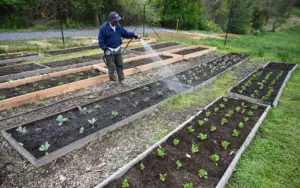





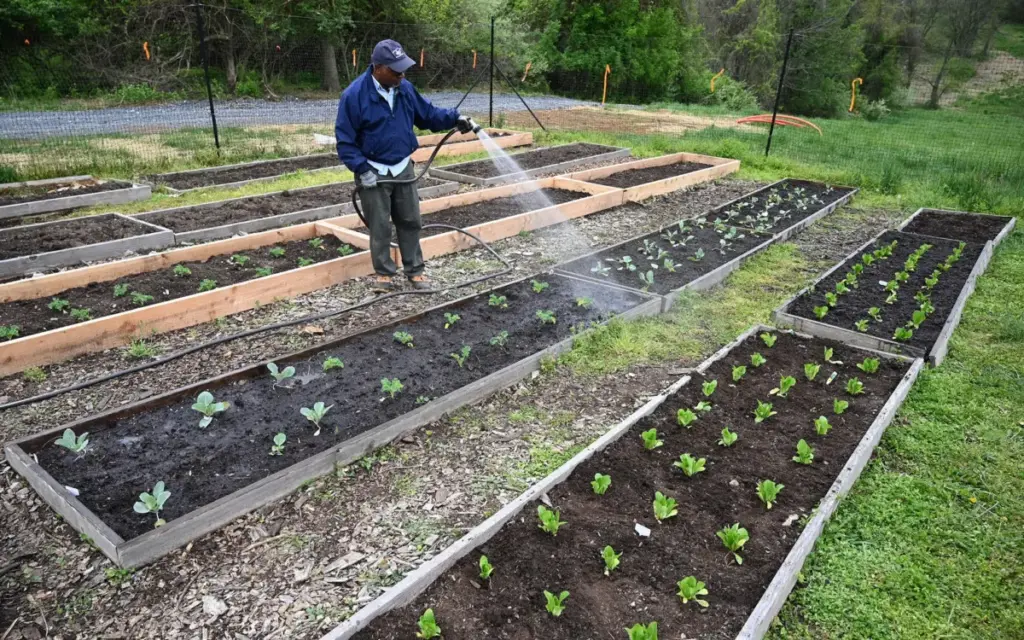
BALTIMORE — Amid the rows of lush green vegetables and carefully tended soil at the Community Action Council of Howard County’s community garden just outside Baltimore, the simple act of watering raised beds represents a vital lifeline for the local community. Here, dedicated workers like Whitney LeBlanc cultivate fresh produce that directly supports the Howard County Food Bank, ensuring that neighbors in need have access to healthy, locally grown food. Yet, for millions of Americans, spaces like these have long remained out of reach due to physical and architectural barriers.
Now, federal officials are moving ahead with a significant new effort to change that reality, aiming to make community gardens across the country fundamentally more accessible to people with disabilities and older adults.
The U.S. Department of Health and Human Services, through its Administration for Community Living, has officially announced the selection of 70 winning teams for its newly established Cultivating Connected Communities Prize Challenge. This nationwide competition was designed to solicit and reward innovative, community-driven ideas aimed at removing the physical, social, and structural hurdles that prevent individuals with intellectual and developmental disabilities, those living with paralysis and other physical disabilities, and older Americans from fully participating in community gardening.
The grassroots response to the challenge highlights a nationwide hunger for inclusivity in public green spaces. Winning teams submitted a diverse array of thoughtful proposals detailing practical alterations and programmatic adjustments. According to HHS officials, the winning concepts include critical structural modifications such as adjustments to raised garden bed heights to accommodate wheelchair users and individuals with limited mobility. Other proposals focus on the introduction of specialized, adaptive gardening tools designed for individuals with varying degrees of physical dexterity, as well as comprehensive community inclusion programs intended to welcome participants of all ability levels into the daily rhythm of garden life.
The initiative underscores a growing recognition of the profound physical, mental, and social benefits that community gardening provides, and the fundamental injustice of leaving certain segments of the population behind.
"Every American should have the opportunity to grow real food, spend time outdoors and participate in a healthy community," said HHS Secretary Robert F. Kennedy, Jr., addressing the importance of the new federal push. "These teams are removing barriers that keep older adults and people with disabilities from taking part in community gardens. By making these spaces more accessible, they are expanding access to nutritious food, healthy activity and the community connections that help people live healthier lives."
The Cultivating Connected Communities Prize Challenge is structured to provide both immediate recognition and sustained financial backing to help bring these local visions to life. The winning teams chosen during Phase 1 of the competition will each receive an initial award of $4,000. Following this initial seed funding, these teams become fully eligible to advance to Phase 2 of the challenge. In this next stage, participants will have the opportunity to actively execute their proposed accessibility plans on the ground. Depending on the successful implementation and measurable results of their projects, these teams can earn an additional $8,000 in prize funding to further sustain and expand their inclusive gardening initiatives.
This federal undertaking does not exist in a vacuum; it is part of a broader, coordinated interagency strategy. The Cultivating Connected Communities Prize Challenge operates as a key component of the U.S. Department of Agriculture’s well-established initiative known as The People’s Garden. This overarching federal program serves to connect community gardens of all shapes and sizes across the United States, promoting local agriculture, environmental stewardship, and community resilience. By aligning the accessibility goals of the Administration for Community Living with the agricultural reach of the Department of Agriculture, the federal government is embedding inclusivity directly into the fabric of the nation’s community green spaces.
As the 70 winning teams prepare to move into Phase 2 of the challenge and begin transforming their local spaces, the initiative offers a promising model for how federal support can catalyze grassroots innovation. From community plots outside Baltimore to gardens in every corner of the nation, the effort promises to open up the joys of cultivation, outdoor recreation, and community fellowship to populations that have historically been overlooked in the planning and design of public agricultural spaces.