









In a significant advancement in neuroscience, researchers at Northwestern University have identified a specific population of brain cells that appears to be the primary driver of anxiety triggered by cannabinoid drugs. The study, which sheds light on the biological underpinnings of why cannabis can sometimes exacerbate fear, suggests that these neurons are particularly sensitive to the interplay between cannabinoid intake and external stress.
The findings, published on October 2 in the journal Nature Communications, provide a clearer picture of how substances like THC—the main psychoactive component of cannabis—interact with the brain’s fear-processing centers. By pinpointing these cells, the researchers have opened a new door for understanding the neurobiology of anxiety, potentially offering a target for future therapeutic interventions.
Tracking the Brain During a Threat
To investigate the complex relationship between cannabinoids and emotional states, the research team, led by Dr. Sachin Patel, chair of psychiatry and behavioral sciences at the Northwestern University Feinberg School of Medicine, turned to a controlled laboratory model using mice. The goal was to simulate the conditions under which a user might experience a "bad trip"—a scenario where the intoxicating effects of a substance are amplified by an environment perceived as threatening.

The researchers exposed mice to the scent of fox urine, a natural predator odor known to elicit an immediate fear response in rodents. Before the exposure, one group of mice was administered a synthetic cannabinoid, while a control group received a placebo.
The behavioral results were distinct: mice that had been given the cannabinoid showed significantly higher levels of fear-based behaviors. They froze more frequently when encountering the scent and spent considerably less time exploring their surroundings compared to the control group. To understand what was happening inside the brains of these animals during the encounter, the team employed advanced imaging techniques, implanting miniature microscopes into the mice’s brains to monitor real-time neural activity.
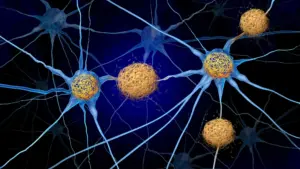
The data revealed that the increased anxiety was linked to a specific population of cells known as somatostatin neurons located in the central amygdala. The central amygdala is a region long associated with the processing of fear, stress, and emotional regulation.
Unlocking the "Brake" on Anxiety
The team’s investigation went deeper than surface-level observation. By analyzing brain tissue, the researchers sought to understand how cannabinoids altered the communication between neurons. They discovered that cannabinoids effectively weaken a natural regulatory mechanism within the brain—a biological "brake" that typically keeps somatostatin neurons in check.
Under normal circumstances, this mechanism prevents these neurons from becoming overactive. However, when cannabinoids are introduced, this restraint is diminished. As the brake is released, the somatostatin neurons fire more aggressively, leading to an exaggerated fear response.
"Higher doses of cannabinoids and environmental stress worked together to synergistically release the ‘brake’ on the central amygdala, which in turn drove excessive anxiety," Dr. Patel explained.
To confirm the role of these specific cells, the researchers used genetic silencing techniques to deactivate the somatostatin neurons in the test subjects. When these neurons were inhibited, the mice that had received the cannabinoid showed a marked reduction in their fear response, behaving more like the control group despite the presence of the predator odor. This causal link strongly suggests that these neurons are not just associated with the anxiety, but are active agents in producing the physiological and behavioral response to stress when cannabinoids are present.
Why Cannabis and Anxiety Matter
The timing of this research is particularly relevant as cannabis usage rates in the United States continue to climb. Alongside increased consumption, healthcare providers have observed a rising number of emergency department visits linked to adverse psychological effects from the drug, including acute anxiety and panic attacks. While cannabis is often sought out for its relaxing properties, the reality of its effects is highly variable and dependent on both the individual and the context in which it is consumed.
"The results of this study could explain why a good trip can turn bad pretty quickly if people consume too much cannabis or the situation they are in turns stressful or scary," Dr. Patel noted.
The findings align with a broader body of literature that has historically identified a complex, often bidirectional, association between cannabis use and long-term risks for anxiety and mood disorders. With these conditions on the rise globally, the medical community has been under pressure to better understand the mechanisms that lead to negative psychological outcomes.
Beyond the specific context of cannabis use, the discovery of this neural pathway has wider implications for the field of psychiatry. The team believes that because these somatostatin neurons in the central amygdala are central to how the brain processes threat, they could represent a fundamental target for addressing anxiety disorders in general.
"Suppressing the activity of somatostatin neurons in the central amygdala could represent a final pathway for reducing anxiety symptoms, not just in the context of cannabis side effects," Dr. Patel explained. By identifying this "final pathway," researchers hope to eventually develop more precise, pharmacological approaches to anxiety that do not rely on systemic sedatives, which often come with unwanted side effects.
"Understanding how cannabis affects brain function to generate its psychoactive effects could ultimately reveal new ways to counteract negative consequences should they arise in some people," he added.
Collaborative Research and Future Directions
The study, titled "Cannabinoid Modulation of Central Amygdala Population Dynamics During Threat Investigation," represents a collaborative effort among several researchers at Northwestern. In addition to Dr. Patel, co-authors included Farhana Yasmin, Saptarnab Naskar, Danyal Zaidi, Isaac Kandil, Michelle Kwon, and Dr. Luis Rosas-Vidal.
The research was supported by significant funding from the National Institutes of Health, specifically through grants MH100785 and K08 MH126166, as well as the Brain & Behavior Research Foundation’s Young Investigator Awards.
As the scientific community continues to grapple with the multifaceted effects of cannabis on the human brain, this study provides a crucial biological framework. By moving from behavioral observation to specific cellular manipulation, the Northwestern team has provided a foundational insight into how the brain balances the effects of exogenous substances with the necessity of responding to environmental threats. Future research will likely focus on whether these pathways can be safely modulated in humans to help those suffering from debilitating anxiety, potentially turning a discovery about a "bad trip" into a new avenue for clinical relief.