








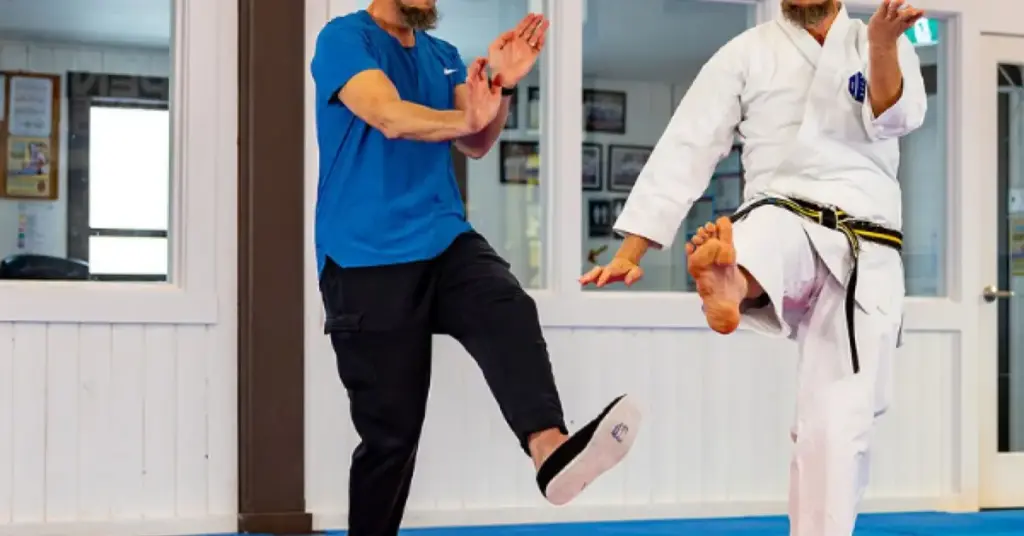
The debate has raged in dojos, living rooms, and pop-culture phenomena for decades: Is martial arts strictly for defense, or is there merit to striking first? On one side of the cultural spectrum stands Mr. Miyagi from The Karate Kid, famously instructing Daniel-san that "Karate is for defense only." On the other side sits the aggressive, unapologetic ethos of the Cobra Kai dojo, which famously advises students to "strike first, strike hard, and show no mercy."
Mr. Miyagi’s instruction appears to echo an ancient principle embedded deep within traditional Okinawan and Japanese martial arts: karate ni sente nashi, meaning "there is no first attack" in karate. Yet, as practitioners, scientists, and martial arts historians unpack the realities of physical altercations, the rigid dichotomy between pure defense and preemptive offense begins to blur. Which philosophy is actually correct when human safety is on the line?
To answer that question, experts must look past cinematic tropes and examine the true mechanics of conflict, human physiology, and the psychological states that govern physical confrontations.

Making Sense of Defense
At its core, the foundation of many traditional martial arts is self-protection across all possible scenarios. Maintaining situational awareness is paramount. When a threat unfolds, the fundamental goal is to get out of the way by moving forward and stepping off the direct line of attack from an opponent, thereby placing oneself in a secure position to respond.
In the earliest stages of martial training, stopping an immediate threat may require targeting vulnerable, high-impact areas—such as a strike to the throat—simply because a practitioner’s technical proficiency is not yet refined enough to neutralize danger otherwise. As training progresses to intermediate stages, the focus shifts toward targeting areas designed to incapacitate, such as kicking the knee to compromise ligaments, which creates a vital opening to escape. At the highest level of mastery, when a physical exchange is entirely unavoidable, the objective becomes total evasion: dodging and avoiding all incoming attacks to ensure a safe escape.
Many martial arts scholars prefer the concept of "self-protection" over "self-defense." Self-protection involves proactive engagement, whereas self-defense implies a passive posture—waiting to be attacked before mounting a response. Traditional defense often encourages backing away while attempting to counterattack on the move. However, if an individual is genuinely under a severe threat, relying solely on defense permits an aggressor to sustain repeated, unchecked attacks. In essence, traditional self-defense acts merely as a shield, while a proactive approach rooted in self-protection provides a spear.
Martial arts traditions recognize three distinct psychological and physiological states that characterize physical encounters between an opponent and a defender: counterattacking, attacking while being attacked, and executing a preemptive attack. Interestingly, these categories scale directly in order of technical difficulty, but the concept of an "attack" remains present in all three. The primary variable that shifts across these states is timing.
Counterattacking involves responding to an adversary only after receiving, intercepting, or blocking their incoming strike. The temporal dynamic in this scenario typically looks like an attack met by a block, followed by a secondary counter-action.
Attacking while being attacked occurs when a defender detects an unfolding threat and launches an immediate response simultaneously with the opponent’s incoming strike.
Finally, a preemptive attack involves taking decisive action the moment an opponent’s intent to strike is perceived, but just before the physical blow is actually delivered. This requires sharp perception of subtle physiological cues, such as shifts in body angles, visual gaze, breathing patterns, and weight distribution.
While the ultimate ideal in martial arts is to perceive an imminent threat early enough to take preventative action and avoid the physical scenario altogether, real-world constraints frequently make total avoidance impossible.
Not the First to Strike, But the First to Hit
When an individual adopts an attack-oriented mindset for self-protection, they may successfully neutralize an adversary, but the tactical advantage is clear: it becomes mathematically and physically harder for the opponent to mount a successful offense against someone who has already seized the initiative.
At the same time, real-world confrontations do not always require violence, and there are many scenarios where a practitioner has no desire to hit, hurt, or harm another person. Consider situations involving a friend, colleague, or family member whose cognitive capacity or behavioral control has been severely altered by alcohol, drugs, or medical conditions such as dementia. In these delicate circumstances, the goal is to safely manage and de-escalate violence without resorting to strikes.
An individual does not necessarily have to hit someone, but they are equally not required to absorb blows themselves. Attack-oriented, tactical body movement does not automatically mandate physical strikes; rather, it preserves personal safety and places the defender in an advantageous spatial position where multiple non-violent options remain available.
Fist Comes From the Heart
To reconcile these tactical realities with traditional ethics, some modern martial artists revise the aggressive Cobra Kai mantra to "strike first, strike fast, show mercy." This refined perspective aligns closely with the classical Wing Chun expression that "the fist comes from the heart."
This traditional saying carries two profound meanings. First, it dictates that a practitioner must occupy the centerline and engage an opponent directly. Second, it establishes that any physical attack must be deployed with a singular purpose: to halt aggression and restore safety. Practitioners learn to neutralize threats with compassion, causing harm only when absolute necessity dictates it.
Crucially, these defensive responses must be executed dispassionately—delivered deliberately and entirely devoid of personal anger. As Miyagi Chojun, the historical founder of Goju-ryu karate who lived from 1888 to 1953, famously observed: "When anger rises the fists must lower, when you raise your fists you must lower your anger."
While cinematic depictions take artistic liberties, the core wisdom of the screen often reflects martial reality. The best way to avoid a punch is indeed to "not be there." Yet, when life leaves no choice and an individual has no option other than to stand their ground, taking the initiative becomes mandatory. When the only way out of a crisis is directly through it, a well-timed and decisive offense truly serves as the most effective defense.