





Occupational therapists have long recognized that human function does not happen in a vacuum. Daily routines, work performance, self-care, and overall well-being are deeply influenced by the people, environments, and social structures surrounding an individual. To better capture these complex dynamics, a growing movement within the profession is turning toward a visual graphic organizer traditionally used in social work: the eco map.
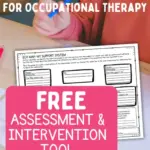
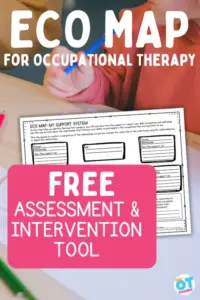
While relationship mapping is a staple in fields like social work, its deliberate application within occupational therapy has historically been less structured. Practitioners often evaluate social factors during routine assessments, but actively mapping out how specific relationships impact a client’s functional performance is rarely integrated into standard treatment protocols. To bridge this gap, new resources—such as specialized eco map worksheets tailored specifically for occupational therapy—are being introduced to help therapists examine both client networks and professional burnout.
Relationships influence nearly every aspect of daily life, acting as catalysts for success or sources of friction that hinder participation. The people around an individual can provide emotional encouragement, create opportunities for social engagement, assist with daily chores, or introduce challenges that complicate everyday tasks. By mapping these connections, occupational therapists can gain a comprehensive snapshot of a person’s support network and environmental factors, aligning closely with the principles outlined in the Occupational Therapy Practice Framework, Fourth Edition (OTPF-4).
Understanding the Eco Map Framework
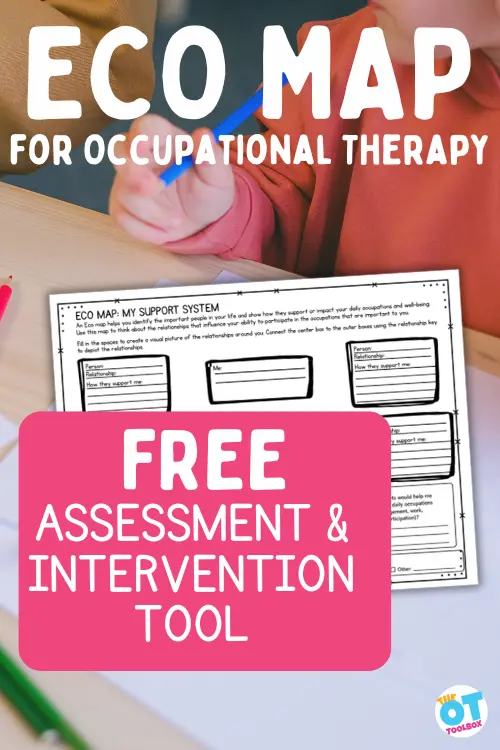
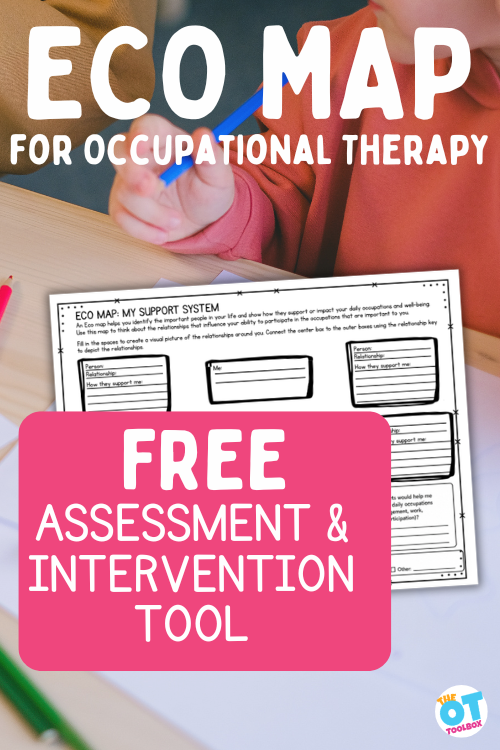
An eco map functions much like a mind map, placing the individual squarely in the center while radiating outward to identify key people, groups, organizations, and support systems that play a role in everyday routines. Unlike a traditional family tree or genogram, which focuses on genealogical history, an eco map hones in on current relationships and how those connections directly affect participation, health, and daily functioning.
The tool provides a clear visual representation of supportive versus stressful connections, helping therapists and clients alike recognize resources that can strengthen occupational engagement. According to the OTPF-4, supports and relationships are classified as critical environmental factors that significantly influence performance and participation within the physical, social, and attitudinal contexts of a person’s life.
Beyond clinical applications with pediatric, adolescent, adult, and geriatric clients, practitioners are increasingly turning these mapping tools inward. By evaluating their own professional support systems, occupational therapists can utilize eco maps to identify supportive relationships and proactively target professional burnout.
Social Participation and Daily Functioning
The OTPF-4 explicitly identifies social participation as a primary occupation, encompassing interactions with family members, friends, peers, coworkers, community members, and various social groups. These occupations play a critical role in overall health and quality of life, yet they are frequently overlooked during standard functional evaluations. The ability to establish, maintain, and navigate relationships directly dictates success in educational settings, work environments, leisure activities, self-care routines, and emotional well-being.
Many individuals rely extensively on external support systems to successfully execute Activities of Daily Living (ADLs) and Instrumental Activities of Daily Living (IADLs). For instance, an older adult may depend on adult children for essential transportation to medical appointments, while a teenager might rely on caregivers to establish structured routines that foster independence. Similarly, a college student navigating a new environment often leans heavily on peer support networks while acquiring independent living skills.
Work performance is another domain heavily influenced by social and environmental structures. Success in vocational tasks often relies on robust social interaction skills, effective communication, collaborative problem-solving, and ongoing support from colleagues or supervisors. By utilizing an eco map within a work-related context, individuals and therapists can pinpoint specific relational dynamics that either enhance job satisfaction and productivity or contribute to occupational stress and burnout.
Screening for Strengths and Areas of Need
Although an eco map is not a standardized psychometric assessment, it serves as an invaluable screening and discussion tool within occupational therapy sessions. As clients complete the visual maps, therapists can observe behavioral patterns and structural gaps that might otherwise go unnoticed. For example, some individuals display remarkably strong family support systems but suffer from a total lack of community involvement. Conversely, others maintain extensive social circles while lacking practical, hands-on support for everyday tasks.
These visual patterns quickly emerge to guide intervention planning and goal development. Therapists begin by placing the client’s name in the center circle before mapping out surrounding categories, including immediate and extended family, friends and peers, school and work supports, healthcare and service providers, community organizations, and online support networks. For each identified relationship, the individual records the nature and quality of the interaction, noting whether it acts as a functional facilitator or a barrier to participation.
To deepen this insight, therapists utilize reflection questions designed specifically around occupational performance. Rather than focusing purely on emotional ties, these discussions explore how specific relationships impact a client’s ability to cook, work, attend school, or manage self-care routines. These targeted conversations frequently reveal intervention opportunities that standard assessments miss.
Broadening the Scope of Client-Centered Care
The integration of eco maps into occupational therapy underscores the profession’s foundational belief that meaningful occupation cannot occur in isolation. People engage in daily life within rich environments defined by interpersonal relationships, social expectations, and institutional systems.
By systematically exploring these connections through structured visual mapping, therapists and clients can collaborate more effectively to identify strengths, dismantle environmental barriers, and build clearer pathways toward meaningful participation. Whether the ultimate clinical goal is increased personal independence, enhanced social engagement, improved academic and workplace performance, or stronger community ties, acknowledging the profound influence of relationships remains a vital step toward achieving lasting, positive outcomes for clients and practitioners alike.