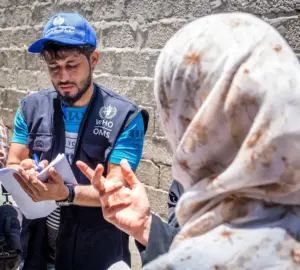









The World Health Organization has released a landmark initial assessment detailing the profound global fallout of the COVID-19 pandemic on routine healthcare delivery. Drawing from reports submitted by 105 countries across five geographic regions between March and June 2020, the data reveals a startling reality: approximately 90 percent of nations experienced disruptions to their essential health services. While high-income nations faced logistical hurdles, low- and middle-income countries bore the heaviest burden, encountering unprecedented challenges in keeping vital medical programs operational.
The findings underline how rapidly even robust medical infrastructures can be overwhelmed when a global health crisis strikes. Routine and elective procedures were widely suspended to redirect resources toward the burgeoning pandemic response, but critical, life-saving interventions—ranging from cancer diagnostics to HIV therapy—suffered high-risk interruptions, particularly in resource-constrained environments.
Weighing in on the findings, Dr. Tedros Adhanom Ghebreyesus, Director-General of the World Health Organization, emphasized the critical lessons that must be learned from the crisis. The survey exposes deep vulnerabilities that have long persisted within global healthcare networks, yet it simultaneously establishes an empirical foundation for shaping smarter, more resilient strategies moving forward.
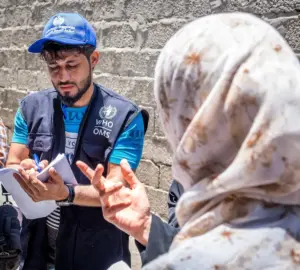
Dr. Tedros noted that the pandemic should serve as a definitive lesson to the international community that health cannot be treated as an either-or proposition. Policymakers, he argued, must balance emergency preparedness with ongoing, sustained investments in domestic health systems capable of addressing the full spectrum of human needs throughout every stage of life.
Services Hit Across the Board
To quantify the scale of the disruption, the WHO pulse survey evaluated key informant reports across a set of 25 tracer health services. On average, reporting nations experienced disruptions in half of these core service areas. The breadth of the impact demonstrates that the disruption was not isolated to a single medical specialty or geographic pocket, but rather represented a systemic shock to global public health.
Routine immunization programs emerged as among the hardest hit. Outreach services were disrupted in 70 percent of reporting countries, while facility-based immunization delivery suffered setbacks in 61 percent of nations. Preventative and diagnostic care for non-communicable diseases—such as cardiovascular conditions and diabetes—was interrupted in 69 percent of countries. Family planning and contraception services experienced similar setbacks, with 68 percent of respondents indicating diminished capacity.
Mental health services also suffered severely, with 61 percent of nations reporting disruptions in the treatment and support systems dedicated to mental health disorders. Furthermore, cancer diagnosis and treatment were impeded in 55 percent of reporting countries, raising grave concerns about long-term survival rates and delayed prognoses.
Infectious disease programs, which had spent decades making hard-won gains, faced significant setbacks. Malaria diagnosis and treatment were disrupted in 46 percent of countries, while tuberculosis case detection and management saw interruptions in 42 percent of responding nations. Even antiretroviral treatment programs for HIV, which require strict adherence to remain effective, experienced disruptions in 32 percent of countries.
While some service suspensions—such as routine dental care and non-urgent physical rehabilitation—were implemented deliberately in alignment with early government containment protocols, the widespread disruption of core medical services carries profound implications. Public health experts warn that the halting of these services will likely trigger severe adverse health outcomes across short, medium, and long-term horizons, reverberating long after the acute phases of the coronavirus outbreak subside.
Potentially Life-Saving Emergency Services Disrupted
Perhaps most alarming is the finding that potentially life-saving emergency services were disrupted in nearly a quarter of responding nations. When primary and secondary safety nets fail, the consequences for acute medical emergencies can be immediately fatal.
According to the data, round-the-clock emergency room services were compromised in 22 percent of countries. Urgent blood transfusion services, which are critical for trauma care, major surgeries, and obstetric complications, faced disruptions in 23 percent of reporting nations. Additionally, emergency surgical procedures were affected in 19 percent of countries, highlighting a dangerous bottleneck in acute care access during the height of the early pandemic waves.
Disruption Driven by a Mix of Supply and Demand Side Factors
The underlying causes of these widespread service failures were multifaceted, stemming from a combination of supply-side constraints and shifts in patient demand. On the demand side, 76 percent of countries reported measurable reductions in outpatient care attendance. This drop was driven not only by strict government lockdowns and mobility restrictions but also by widespread public fear of contracting the virus in healthcare facilities, alongside growing financial difficulties among patients.
On the supply side, the most frequently reported factor was the preemptive cancellation of elective and non-urgent services, cited by 66 percent of countries. Beyond administrative cancellations, healthcare systems contended with severe workforce strains. Medical personnel were frequently redeployed from their standard departments to frontline COVID-19 relief efforts, leaving critical gaps in other specialties.
Furthermore, many facilities faced outright closures due to localized outbreaks or infection control measures. Global supply chains experienced unprecedented bottlenecks, resulting in critical shortages of personal protective equipment, medical devices, and essential health commodities necessary for day-to-day clinical operations.
Adapting Service Delivery Strategies
In response to these unprecedented pressures, many governments and healthcare authorities initiated adaptive measures, drawing on guidance provided by international bodies. Countries began implementing mitigation strategies such as clinical triage to prioritize urgent care, transitioning to telemedicine and online patient consultations, altering pharmaceutical prescribing practices to reduce facility visits, and deploying targeted public health information campaigns.
However, the survey revealed critical gaps in financial protection policies. Only 14 percent of reporting countries implemented the removal of user fees for health services—a measure strongly recommended by the WHO to offset the growing financial vulnerability of patients facing economic shocks during the pandemic.
The pulse survey underscores the urgent necessity of establishing real-time monitoring mechanisms. As viral transmission rates continue to fluctuate and outbreaks wax and wane across different regions, health systems must possess the agility to track shifting patterns in service delivery and utilization, adapting their operational models accordingly.
Moving Forward with New Tools and Learning Hubs
To address these systemic challenges and support national governments in navigating ongoing fallout, the World Health Organization is expanding its operational toolkit. Recognizing the intense global demand for practical, evidence-based assistance, the organization is developing the COVID-19 Health Services Learning Hub. This web-based digital platform is designed to facilitate the cross-border sharing of experiences, enabling nations to learn from innovative, localized practices and integrate those lessons into a stronger collective global response.
In tandem with the online hub, the WHO is designing additional sub-national and facility-level surveys. These initiatives aim to capture a more granular view of the longer-term impacts of service disruptions, empowering health authorities to accurately weigh the complex benefits and risks associated with different pandemic mitigation strategies.
The underlying data was gathered through a comprehensive rapid assessment titled "Rapid assessment of continuity of essential health services during the COVID-19 pandemic," administered across 159 countries representing every WHO region except the Americas. A total of 105 responses—representing a 66 percent response rate—were submitted by senior officials within ministries of health, capturing the period from March to June 2020.
While public health experts acknowledge the inherent limitations associated with rapid pulse surveys, the comprehensive nature of this assessment remains a key strength. By examining 25 core health services simultaneously rather than focusing on a single disease topic, the study provides a standardized, comparable overview of disruptions across more than 100 nations. The findings serve as a stark reminder that even well-resourced medical infrastructures can be destabilized by a pandemic, reinforcing the vital need for sustained data collection and strategic adaptation to safeguard essential care provision worldwide.