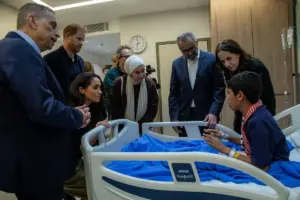









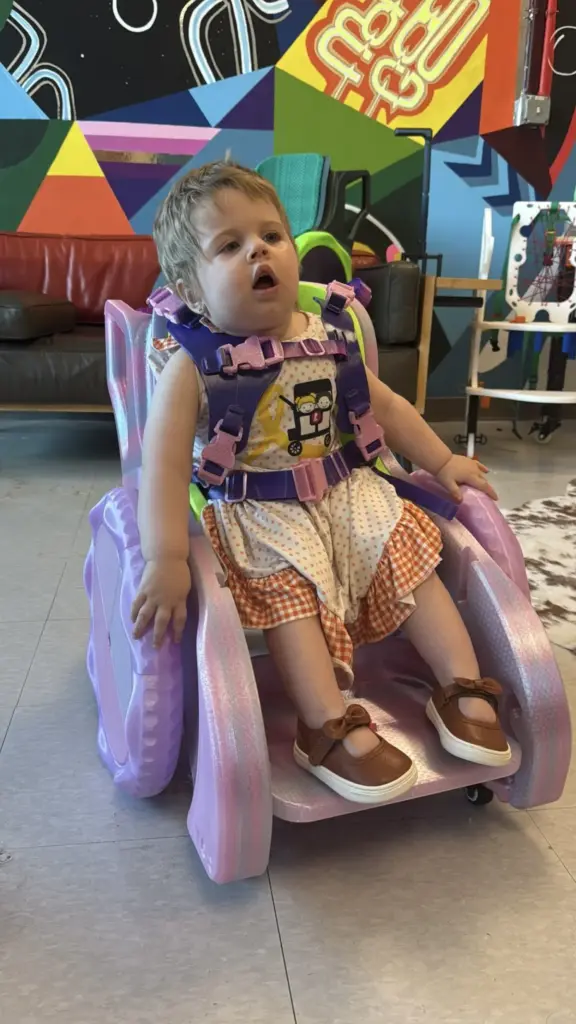
At the Monroe Carell Jr. Children’s Hospital in Nashville, the newest piece of mobility equipment to join the wards is a fully 3D-printed wheelchair, built layer by layer by a gaming and technology specialist who never actually set out to design medical hardware.
That single detail highlights a much broader, quiet shift taking place across the landscape of pediatric care. Hospitals, schools, and even individual families are increasingly taking matters into their own hands, beginning to manufacture the assistive technology that traditional medical supply chains have continually struggled to deliver in a timely or affordable manner. For decades, conventional medical manufacturing has relied on centralized factories, heavy global distribution networks, and complex retail markups that often leave children waiting months for standard equipment—equipment that is frequently generic rather than tailored to the vibrant, dynamic lives of actual kids.
The story at Monroe Carell centers on Graden Knapp, whose day job involves making hospital stays more bearable for young patients through toys, interactive video games, and other therapeutic entertainment tools. While working within the hospital environment, Knapp identified a fundamental gap that went far beyond mere recreation: the facility frequently faced shortages of pediatric wheelchairs properly suited to the diverse and rapidly changing physical needs of its youngest patients.

Recognizing this unmet need, Knapp took the initiative to teach himself an entirely new skill set. He came across open-source pediatric designs provided by MakeGood, a New Orleans-based disability design nonprofit dedicated to expanding early childhood mobility. Over the course of two to three months, Knapp utilized printing equipment to fabricate the components and assemble what is now the hospital’s first nearly complete 3D-printed wheelchair.
Rather than relegating the equipment to a hospital storage closet to be shared among transient patients, Knapp designed the initiative with a transformative intent. The plan is for young patients to take their custom wheelchairs home with them upon hospital discharge, effectively turning a sterile piece of institutional equipment into a cherished personal item that a child can keep, customize, and physically grow alongside.
While this local endeavor appears at first glance to be a grassroots community project, it points powerfully toward the future of pediatric assistive technology: equipment produced on-site, perfectly tailored to an individual child, and designed from the ground up around the idea that medical hardware can be both entirely functional and genuinely exciting for a kid to use.
The Likely Design and Open-Source Philosophy Behind the Build
While local news reports did not explicitly name the exact model Knapp fabricated, public documentation points toward MakeGood’s flagship open-source pediatric mobility project: the Toddler Mobility Trainer. This device stands out as the organization’s primary fully 3D-printable wheelchair design, matching the descriptions of a printed children’s mobility device sourced from a nonprofit network of collaborative designers and engineers.
The Toddler Mobility Trainer is an innovative mobility device engineered for children roughly between the ages of one and eight years old. Developed by MakeGood in collaboration with the industrial design firm LINK PBC and the nonprofit TOM Global, the device was publicly introduced to expand access to early childhood mobility solutions. Nearly every structural component—including the frame, wheels, tires, seating elements, and even the restraining straps—can be printed on consumer-grade desktop machinery, with the design optimized for widely available printers like the Bambu Lab A1.
The individual parts are engineered to snap together securely without the need for specialized tools, metal screws, or messy glues, utilizing an intuitive jigsaw-style assembly. This modular approach means that if a single part experiences excessive wear or breaks during rough playground use, caregivers do not need to replace an entire expensive unit. Instead, they can simply reprint and swap out the single damaged component.
MakeGood has distributed the Toddler Mobility Trainer as a completely free, open-source digital file on shared maker platforms, ensuring that anyone with access to a standard 3D printer and thermoplastic filament can produce a device. Whether it is a concerned parent, a school librarian, or a hospital technologist like Knapp, the barrier to creation has been lowered dramatically. Since its founding in 2021, MakeGood and its collaborative networks have delivered thousands of free assistive devices globally, demonstrating the profound scalability of open-source hardware models.
Confronting the Realities of Medical Equipment Costs
This intersection of digital fabrication and healthcare moves the narrative past a feel-good local interest piece and directly into a vital conversation about economic accessibility in modern medicine.

In the United States, a traditional pediatric wheelchair typically commands a retail price ranging from $1,200 to $5,000. Fully custom or powered pediatric mobility models can easily run well past $12,000 once specialized seating systems, bespoke materials, and advanced electronic controls are factored into the final bill. These staggering figures represent only the baseline acquisition costs. Because children experience rapid physical growth during their early years, families frequently find themselves forced to replace these expensive chairs every couple of years, compounding the lifetime financial burden exponentially. Furthermore, families often face uphill battles with health insurance providers that routinely deny coverage or only partially subsidize these essential medical claims.
By contrast, organizations like MakeGood estimate that a complete Toddler Mobility Trainer can be manufactured using raw materials costing approximately $150. Itemized breakdowns of these production costs typically account for roughly eight to ten spools of sturdy PETG filament, two to three spools of flexible TPU for tires and cushioning, and a minimal amount of standardized hardware such as a few basic bolts, nuts, washers, and small caster wheels.
While exact material costs can fluctuate depending on local supply chains, the overarching financial disparity remains striking. Knapp’s own operational assessment of his hospital build indicated that his custom device came out to roughly ten times cheaper than a standard commercial wheelchair. This dramatic reduction in expenditure is not merely the result of utilizing cheaper plastics; rather, it stems from the fundamental elimination of an entire traditional apparatus of manufacturing, global shipping, distribution networks, and institutional retail markups.
Conventional durable medical equipment must be prototyped, tooled for mass production, manufactured in distant industrial factories, shipped across oceans, warehoused by medical suppliers, and marked up significantly at every intermediary stage. In contrast, a 3D-printed mobility device bypasses almost the entire commercial supply chain. The design exists as a portable digital file, and the manufacturing center becomes whatever workspace happens to house a printer—whether that is a hospital utility room, a community school library, or a family’s spare bedroom.
Global Implications and the Broader Need for Accessible Mobility
While the initial narrative unfolds within a single pediatric hospital in Tennessee, the underlying technology carries profound implications that stretch far beyond North America. This is especially true for low- and middle-income countries, where systemic barriers make access to reliable mobility devices significantly more challenging than in wealthy industrialized nations.
The global statistics surrounding assistive technology illustrate a stark disparity. According to comprehensive data from the World Health Organization and UNICEF, more than 2.5 billion people worldwide require at least one form of assistive product, such as a wheelchair, hearing aid, or communication device. Yet nearly one billion of those individuals are routinely denied access. Detailed analyses across multiple developing nations show that local access to necessary assistive devices can drop as low as three percent of the total population in need, contrasted sharply with a nearly ninety percent fulfillment rate in wealthy nations.
Peer-reviewed studies on global wheelchair service provision, relying on population estimates from the World Health Organization, indicate that roughly 77 million people worldwide require a wheelchair for daily mobility. Among that population, only an estimated seventeen to thirty-seven percent have reliable access to a device in less-resourced settings, leaving tens of millions of individuals entirely unassisted. The World Health Organization’s broader reports on global disability further emphasize that an overwhelming majority of individuals with disabilities reside in developing or low-resource regions—precisely the areas where commercial medical supply chains are thinnest, import tariffs are highest, and traditional replacement parts are virtually impossible to acquire.
This vast geographical and economic gap is precisely what low-cost, open-source 3D-printed designs are uniquely positioned to address. Because the blueprints can be downloaded instantaneously over the internet anywhere a network connection exists, local communities no longer need to depend on unpredictable international cargo shipments or expensive import models. If a part breaks in a remote clinic, it can be digitally transmitted and reprinted on-site within hours, transforming healthcare logistics from a rigid top-down supply chain into a resilient, decentralized network of local producers.
Institutional Adoption and the Path Forward
For hospitals, educational institutions, and international humanitarian organizations, the expanding viability of 3D-printed medical devices offers a compelling path forward. Projects like the one at Monroe Carell demonstrate that institutional environments can leverage internal technical talent to solve immediate, localized equipment shortages while fostering deeper emotional connections between young patients and the medical devices they rely on.
Of course, experts caution that open-source, 3D-printed mobility aids are not yet positioned to completely replace highly specialized, clinically prescribed, and insurance-backed wheelchairs for every complex medical profile. Factors such as long-term structural durability under heavy daily stress, individual weight limits, and rigorous clinical validation remain active areas of ongoing research and refinement within the engineering community.
Nevertheless, for the specific, pressing challenge demonstrated in Nashville—rapidly and affordably getting a functional, well-fitted mobility device into the hands of a young child who desperately needs independence—the technology is already proving its worth in real-world clinical settings. As more institutions recognize the potential of digital fabrication, the central question for hospitals, schools, and global health advocates is no longer whether open-source assistive manufacturing works, but rather who will lead the charge in printing the next generation of accessible care.