






When people envision modern robotics, the immediate image that typically comes to mind is one of rigid, heavy machines operating within the confines of a tightly controlled factory floor. These traditional systems require exhaustive, painstaking programming, massive datasets to recognize patterns, and perfectly regulated environments to function properly. If even a single variable is shifted slightly out of place—a millimeter off in calibration or an unexpected obstruction—the robot inevitably fails, halting operations until human intervention restores order.
Yet a fundamental question has long driven engineers and computer scientists forward: What if robots could learn the way living beings do?
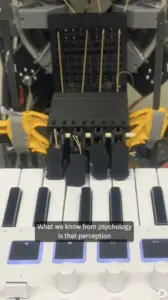
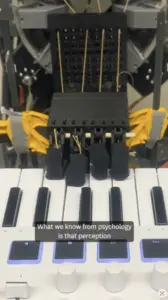
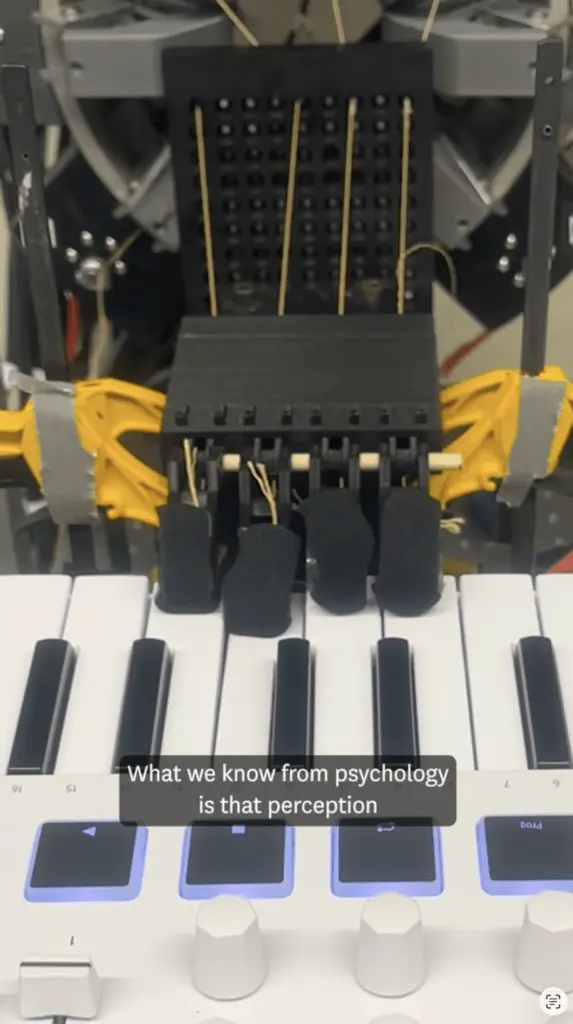
In a recent and profound breakthrough emerging from the USC Viterbi School of Engineering, researchers have developed an innovative robotic system known as the "Musician Hand." This remarkably simple, tendon-driven mechanical hand achieved something previously thought to require extensive training: after listening to a complex 30-note musical melody, it played the sequence back flawlessly on a standard piano on its very first attempt.

The achievement stands apart from conventional machine learning milestones because it required no weeks of grueling training, no massive cloud-based datasets, and no specialized computing clusters. Instead, the system accomplished the feat following a mere two minutes of self-taught practice.
While a robot playing a piano might initially read like an impressive parlor trick or a novelty demonstration, the broader implications for the future of assistive technology are staggering. This research provides tangible proof that physical machines can learn rapidly from brief, real-world experiences and seamlessly adapt to unpredictable, shifting environments. In doing so, it opens the door wide to a new era of highly personalized, intuitive assistive devices that could radically improve the daily lives of individuals with physical and cognitive challenges.
How the Musician Hand Works: The Perception-Action Loop
The core magic behind the successful operation of the Musician Hand lies in a fundamental biological concept known as the "perception-action loop." Rather than being heavily programmed with explicit lines of code instructing every individual finger when and how to press a specific key, the robot essentially taught itself how its own physical body worked through a process mirroring biological motor babbling.
By executing exploratory movements and immediately observing the physical feedback through its sensors, the system mapped its own mechanics in real time. It learned the tension of its tendon wires, the range of motion of its four robotic fingers, and the precise physical relationship between its soft fingertips and the piano keys. This biological approach to machine learning bypassed the traditional bottleneck of heavy data collection, allowing the mechanism to understand its own physical capabilities within minutes.
Traditional artificial intelligence applications, such as those powering modern autonomous vehicles or advanced industrial robotics arms, typically require megawatts of continuous power and years of accumulated historical data to operate safely and effectively. In sharp contrast, the USC Viterbi Musician Hand achieved its musical task utilizing remarkably efficient, low-power computing hardware—specifically, a standard, everyday laptop.
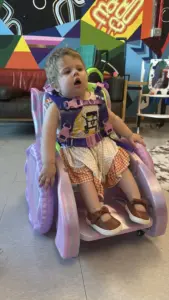
Because this newly validated model of perceptual robotics operates with such extreme computational efficiency and environmental adaptability, it holds massive, transformative potential for the field of physical assistive devices. For individuals who rely on prosthetic limbs, motorized wheelchairs, or specialized physical interfaces, the ability of a device to instantly understand and adapt to a user’s unique physical nuances could eliminate the frustrating, lengthy calibration processes that currently plague adaptive technology.
Beyond the Physical: Abstract and Cognitive Applications
The profound importance of this engineering research extends far beyond robotic hands and physical mobility aids. The underlying conceptual framework—utilizing efficient, real-time perception to instantly adapt to a user’s immediate context and environment—has the capacity to radically transform how engineers design software applications, interactive learning tools, and specialized cognitive aids.
When a system can understand and adjust to real-time feedback with minimal computational overhead, digital interfaces can become truly personalized. Assistive software designed for individuals with cognitive impairments or learning differences could dynamically alter its pacing, complexity, and presentation style based on immediate behavioral cues, creating a truly responsive digital companion rather than a static tool that forces the user to navigate a rigid structure.
The traditional paradigm governing the relationship between humans, robotics, and artificial intelligence has historically forced the human user to adapt to the limitations, constraints, and rigid programming of the machine. The successful debut of the Musician Hand strongly suggests that we are now entering a new technological era where the machine can quickly, efficiently, and intuitively adapt to the human being instead.
By successfully shifting the underlying methodology from rigid, predetermined programming to dynamic, organic perceptual learning, the next generation of assistive technology is poised to evolve beyond simple tools that people merely use. Instead, they are set to become deeply intelligent systems that genuinely understand how human beings move, how we learn, and how we live our daily lives.