







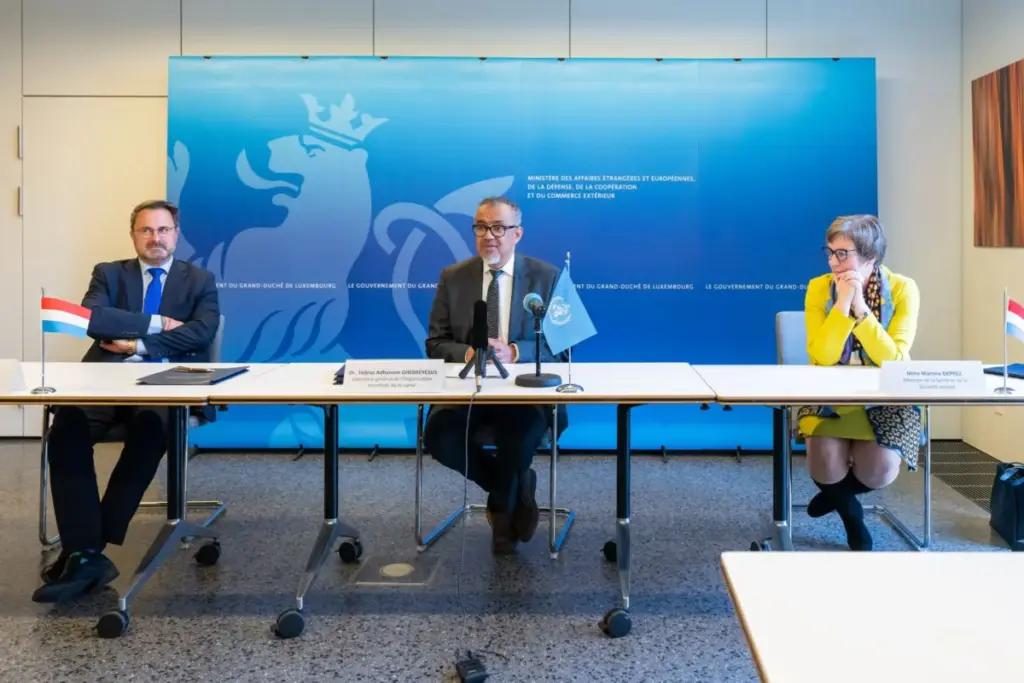
In a landmark milestone for international public health cooperation, the Grand Duchy of Luxembourg and the World Health Organization (WHO) have sealed a historic partnership designed to accelerate global health progress and support sustainable development goals over the coming years. Formally enacted on December 20, 2024, the agreement represents a defining moment for Luxembourg’s enduring dedication to multilateralism, humanitarian assistance, and worldwide health equity. The timing of the announcement carried profound symbolic weight, coinciding with the International Day of Solidarity, underscoring a shared vision of global unity, proactive disease prevention, and international cooperation at a time of complex global health challenges.
The centerpiece of this diplomatic and financial milestone is a newly minted Strategic Partnership Framework (SPF) agreed upon with Luxembourg’s Ministry of Development Cooperation and Humanitarian Affairs. Valued at €46.5 million, this framework stands as the largest-ever funding agreement established between the WHO and Luxembourg. Alongside this monumental commitment, a complementary multiyear agreement was launched with the Ministry of Health and Social Safety, marking Luxembourg’s first-ever voluntary contribution of €1 million to the organization. Together, these two agreements inject vital resources into the global health architecture, positioning both entities to drive meaningful change toward the Sustainable Development Goals spanning from 2025 through 2028.
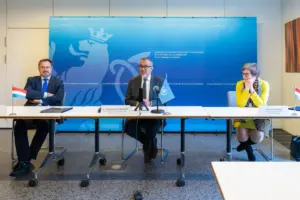
The official signing ceremony brought together high-level dignitaries, including WHO Director-General Dr. Tedros Adhanom Ghebreyesus, Xavier Bettel, Luxembourg’s Deputy Prime Minister and Minister of Foreign and European Affairs, Cooperation and Foreign Trade, and Martine Deprez, Minister of Health and Social Safety. The gathering served as a platform for leaders from both sides to articulate a shared vision for international health security, emphasizing that robust international collaboration remains the most effective defense against future sanitary crises and systemic health disparities.

Detailing the scope of the landmark €46.5 million Strategic Partnership Framework, officials noted that the funding package is structured to provide both targeted support and flexible resources. A significant portion of the agreement contains fully flexible and thematic funding, an invaluable asset that allows the WHO to direct financial resources dynamically toward areas experiencing the highest and most urgent needs globally. In addition to flexible funds, the package includes dedicated allocations directed toward critical global health initiatives, notably the Universal Health Coverage Partnership, vital research into neglected tropical diseases, and ongoing international efforts aimed at polio eradication.
During the high-level bilateral discussions accompanying the signing ceremony, Minister of Health and Social Safety Martine Deprez elaborated on how the newly launched multiyear agreement will shape national and international priorities. She noted that from now until 2028, this targeted contribution will help finance critical priority areas within Luxembourg’s collaborative framework with the WHO. In particular, Minister Deprez highlighted two core pillars of the partnership: strengthening sanitary crisis preparedness and response mechanisms, and aggressively combating health inequalities, with a dedicated and intentional focus on integrating gender considerations into health programming.
The emphasis on preparedness and prevention was further echoed by Deputy Prime Minister Xavier Bettel. In his remarks during the proceedings, Bettel stressed that the signing of these two new partnership agreements serves as a resounding reaffirmation of Luxembourg’s steadfast, continued support for the WHO and its overarching global mission. He pointed out that this unprecedented financial and political backing reflects the nation’s deeply ingrained commitment to promoting global health and upholding the principles of multilateralism. Framing the core philosophy behind the initiative, Bettel remarked that the agreements were launched with the WHO because of a firm belief that the most effective way to manage a crisis is to prevent it from happening in the first place.
Beyond emergency response and crisis management, the strategic partnership framework is strategically designed to fortify the WHO’s foundational capacities. This includes robust support for the organization’s core mandate to develop, deliver, and implement high-quality technical products. These foundational assets include the evidence-based guidelines, norms, and global standards upon which countless national health systems and policymakers rely to shape domestic health policies, regulate medical interventions, and ensure clinical safety. By backing these core normative functions, Luxembourg is actively contributing to the elevation of global health standards across diverse geographic and economic contexts.

Responding to the historic announcement, WHO Director-General Dr. Tedros Adhanom Ghebreyesus expressed profound appreciation for Luxembourg’s generosity and long-standing partnership. Dr. Tedros remarked on the deep symbolism of finalizing the agreements on the International Day of Solidarity, describing the financial commitments as a powerful statement of solidarity by Luxembourg not only with the World Health Organization as an institution, but directly with the people of the world who rely on equitable access to health services. The Director-General’s remarks were echoed across digital platforms, where the WHO officially commended Luxembourg for setting a vital benchmark in international solidarity and proactive health financing.
The agreements reinforce a rich, historical strategic partnership between the WHO and Luxembourg, characterized by a unified, cooperative mission to promote, provide, and protect health for vulnerable and marginalized populations worldwide. As the international community looks ahead to the 2025–2028 strategic horizon, this milestone infusion of capital and diplomatic resolve ensures that both organizations remain well-equipped to navigate emerging public health threats, address persistent systemic inequities, and work steadily toward a healthier, more resilient global society.