






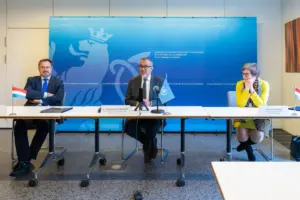


RIO DE JANEIRO – Health ministers from the world’s leading economies have issued a unified call for increased financial support for the World Health Organization (WHO), underscoring the critical need for sustainable funding to navigate an increasingly complex global health landscape. Meeting in Rio de Janeiro under the chairmanship of Brazil, the ministers expressed their firm support for the WHO’s inaugural Investment Round—a strategic initiative designed to secure the predictable and flexible funding necessary to implement the organization’s ambitious new global health strategy.
The high-level gathering served as a pivotal staging ground ahead of the G20 Leaders’ Summit, scheduled for November 18–19, 2024. As the international community grapples with the lingering effects of past pandemics and the looming threat of future health crises, the ministers emphasized that the WHO’s ability to function effectively depends on a more stable financial foundation. By backing the Investment Round, the G20 nations aim to bolster an organization tasked with improving the lives of billions and preventing an estimated 40 million deaths through its comprehensive new roadmap for global health.
A Call for Global Solidarity and Financial Sustainability
Dr. Tedros Adhanom Ghebreyesus, Director-General of the World Health Organization, addressed the assembled ministers with a sense of both gratitude and urgency. He highlighted the progress made thus far, noting that the organization has already secured 63 pledges totaling more than one billion US dollars. However, he stressed that the path toward full sustainability requires participation from every member state, scaled according to their individual means.
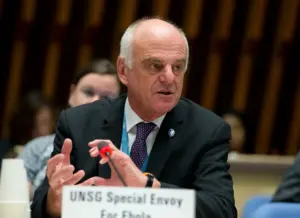
“I have asked every Member State and partner to participate in the Investment Round, according to its means,” Dr. Tedros stated. “Every contribution counts. Some of the world’s poorest countries have pledged, because they see first-hand the difference that WHO makes.”
The Director-General’s remarks were particularly notable for their emphasis on the diversity of the contributors. More than half of the current pledges have originated from first-time voluntary contributors, representing a broad cross-section of the global community, including significant support from nations across the African, Western Pacific, and South-East Asian regions. This shift toward a more inclusive funding base is viewed by experts as a vital step in ensuring the WHO remains an impartial and effective arbiter of global health.
During the meeting, Dr. Tedros formally acknowledged the commitment shown by early contributors, specifically thanking Germany, Norway, Singapore, South Africa, Türkiye, the European Union, and the Wellcome Trust for their leadership in setting the tone for the Investment Round.
The Strategic Importance of the G20 Leaders’ Summit
The upcoming G20 Leaders’ Summit, to be chaired by the President of Brazil, H.E. Luiz Inácio Lula da Silva, is being framed as the defining moment for this financial initiative. With the eyes of the international community turned toward Rio, expectations are high that additional G20 nations and other global partners will formalize their pledges. The goal is to move the WHO away from a model of fragmented, often restrictive funding toward a system of predictable, flexible resources that allow the organization to respond rapidly to emerging health threats rather than waiting for earmarked funds.
Nísia Trindade, Brazil’s Minister of Health, underscored the political necessity of this endeavor. Addressing her colleagues, she noted that the mandate of the WHO is inextricably linked to its financial health. “We need a strong WHO to accomplish its mandate and we call on everyone to contribute to the financial sustainability of the WHO, including by pledging at the G20 Leaders’ Summit,” Trindade said. Her comments echoed the sentiments of many in attendance, who view the current financial model of the WHO as a potential bottleneck to effective global health governance.
Aligning Political Commitment with Financial Reality
The dialogue in Rio highlighted a growing consensus among major powers that health security is synonymous with economic stability. German Health Minister Dr. Karl Lauterbach was among the most vocal proponents of this view, arguing that the time for symbolic support has passed. For Germany, the Investment Round represents an opportunity for the G20 to finally align its political rhetoric with its financial actions.
“A strong WHO is essential for the world,” Dr. Lauterbach asserted. “Resilient sustainable financing is essential for WHO. Financing WHO means investing in a healthier future. We call on all G20 partners to stand by their political commitments for WHO. To walk the talk and to increase their predictable and flexible financial support to WHO.”
Dr. Lauterbach’s call for “walking the talk” reflects a broader frustration among public health advocates regarding the discrepancy between the WHO’s responsibilities and its budget. Historically, the WHO has relied heavily on voluntary contributions that are often restricted to specific programs, limiting the Director-General’s ability to address systemic health issues or respond to crises that do not fall neatly into pre-funded categories. The Investment Round is intended to bridge this gap, providing the core funding required to maintain essential health infrastructure and provide technical guidance to member states.
Looking Toward the Future: A Sustained Effort
The commitment to the WHO’s long-term financial health is not intended to be a one-time effort. During the meeting, a significant development occurred when South Africa’s Minister of Health, Dr. Pakishe Aaron Motsoaledi, announced that his nation would prioritize the sustainability of WHO financing during its own upcoming G20 presidency.
The announcement was met with warm approval from the other ministers, as it ensures that the momentum generated in Brazil will not dissipate at the end of 2024. Dr. Motsoaledi stated that South Africa “is dedicated to carry forward the sustainable financing journey of the World Health Organization into our presidency of the G20 in the coming year. We are carrying forward the baton from Brazil.”
This transition of leadership signifies a maturing of the global health agenda within the G20 framework. By integrating the sustainability of the WHO into the core platform of successive presidencies, the G20 is signaling a shift toward long-term institutional support rather than reactive, emergency-based engagement.
As the international community prepares for the November summit, the focus remains on the tangible impact of these financial commitments. For the millions of people who rely on the WHO for vaccine distribution, disease surveillance, and the strengthening of local healthcare systems, the outcome of the Investment Round is more than a diplomatic achievement—it is a matter of fundamental health security.
With the backing of major economies and a clear roadmap for the months ahead, the WHO and its member states are attempting to build a system that is as resilient as the challenges it is designed to face. The meetings in Rio have established a clear expectation: that the global community will move beyond the constraints of the past to ensure that the WHO remains capable of fulfilling its life-saving mission for decades to come. As the November summit approaches, the world waits to see how many more nations will step forward to solidify this essential pillar of global stability.