








As September brings the first crisp days of the school year and the transition from summer excitement to academic routines, pediatric occupational therapists are rolling out seasonal, apple-themed frameworks to support student development. School-based practitioners are utilizing curated digital toolkits to address a wide array of developmental domains, ranging from fine motor precision and sensory regulation to executive functioning and social-emotional skills.
For many pediatric specialists, September signals the formal rollout of fall programming designed to engage students returning to the classroom. Practitioners note that thematic units offer a natural, highly engaging medium for pediatric therapy sessions, allowing clinicians to seamlessly blend foundational skill-building with seasonal play. By leveraging centralized platforms like The OT Toolbox Membership, therapists are able to quickly sort and print targeted materials tailored to the specific needs of their entire school-based caseloads.
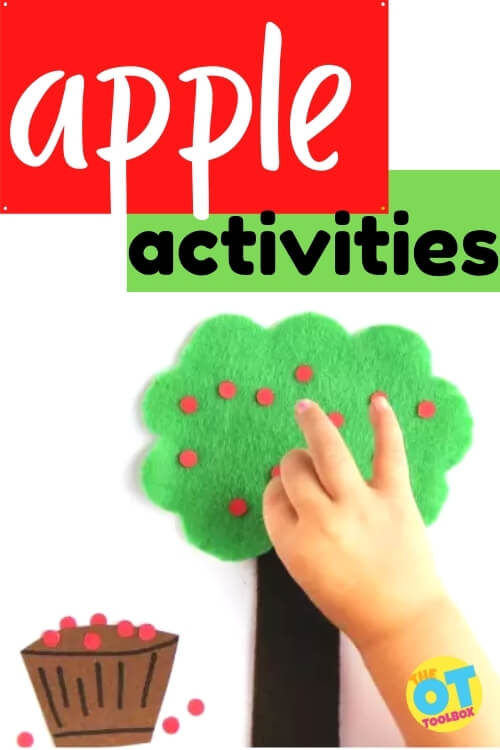
The core objective of these seasonal interventions is to address essential functional tasks—such as handwriting, scissor use, self-regulation, and self-help skills—using cohesive, multi-sensory themes. Rather than relying on isolated drills, therapists are incorporating apple-themed activities that stimulate multiple sensory pathways simultaneously, preparing children physically and cognitively for academic demands.
Apple Sensory Activities
Sensory integration serves as a cornerstone for many school-based therapy sessions, particularly during the transition back to school. Practitioners are utilizing tactile and proprioceptive experiences to help students regulate their nervous systems, whether they experience hyper- or hyposensitivity.
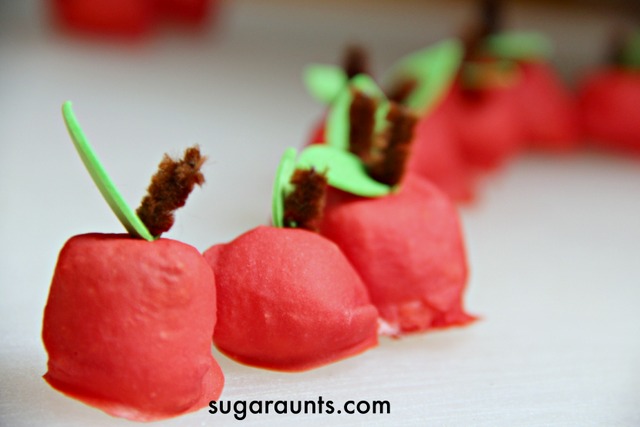
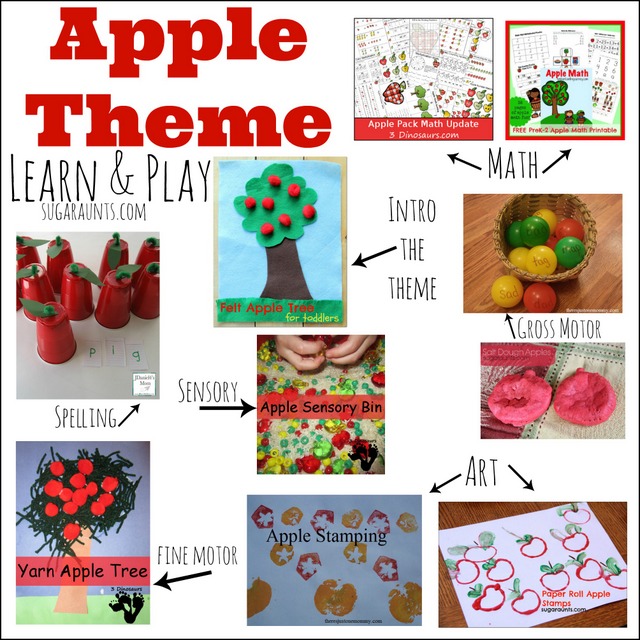
One prominent approach involves tactile heavy work that engages the hands while providing essential proprioceptive input. Therapists have reported success utilizing baked cotton balls fashioned into apple shapes for sensory play and fine motor manipulation. Additionally, apple-cinnamon sensory bins offer rich tactile exploration opportunities. Clinicians frequently hide magnetic letters within the sensory material, prompting children to locate and spell out the word "apple." This tactile reinforcement has proven particularly beneficial for students struggling with shape constancy and letter reversals, as physical manipulation of the letters aids in memory retention and cognitive mapping.
Other tactile initiatives include modified oobleck incorporating applesauce and cinnamon. Beyond addressing sensory processing concerns, practitioners leverage these messy play experiences to target attention, sequencing, and multi-step direction following. When combined with guided discussion, these sensory mediums can also support socio-emotional interventions by providing a calming, tactile outlet for expression.

Apple Fine Motor Activities
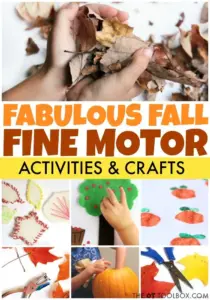
Developing hand strength, dexterity, and precise pincer grasps remains a primary focus for occupational therapists preparing students for functional tasks like handwriting, buttoning, zipping, and clothing independence. Fall-themed fine motor tasks provide structured opportunities to build these intrinsic hand muscles.
Therapists are implementing a variety of craft and math-based manipulations, including apple-themed counting activities and stamping exercises utilizing repurposed toilet paper rolls. These crafting tasks encourage eye-hand coordination, precision, and the critical developmental milestone of crossing the midline.

Simple classroom materials are also being reimagined for therapeutic benefit. Activities requiring students to puncture cardboard or thick paper with toothpicks demand a refined tripod or pincer grasp, directly strengthening the muscles required for pencil control. Similarly, pointillism art projects utilizing standard hole punches offer robust resistance training for hand muscles while encouraging the precise grasp needed to pick up small paper circles.
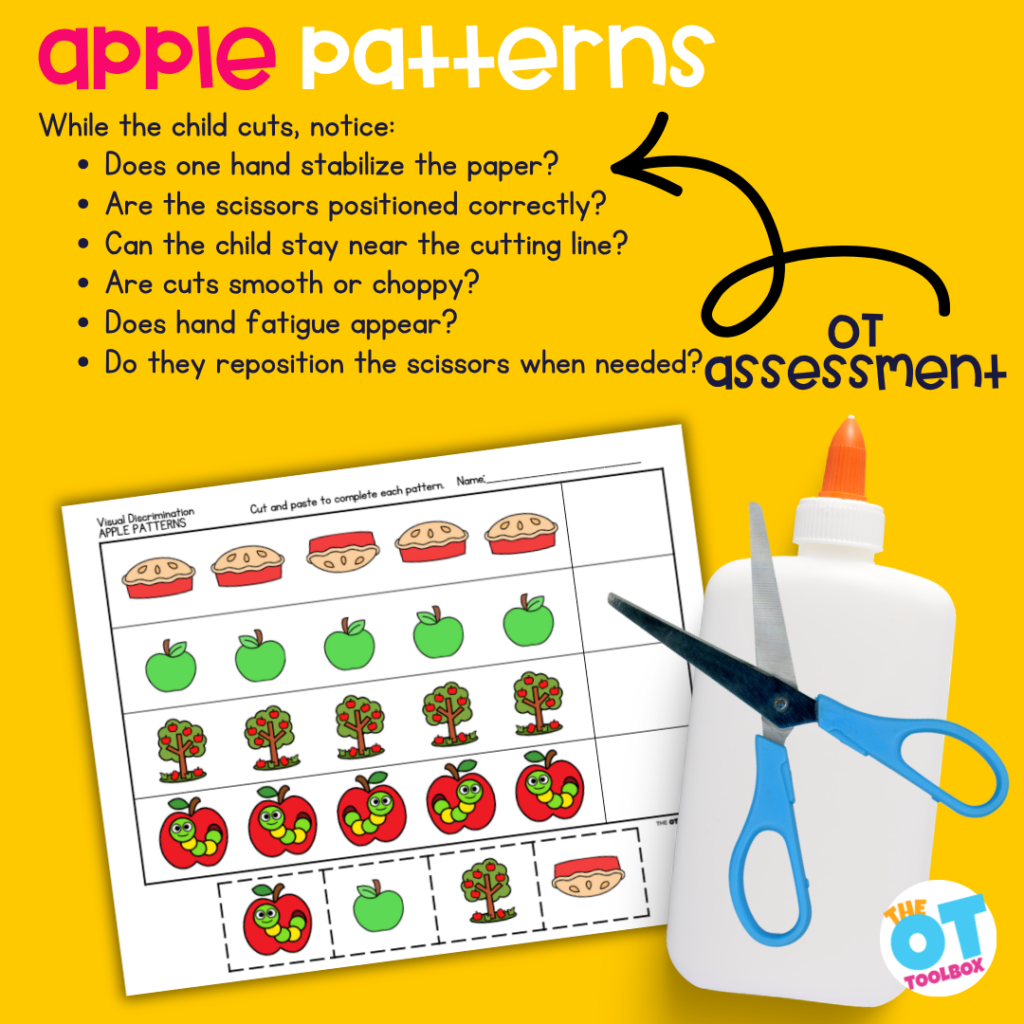
Printable pattern worksheets integrated into the curriculum allow therapists to evaluate student capabilities at the start of the academic year. As children manipulate scissors to cut along apple outlines, clinicians observe critical metrics such as bilateral coordination, visual motor integration, working memory, and environmental planning. These observations serve as valuable baseline data for initial school-based screenings and progress monitoring.
Apple Gross Motor Activities
Core strength, balance, endurance, and motor planning are vital prerequisites for classroom success and postural stability. To address these gross motor needs, specialists are introducing movement-based activities centered around the autumn harvest theme.
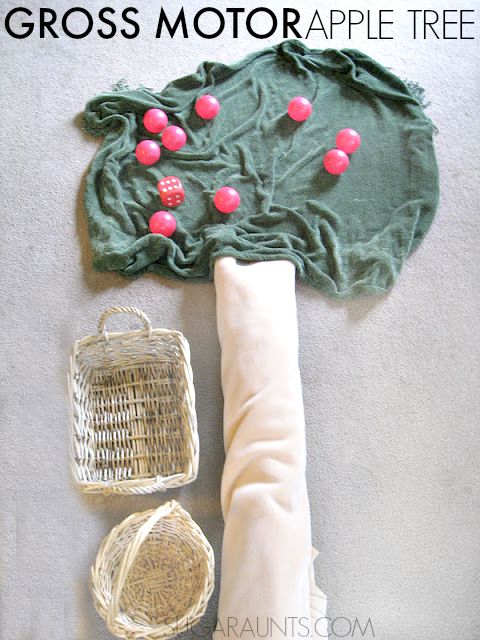
Indoor balance beams decorated with apple motifs are being utilized to challenge vestibular processing, proprioception, and core stability. Movement-based brain breaks incorporate whole-body coordination exercises designed to assist with self-regulation throughout the school day. Additionally, classic children’s literature, such as Ten Apples Up on Top by Dr. Seuss, is being adapted for gross motor development. By having students mimic the balance and postural movements demonstrated by the book’s characters—and occasionally attempting to balance felt apples on their heads—therapists can address dynamic balance and postural control in an interactive format.
Apple Visual Perception Activities
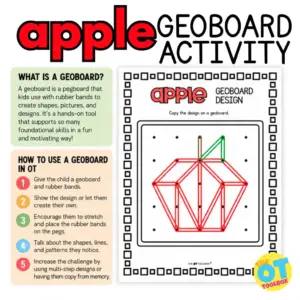
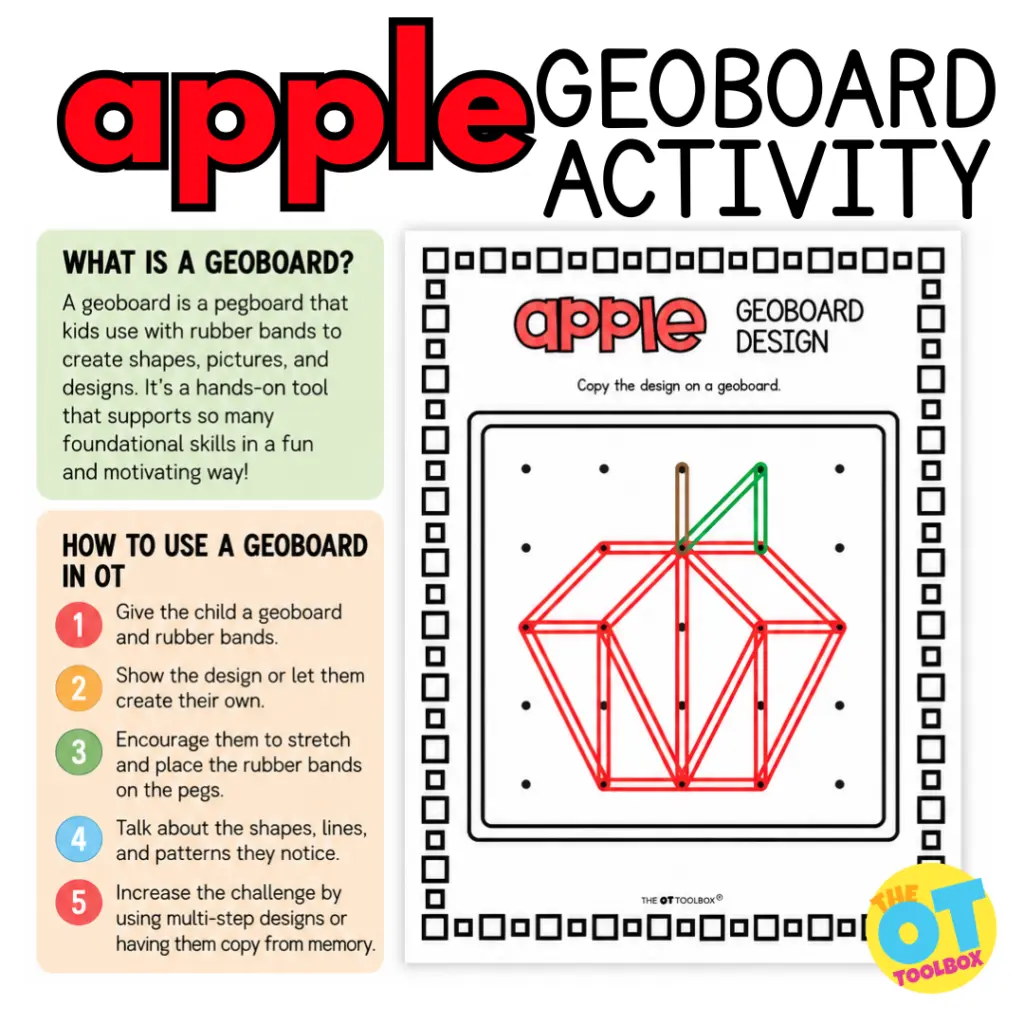
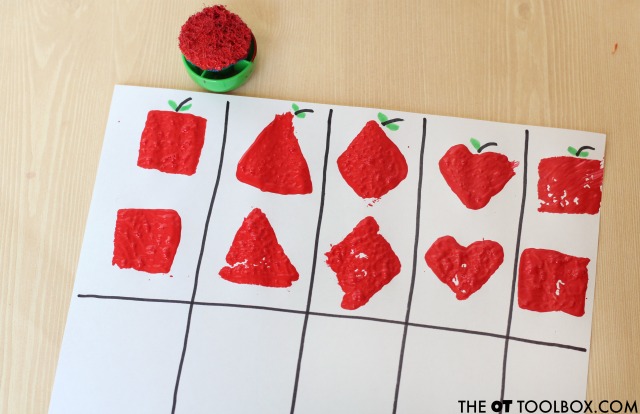
Visual perception, discrimination, form constancy, and spatial awareness are critical for reading, math, and writing tasks. Therapists are addressing these visual-motor skills through shape-matching exercises and structural building tasks, such as creating apple formations using plastic bricks or geoboards.
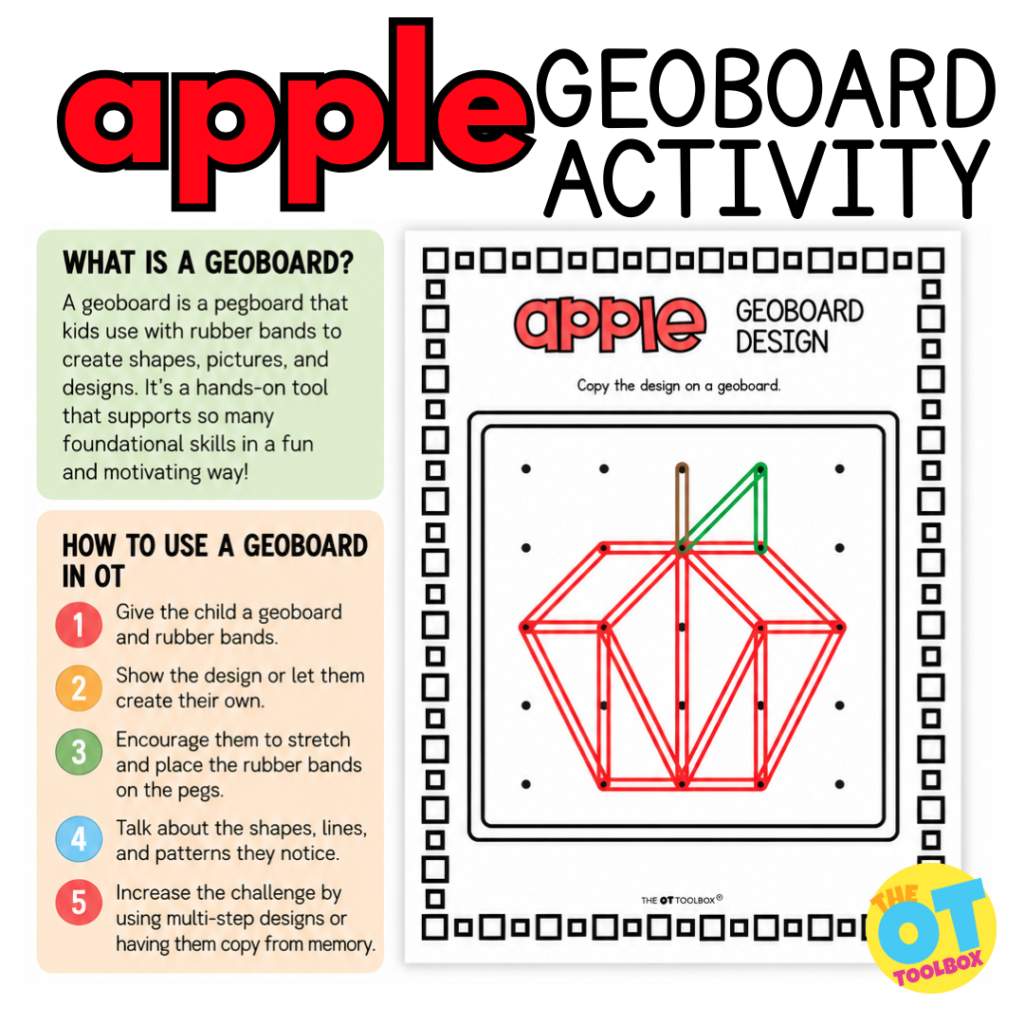
Printable apple geoboards require children to replicate complex designs using rubber bands. This task challenges hand strength, arch development, finger isolation, and visual-motor integration as students visually locate correct pegs and execute precise motor planning. Clinicians can easily adjust the difficulty of the exercise by presenting partial designs for beginners or asking older students to recreate patterns from memory after a brief visual review. Writing descriptive vocabulary words immediately following the visual task bridges the gap between spatial awareness and expressive language.
Apple Executive Function Activities
Executive functioning skills—including working memory, cognitive flexibility, and planning—are deeply intertwined with purposeful, multi-step tasks like cooking and crafting. Salt dough apple recipes provide a tangible medium for following multi-phase instructions, while literary resources like The Apple Pie Tree by Zoe Hall offer opportunities to explore life cycles and practice narrative sequencing.
Classroom-based sorting tools, such as color-coded cups used for spelling and word recognition games, allow educators and therapists to target attention, memory, and cognitive organization simultaneously.
Apple Handwriting Activities
Handwriting proficiency is continually reinforced through tiered writing prompts that accommodate varying developmental stages. Beginning writers practice fundamental letter formation by generating single apple-themed vocabulary words, while developing writers construct complete sentences. Older students tackle more complex cognitive challenges, writing structured paragraphs detailing the botanical life cycle of an apple from seed to fruit. These writing exercises are frequently paired with directed drawing tasks and sensory letter hunts to reinforce orthographic mapping.
Apple Activities for Social Emotional Skills
Structured group activities centered around seasonal themes also facilitate social communication and peer interaction. Collaborative projects encourage children to practice turn-taking, sharing materials, and communicating effectively within a guided group setting.
The integration of these comprehensive apple-themed resources reflects a broader trend among school-based specialists toward holistic, engaging interventions that address the whole child as the academic year gets underway. Sydney Thorson, an occupational therapist with a background in human development, emphasizes the importance of providing individualized, meaningful treatment strategies that resonate with students and their families as they navigate the transition into the school year.