Stress is a universal human experience, often characterized by a rapid, visceral response to the challenges of our environment. While it is frequently viewed through the lens of anxiety or discomfort, scientists have long understood that stress serves an evolutionary purpose, acting as a biological alarm system that sharpens our focus and alters our internal state. Among the most intriguing facets of this response is the way stress influences memory. It is a common observation that we recall moments of high emotional intensity—a narrow escape, a joyous celebration, or a sudden shock—with far greater clarity than the mundane details of our daily lives.
For years, researchers have known that cortisol, the primary hormone released by the adrenal glands during stressful encounters, plays a pivotal role in this phenomenon. However, the precise mechanics of how this chemical signal translates into the long-term storage of memories have remained a complex puzzle. A new study from Yale University has finally provided a clearer view into this process, revealing that cortisol functions by orchestrating a sophisticated recalibration of the brain’s internal communication networks. These findings, recently published in the journal Science Advances, offer a deeper understanding of why specific experiences become indelibly etched into our minds while others fade away.
The Biological Architecture of Emotional Memory
The brain does not process all information with equal weight. When we encounter a stimulus, the amygdala—a structure deep within the temporal lobes—frequently acts as a gatekeeper, assessing the emotional significance of the event. If an experience is deemed important or threatening, the body releases cortisol, which cascades through the system, influencing various neural regions involved in memory formation.
"We all experience stress, and my lab is interested in understanding how stress can be helpful," says Elizabeth Goldfarb, the study’s corresponding author and an assistant professor of psychiatry at the Yale School of Medicine. Understanding the "helpfulness" of stress is crucial because, historically, researchers have struggled to disentangle whether cortisol acts primarily on our emotional reaction to an event or on the physical encoding of the memory itself.
"Forming memories for emotional experiences involves different processes in the brain: first, perceiving an experience as emotional or intense, and second, encoding that experience into long-term memory," explains Goldfarb, who is also a member of Yale’s Wu Tsai Institute, an interdisciplinary hub dedicated to the study of cognition. By separating these two processes, the Yale team sought to identify how cortisol shifts the brain’s priority settings to ensure that significant events are preserved for future use.
A New Methodology for Mapping Neural Connectivity
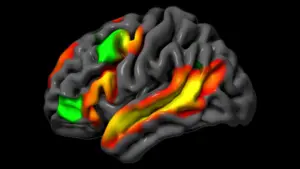
To investigate these mechanisms, the researchers designed a rigorous double-blind experiment. Participants were administered either a dose of hydrocortisone—a synthetic form of cortisol—or an inactive placebo. While under the influence of the substance, participants viewed a series of images while undergoing functional magnetic resonance imaging (fMRI). This imaging technique, which tracks changes in blood flow and oxygen consumption, allowed the researchers to observe which neural regions were active in real-time.
Crucially, the study was conducted twice for each participant, with the order of the hydrocortisone and placebo randomized to ensure that the researchers could compare how an individual’s brain responded to the exact same stimuli under different hormonal conditions. This within-subject design provided a unique opportunity to observe the precise, individualized impact of cortisol on neural activity.
One of the study’s most significant methodological breakthroughs was in the temporal resolution of the data. Traditional fMRI analysis often requires several minutes of continuous brain activity to calculate "functional connectivity"—a measure of how different brain regions fluctuate in unison. However, the Yale team opted for a more granular approach, analyzing functional connectivity during individual, five-second trials. This allowed the researchers to capture a "snapshot" of brain activity specifically tied to the processing of each image. By correlating these brief bursts of activity with the participants’ subsequent ability to recall the images the following day, the team was able to create a high-definition map of how the brain prioritizes emotional information.
Cortisol as a Network Coordinator
The results of the study revealed that cortisol’s influence is not a blunt instrument but a highly targeted adjustment of neural communication. The researchers observed two primary effects that explain why stress-induced memories are so robust.
First, cortisol increased the consistency and engagement of brain networks responsible for emotional processing. When the hormone was present, the brain responded more reliably to the emotional weight of an image. This suggests that cortisol primes the brain to "pay attention" to stimuli that carry emotional significance, essentially turning up the gain on the sensory information being received.
Second, the hormone affected memory-encoding networks in a distinct, specialized manner. Under the influence of cortisol, these networks became more finely tuned to emotional information, effectively sharpening the brain’s ability to "tag" specific experiences as worthy of long-term storage. Perhaps most importantly, the study found that cortisol increased the coordination between these emotion-processing networks and the memory-encoding networks. By bridging the gap between how we feel about an experience and how we store it, cortisol ensures that the emotional intensity of an event is baked into the resulting memory trace.
These findings suggest that stress does not simply "enhance" memory in a general sense. Instead, it acts as a selective filter, ensuring that the brain allocates its limited resources to information that is deemed biologically or personally significant.
Implications for Learning and Cognition
The study’s findings carry significant implications for our understanding of human cognition and learning. If stress-induced memory enhancement is an adaptive trait designed to help us navigate important life events, it stands to reason that we can leverage this mechanism to improve our own learning processes.
"Stress responses are fundamentally adaptive and can help you form strong memories—but this is specific to experiences that you find to be emotionally intense or meaningful," Goldfarb notes. "This is in part related to your brain increasing engagement of networks that track emotional intensity. So, if you are stressed out and trying to learn something new, it might help to think about exciting elements or strong feelings connected to what you are learning."
This insight shifts the narrative around stress in academic and professional settings. Rather than viewing stress as an entirely disruptive force that clouds the mind, it can be understood as a signal-boost for meaningful information. By intentionally attaching emotional significance or personal relevance to new material, individuals may be able to harness their body’s stress response to improve retention, even in high-pressure environments.
The research team, which included Rajita Sinha and Todd Constable of the Yale School of Medicine, emphasizes that this study provides only one part of a larger, complex picture of how the brain adapts to stress. By moving beyond the idea that stress is purely detrimental, the study opens new avenues for exploring how we can work with, rather than against, our brain’s natural tendencies to prioritize what matters most. As research continues to map the intersection of emotion and memory, the ability to decode these neural processes may eventually offer new ways to support learning, memory, and emotional regulation in an increasingly stressful world. Supported by the National Institutes of Health, the Yale team’s work underscores the importance of interdisciplinary collaboration in unlocking the fundamental mysteries of human thought.