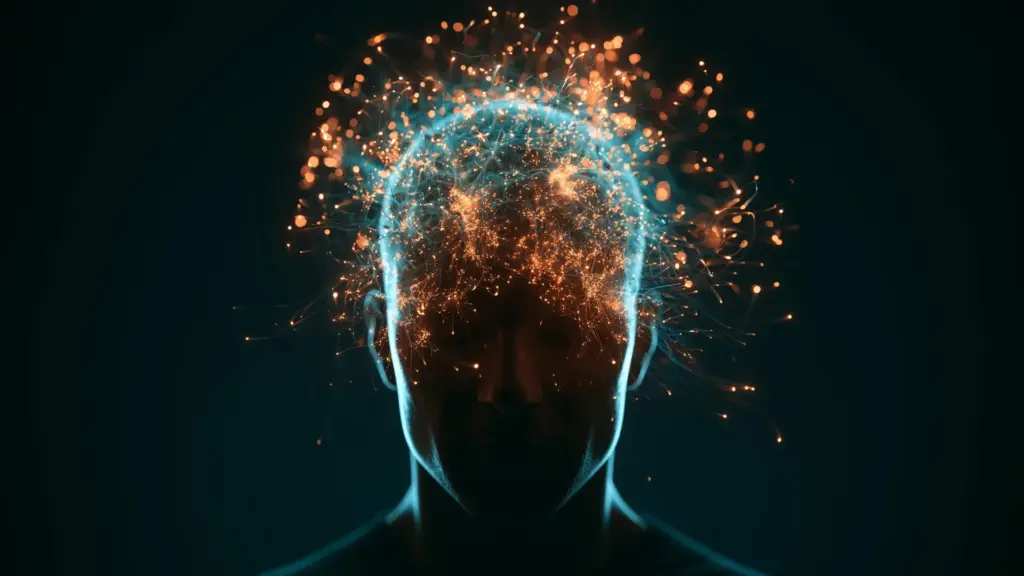
Even when a patient is fully unconscious under the deep influence of general anesthesia, the human brain is far from dormant. A groundbreaking study conducted by researchers at Baylor College of Medicine has revealed that even in a state of total sedation, the brain continues to perform complex, high-level cognitive tasks, including the processing of language, the recognition of patterns, and the active anticipation of upcoming information. The findings, recently published in the journal Nature, offer a profound new perspective on the nature of consciousness and the underlying mechanisms that govern human thought.
By challenging long-standing assumptions about the relationship between conscious awareness and neural activity, this study suggests that the brain remains a remarkably active organ even when the subjective experience of the world has been entirely suspended. These insights not only reshape our theoretical understanding of the unconscious state but also provide a potential foundation for future medical technologies aimed at restoring communication for patients suffering from severe neurological injuries.
Recording Brain Activity During General Anesthesia
To unlock the mysteries of the unconscious brain, a team led by Dr. Sameer Sheth—a professor and Cullen Foundation Endowed Chair of neurosurgery at Baylor College of Medicine—embarked on a rigorous study of patients undergoing epilepsy surgery. Because these patients required general anesthesia for their procedures, they provided a unique window into the cognitive state of an unconscious brain.

The primary focus of the research was the hippocampus, a critical structure located deep within the brain’s temporal lobe. Long recognized as the command center for learning and memory, the hippocampus is responsible for organizing information and facilitating the formation of new memories. To capture the granular activity of this region, the team employed "Neuropixels" probes. These state-of-the-art recording devices are capable of monitoring electrical signals from hundreds of individual neurons simultaneously. By providing a high-resolution map of neural responses, the technology allowed the researchers to observe how specific groups of neurons react to external stimuli when the patient is completely unresponsive and incapable of reporting their subjective experiences.
The Brain’s Ability to Learn While Unconscious
The researchers began their investigation with a relatively straightforward experiment: they played a series of repeating tones to the anesthetized patients, periodically interrupting the sequence with a sound that deviated from the pattern.
The results were immediate and startling. Even under the influence of potent anesthetic agents, neurons within the hippocampus demonstrated a clear, distinct response to the unexpected, deviant sounds. Perhaps even more significant was the observation that, as the experiment continued, these nerve cells became increasingly adept at distinguishing the unusual tones from the background sequence. This progression suggests that the hippocampus is capable of neural plasticity—the brain’s fundamental mechanism for adapting its responses through experience—even in the absence of consciousness. In effect, the basic machinery of learning appears to remain "online" even when the person as a whole is entirely unaware of their surroundings.
The Unconscious Brain Can Process Language and Predict Words
Having established that the unconscious hippocampus can recognize patterns in sound, the research team pushed further to determine whether it could handle the intricate complexities of human language. They played short stories to the anesthetized patients while maintaining the high-fidelity recording of hippocampal activity.
The data revealed a sophisticated level of linguistic processing. Neural activity patterns in the hippocampus contained information specific to various categories of words, including verbs, nouns, and adjectives. This indicated that the brain was not merely registering the presence of sound; it was actively identifying the semantic and structural features of language.
The most compelling discovery, however, was the finding that this neural activity carried information that could be used to predict upcoming words in a sentence. Despite the total absence of conscious awareness, the brains of the anesthetized patients appeared to be anticipating how the language would unfold.
Dr. Sheth, who also serves as the Director of the Gordon and Mary Cain Pediatric Neurology Research Foundation Laboratories at the Duncan Neurological Research Institute, explained that this phenomenon is rooted in a process known as "predictive coding." Rather than functioning as a passive receiver of sensory data, the brain is an active, forward-looking organ that constantly utilizes past experiences and existing patterns to form expectations about the immediate future. When listening to speech, the brain uses the words already processed to anticipate what is likely to follow.
"The brain appears to anticipate what comes next in a story, even without conscious awareness," Dr. Sheth noted. Historically, such high-level predictive modeling has been associated exclusively with individuals who are fully awake and alert. Finding evidence of this process during general anesthesia implies that some of the most complex cognitive functions of the human brain can operate independently of the state of consciousness. Dr. Benjamin Hayden, a professor of neurosurgery at Baylor, added, "This kind of predictive coding is something we associate with being awake and attentive, yet it’s happening here in an unconscious state."
What Does This Discovery Mean for Consciousness?
The study forces a critical reassessment of what consciousness actually provides to the brain’s information-processing capabilities. Typically, consciousness is equated with subjective awareness—the feeling of hearing, thinking, and actively engaging with the world. However, the findings from the Baylor team indicate that the brain is capable of interpreting language and anticipating future events without that subjective component.
This does not imply that anesthetized patients were "understanding" the stories in a way that would register to them upon waking. Rather, it suggests that the brain can perform complex, high-level computational tasks that we once thought required an active, conscious mind. This distinction is vital for researchers attempting to map out how consciousness emerges. One prevailing theory is that awareness relies not just on the activity of individual brain regions, but on the coordinated, global integration of information across multiple networks. In this view, the hippocampus may continue its analysis in isolation, even when the broader communication pathways required for a conscious experience are effectively silenced by anesthesia.
A Surprising Connection Between the Brain and Artificial Intelligence
The researchers noted an intriguing parallel between their findings and the mechanics of modern artificial intelligence. Large language models, which power today’s advanced chatbots, operate on the principle of predicting the next likely token in a sequence based on vast amounts of learned data.
While biological brains and digital AI systems function through vastly different architectures, both demonstrate the power of pattern-based prediction. By observing similar predictive behaviors in the human hippocampus, scientists may gain a deeper understanding of the fundamental principles of prediction, both in natural biology and in synthetic systems.
Beyond theoretical implications, this research carries significant potential for the development of brain-computer interfaces (BCIs). These technologies, which bridge the gap between neural activity and external hardware, are currently being refined to help patients with speech impairments regain their voice. If researchers can pinpoint the specific neural signals associated with language and word prediction, these findings could eventually inform the creation of more effective speech prosthetics.
Dr. Vigi Katlowitz, the study’s first author and a neurosurgery resident at Baylor, highlighted the potential for future clinical applications. "Can we use these signals to deploy and run a speech prosthetic for some of the parts of the brain that are damaged by stroke or injury? These are questions that we can now consider in relation to this part of the brain," she said.
Scientists Are Rethinking the Limits of the Unconscious Brain
While the findings are transformative, the researchers are careful to emphasize the scope and limitations of their work. The study was conducted using a specific protocol for general anesthesia; therefore, these results cannot be generalized to all forms of sedation or to other states of unconsciousness, such as natural sleep or coma, which differ significantly in their physiological mechanisms. Furthermore, as the study focused exclusively on the hippocampus, future research will be required to determine if similar linguistic and predictive capabilities exist in other areas of the brain and how those regions interact when the lights of consciousness are turned off.
Nevertheless, the study serves as a compelling piece of evidence that the unconscious brain is not a static or "dark" entity. It remains a dynamic, analytical engine, constantly processing information, responding to environmental cues, and anticipating the future. As Dr. Sheth concluded, "This work pushes us to rethink what it means to be conscious. The brain is doing much more behind the scenes than we fully understand."