









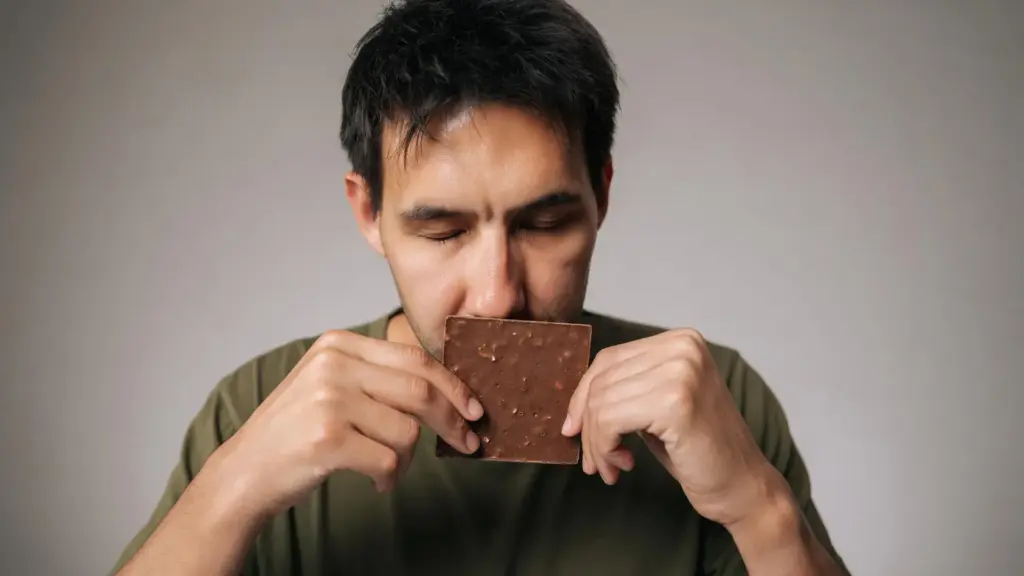
A grueling leg day at the gym is often viewed as a test of sheer willpower, requiring intense physical output and mental fortitude. However, according to a recent study published in Frontiers in Physiology, the key to unlocking extra repetitions may not lie in a new supplement or an expensive piece of equipment, but in something as simple as the aroma of chocolate. The research suggests that exposure to specific chocolate scents before and during resistance training can significantly boost training volume without increasing a person’s perceived level of exertion.
This fascinating intersection of olfaction—the sense of smell—and physical performance suggests that our brains are far more responsive to environmental cues than previously understood in a fitness context. By tapping into the powerful neural pathways that connect smell to appetite and emotion, researchers believe they have identified a way to "hack" the body’s readiness for exercise, allowing athletes to push harder while feeling as though they are putting in the same amount of effort as usual.
The Science Behind the Scent
The study, led by Dr. Mohamed Nashrudin bin Naharudin, an assistant professor at the Faculty of Sports and Exercise Science at the University of Malaya, sought to explore the three-way interaction between smell, appetite, and actual physical capacity during resistance exercise. "We know olfaction is powerfully wired into the brain’s appetite and emotion networks, but surprisingly, no study has systematically looked at the three-way interaction between smell, appetite, and actual resistance exercise capacity," Dr. Nashrudin Naharudin noted.

To investigate this, the research team recruited 23 healthy, moderately trained men in their early to mid-20s. To ensure a clean baseline, participants were required to fast for at least 10 hours prior to the exercise session. The men were divided into three distinct groups, each exposed to a different sensory stimulus: a liquified dark chocolate sample containing 90% cocoa, a liquified milk chocolate sample containing 60% cocoa, or a control sample of plain water.
The exercise protocol focused on leg extensions—a staple move in strength training that requires the individual to sit and straighten their lower legs against a weighted resistance. The researchers carefully measured performance both before and during the training session. Simultaneously, they assessed the participants’ psychological state, asking them to rate their hunger, desire to eat, and intention to eat, both at the start and after each 30-second exposure to the assigned scent during the sets.
Distinct Responses to Dark and Milk Chocolate
The findings revealed that the two types of chocolate did not produce identical results, highlighting that the "type" of sensory cue matters significantly. The dark chocolate aroma, with its high cocoa content, functioned in a way that directly impacted the metabolic signals of hunger. Participants exposed to the 90% dark chocolate scent reported significantly lower levels of hunger and a reduced desire to eat compared to both the water control group and the milk chocolate group. It appears the dark chocolate aroma successfully triggered a sense of fullness, effectively "tricking" the brain into believing the body had already consumed a satiating, nutrient-dense food.
Milk chocolate, however, operated through a different mechanism. While participants rated the aroma of milk chocolate as more pleasant than that of dark chocolate or water, it did not significantly alter their hunger or appetite levels. Instead, the milk chocolate aroma appeared to function primarily as a hedonic reward. It created a more enjoyable sensory environment, which in turn allowed the athletes to increase their work capacity, though the physiological hunger-suppressing effect was absent.
The performance gains were measurable and, according to the researchers, quite substantial. "Sniffing a 90% dark chocolate odor added about 18 more repetitions to participants’ leg extensions, while a 60% milk chocolate odor added about nine repetitions compared to the water control," said Dr. Nashrudin Naharudin. The fact that these participants could perform significantly more work without feeling an increase in the difficulty of the task is, as the researchers described it, a "fascinating psychobiological outcome."
Unlocking the Brain’s Anticipatory State
The researchers posit that these results are rooted in learned associations. From a very young age, humans are conditioned to associate specific food aromas with the act of eating. These smells act as cues, signaling to the brain that nutrients are on the way. Over time, these signals become deeply ingrained, allowing the body to prepare for digestion before a single bite is taken.
In the context of the study, the dark chocolate scent acted as a cue for a rich, bitter, and highly satiating food, effectively shifting the participants into an "anticipatory state of fullness." Even in a fasted state, the brain reacted to the aroma by modulating the body’s perception of hunger. Conversely, the sweeter scent of milk chocolate acted as a positive, pleasurable stimulus, boosting performance by creating a more favorable psychological state rather than by suppressing hunger.
This raises an intriguing possibility: our bodies may be capable of mimicking the physiological responses to eating simply through the act of smelling food. By creating an environment where the brain anticipates a reward or satiety, it may be possible to bypass some of the mental fatigue that often limits physical performance during high-intensity training.
Limitations and the Need for Future Study
Despite these promising results, Dr. Nashrudin Naharudin and his team are cautious about overstating the findings. The research remains in its early stages, and the biological explanations provided are currently speculative. Because the study did not include measurements of blood hormones—such as ghrelin or leptin, which regulate hunger—or direct monitoring of neural activity in the brain, the exact biological pathways responsible for the performance boost remain a mystery.
There were also practical limitations to the study design. For instance, it was difficult to ensure that the intensity of the two chocolate aromas was perfectly identical, which could have influenced how the participants reacted to each sample. Additionally, because the control group was provided with odorless water, it is possible that participants were aware they were in the control condition, which could introduce a psychological bias into the results.
Furthermore, the study was relatively small and focused exclusively on healthy, moderately trained young men. To determine if these effects are universal, further research is required with more diverse populations, including women, older adults, and individuals with varying levels of athletic training. Whether these findings would translate to professional athletes or individuals with different dietary habits remains to be seen.
Could Other Aromas Enhance Performance?
The question of whether chocolate is uniquely suited for this purpose is one that remains open. While chocolate has strong, almost universally recognized reward associations, the researchers do not believe it is the only substance capable of producing such effects.
"We don’t think chocolate is entirely unique, though it is a food cue with incredibly strong, universally recognized reward associations," Dr. Nashrudin Naharudin noted. It is plausible that other familiar, comforting food odors could produce similar psychological shifts, provided that the individual has a positive or neutral association with the scent. The key, it seems, is familiarity and personal appeal. If an athlete finds an odor repulsive, the psychological boost is unlikely to materialize.
As the sports science community continues to explore the boundaries of human performance, the role of sensory input—beyond just nutrition and physical training—may become an increasingly relevant area of study. For now, the prospect that a simple scent could help an athlete squeeze out a few more repetitions is a compelling reminder of the complex and often hidden ways that our brains dictate our physical limits. While it is not a replacement for training or proper fueling, the humble aroma of chocolate may offer a small, simple, and surprisingly effective edge for those looking to maximize their gym performance.