







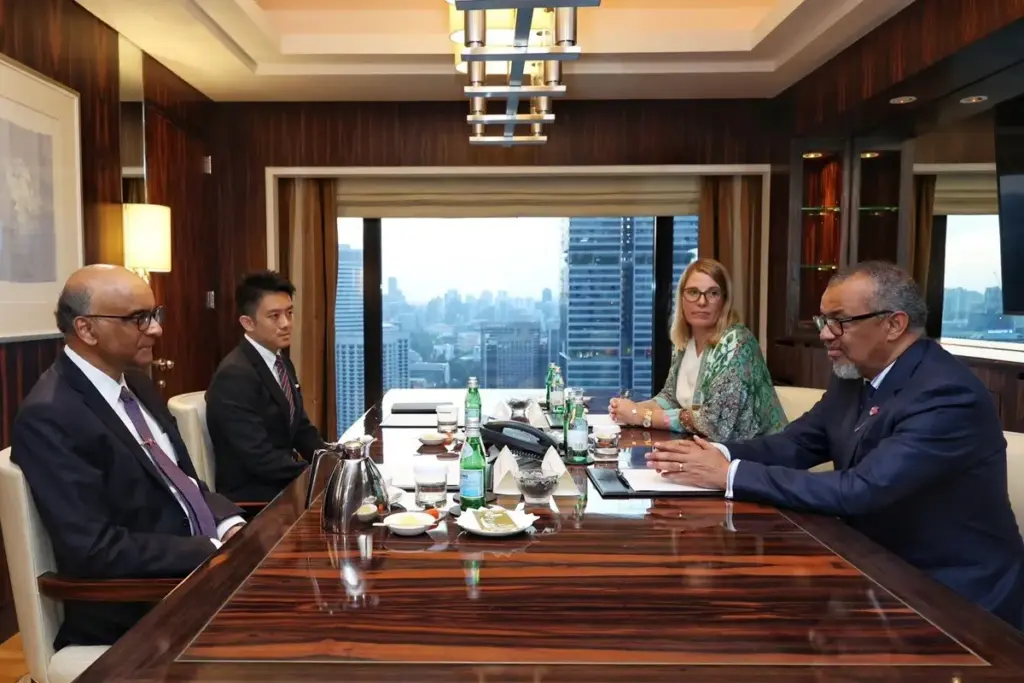
Philanthropic support has long been recognized as a silent engine behind the progress of global health initiatives, but its role is increasingly moving to the forefront of international strategy. As nations grapple with an era defined by economic volatility, climate-related health risks, and the lingering threat of future pandemics, the intersection of private capital and public health policy has never been more critical. This synergy was the central theme at the recent Philanthropy Asia Summit, held in Singapore from May 5–7, 2025, where global leaders gathered to discuss how strategic investments can fortify health systems and accelerate the pursuit of universal health coverage.
Dr. Tedros Adhanom Ghebreyesus, the Director-General of the World Health Organization (WHO), utilized the platform to articulate a vision where philanthropy acts not merely as a supplemental funding source, but as a primary driver of systemic change. In his address to the delegates, Dr. Tedros underscored that the contributions of philanthropic partners are essential for realizing the organization’s core mandate: ensuring that the highest attainable standard of health is treated as a fundamental human right rather than a privilege reserved for the affluent.
The Summit, organized by the Temasek Foundation and the Philanthropy Asia Alliance, provided a stage for high-level dialogue on the necessity of "country self-reliance." In a world described by the Director-General as increasingly turbulent, the ability of individual nations to withstand health shocks depends heavily on the robustness of their local infrastructure. Dr. Tedros highlighted that philanthropic engagement is particularly effective when it prioritizes long-term capacity building over short-term interventions, allowing health systems to evolve from fragile, donor-dependent models into resilient, self-sustaining networks.
Central to these discussions was the acknowledgment of Singapore’s proactive role in international health security. During the proceedings, Dr. Tedros expressed his profound gratitude to His Excellency President Tharman Shanmugaratnam and the people of Singapore. The Director-General pointedly recognized the Temasek Foundation as one of the early pioneers in pledging support for the WHO’s current Investment Round, a pivotal financial mechanism designed to provide the organization with the flexibility and stability required to respond to global health emergencies and persistent health disparities.
The WHO’s ongoing Investment Round represents a strategic pivot for the organization. By actively seeking to expand its donor base beyond traditional state actors, the WHO is looking to harmonize the objectives of international public health with the agility of the philanthropic sector. Dr. Tedros noted that these partnerships are instrumental in helping countries strengthen essential health services, thereby creating the foundational layers necessary for achieving universal health coverage. When philanthropic entities align their resources with the WHO’s strategic priorities, they essentially multiply the impact of limited governmental budgets, filling critical gaps that might otherwise remain unaddressed.
The utility of philanthropic capital often lies in its appetite for innovation. While traditional governmental and multilateral funding streams are often constrained by legislative mandates, multi-year budget cycles, and the need for immediate, proven results, philanthropic organizations are uniquely positioned to act as venture capitalists for the global health sector. They can provide the necessary "patient capital" required for high-risk, high-reward research—such as the development of novel vaccine platforms, experimental diagnostic tools, or adaptive digital health technologies. This willingness to fund research that is deemed too speculative by traditional institutions has, on numerous occasions, yielded breakthroughs that have fundamentally altered the trajectory of disease control.
Beyond the infusion of capital, the expertise provided by the philanthropic sector acts as a powerful catalyst for policy advocacy. Philanthropic actors are often highly effective in raising awareness about neglected tropical diseases, health inequities, and the social determinants of health that contribute to poor outcomes in vulnerable populations. By utilizing their influence to advocate for evidence-based policies, these organizations help translate complex scientific findings into actionable legislative and social change. They act as a bridge between the clinical community, policy-makers, and the public, helping to maintain global focus on health priorities even when competing geopolitical crises threaten to divert attention.
The collaboration between the WHO and philanthropic partners is specifically designed to complement the work of governments and international organizations. Rather than operating in silos, these partnerships aim to amplify the reach of existing public health frameworks. For instance, in the realm of pandemic preparedness, philanthropic support has enabled the rapid scaling of vaccine distribution chains and the enhancement of genomic surveillance systems in resource-limited settings. By integrating these private sector strengths into the national health systems of recipient countries, the partnership ensures that progress is sustainable, scalable, and deeply embedded within local structures.
Looking toward the future, the integration of philanthropic collaboration is set to remain a pillar of the WHO’s Fourteenth General Programme of Work. This framework, which outlines the organization’s strategic path for the coming years, emphasizes the need for a diversified and sustainable funding base. The success of this vision rests on the ability of the WHO to effectively leverage the unique strengths of a wide range of global health stakeholders. By creating a collaborative ecosystem where the resources of philanthropies are matched with the technical expertise and global reach of the WHO, the organization seeks to maximize its impact on human health outcomes across the globe.
The message delivered in Singapore was clear: the challenges facing global health are too vast and too complex for any single actor or entity to resolve alone. The shift toward a more inclusive, partnership-driven model of health funding acknowledges that the complexity of modern health threats—ranging from the resurgence of infectious diseases to the quiet crisis of non-communicable diseases—requires a multi-faceted approach.
As the summit concluded, the emphasis remained firmly on the concept of partnership as a prerequisite for success. By fostering an environment of mutual trust and strategic alignment, the WHO and its philanthropic partners are working to ensure that the global health community can respond with agility to the health challenges of today, while simultaneously building the resilient infrastructure necessary for tomorrow. The ongoing support from institutions like the Temasek Foundation, and the leadership shown by Singapore, serves as a blueprint for how nations and private foundations can work in concert to achieve the enduring goal of health for all, ensuring that no country is left behind in the pursuit of wellness and stability.
In this new landscape, the role of philanthropy is being redefined from an external contributor to an essential participant in the architecture of global health. As the WHO moves forward with its strategic initiatives, the insights gained and the partnerships solidified during the Singapore summit will undoubtedly continue to play a pivotal role in shaping the health outcomes of millions worldwide. By focusing on shared goals and long-term systemic progress, this coalition of public and private interests remains committed to the foundational vision of the WHO: that health is a universal right, and that the path to achieving it must be paved through collective action, innovation, and unwavering commitment.