










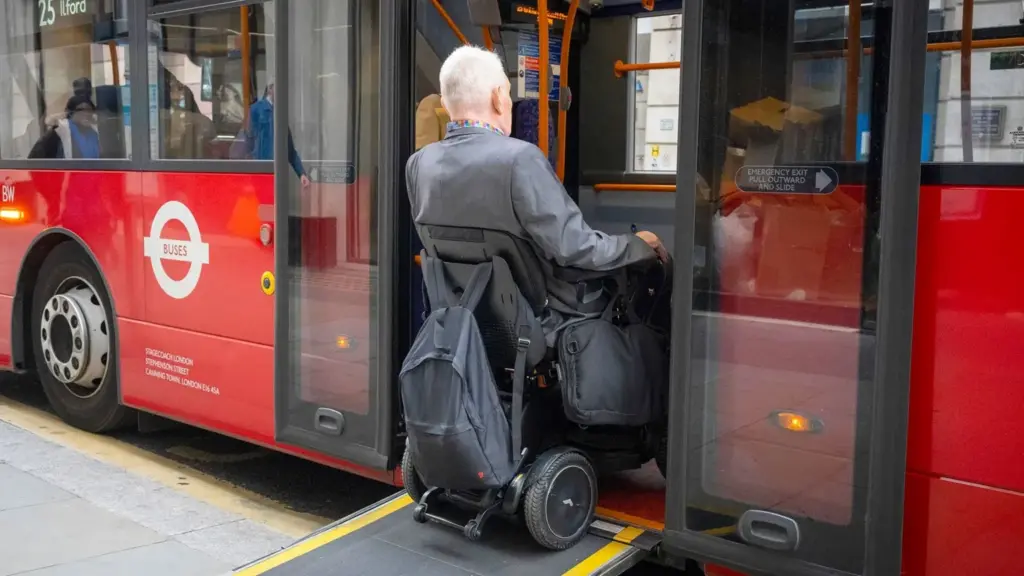
Starting April 1, disabled people across England will be able to travel by bus for free at any time of day, marking a major transformation in public transportation accessibility and daily mobility for roughly one million residents.
Previously, free bus passes issued under the concessionary travel scheme were restricted to off-peak hours on weekdays, specifically valid only between 09:30 and 23:00. This temporal restriction created significant barriers for pass holders, making it remarkably difficult to commute to standard morning jobs, attend early professional obligations, or participate in late-night educational, social, and cultural events. The removal of these time limits effectively transforms the standard bus pass into a true full-time lifeline, granting disabled individuals the freedom to travel whenever their personal or professional lives demand it.
The groundbreaking policy follows a highly successful regional trial implemented within Greater Manchester’s integrated public transport system, known as the “Bee Network.” The expansion also serves as a direct response to years of relentless campaigning by prominent disability rights organizations, including Scope and Transport for All. Advocates have widely celebrated the government’s move, praising it for dismantling an unfair “postcode lottery” system where the validity of a concessionary pass previously depended heavily on localized municipal rules and regional funding decisions. However, disability advocacy organizations continue to emphasize that while this policy is a monumental victory, it remains only one step forward. They note that eligibility requirements and assessment processes across different regions still require broader standardization to ensure true equity nationwide.

To secure the long-term viability of the program and make the initiative permanent, the £60 million scheme is being jointly funded through the Department for Transport and the Department for Work and Pensions. Government officials have framed the sweeping reform as an essential workforce and cost-of-living initiative. This policy aligns with existing national transit measures designed to ease financial pressures on the public, such as the nationwide £2 single-fare cap. Furthermore, the reform brings England in line with similar 24/7 concessionary transit programs that have already been operating successfully in Scotland and Wales for years.
Global Takeaways: How Other Countries Can Make Accessible Commuting Possible
Making daily commuting accessible, reliable, and affordable for disabled citizens requires a careful and deliberate combination of comprehensive policy design, integrated digital systems, and targeted public investment. As transportation networks worldwide look for models to emulate, the United Kingdom’s latest reform offers a clear blueprint for how national governments can integrate social welfare policy with modern transit infrastructure.
Why Was the UK Able to Do It?
The ability of the United Kingdom to implement a nationwide 24/7 free bus travel scheme for disabled individuals stems from a combination of centralized transit frameworks, established statutory concessionary travel entitlements, and sustained pressure from civil society organizations. By building upon the existing statutory framework of the English National Concessionary Travel Scheme—which has historically guaranteed off-peak bus travel—the government possessed the legislative architecture necessary to expand benefits without inventing an entirely new administrative apparatus from scratch. Furthermore, the active participation of local authorities, combined with joint financial backing from central government departments such as the Department for Transport and the Department for Work and Pensions, provided the fiscal stability required to absorb the operational costs associated with increased off-peak and peak ridership.
Does It Depend on Existing Infrastructure?
Yes, heavily. Free transit passes only work if the public transport network is physically and technologically accessible across all operating hours. The success of any expanded transit concession relies on comprehensive infrastructure investments. This includes the widespread deployment of low-floor buses equipped with functioning wheelchair ramps and secure designated spaces, real-time audio-visual announcement systems for passengers with sensory impairments, and well-maintained physical boarding environments at bus stops and transit interchanges. Additionally, digital ticketing infrastructure, standardized smartcard readers, and reliable operator training play an indispensable role in ensuring that drivers and station personnel can seamlessly accommodate disabled passengers during peak commuting hours without causing delays or service friction.
What Is Needed to Make Commuting Affordable for People with Disabilities?
Creating an economically viable and genuinely inclusive public transit ecosystem for disabled commuters requires coordinated action across multiple levels of governance and service delivery. First, sustainable long-term public funding models—such as dedicated joint budgets between transport and social security authorities—are essential to compensate bus operators fairly for carrying concessionary pass holders without compromising route viability or service frequency. Second, policymakers must eliminate regional discrepancies and localized eligibility criteria, ensuring that a disabled citizen enjoys identical travel rights regardless of where they live within a country. Finally, ongoing consultation with disability advocacy groups ensures that policy adjustments directly address real-world barriers, allowing transit networks to evolve in step with the actual needs of the communities they serve.