







Core ideas within Buddhist and Daoist spiritual traditions reflect the deep commonalities found across human-scale indigenous cultures worldwide. A compassionate framework of love, understood as vulnerable mutual knowing, is inherently compatible with a panpsychic relational philosophy. Everyone ultimately wants their lived experience to be taken seriously. As embodied spirits, humans are compelled to make sense of this complex world, a task that can only be achieved in good company and at a human scale.
Life
Life creates conditions conducive to life, as sustainability expert Janine Benyus famously observed. This simple yet profound definition hints at the fundamental reality that the dynamic process of living consists of continuous feedback loops. Life is entirely relational, sacred, cyclical, fleeting, compostable, nested, regenerative, and forever mysterious for all who participate in it.
When examining the spatial and temporal scales relevant to biological and ecological systems, the smallest feedback loops emerge between molecules, resulting in the mind-boggling complexity found in cell biology and molecular genetics. These loops scale up across bioregional terrestrial and marine ecosystems within Gaia, the living planet. Popular anthropocentric conceptions of consciousness generally restrict the term to animals with brains, thereby excluding the vast network of feedback loops that contribute to lived experiences at both microscopic and macroscopic scales.
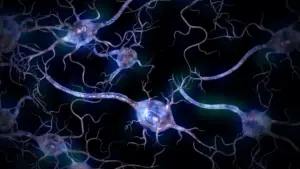
Powered-up positive feedback loops occur when information accumulates within specific living cells or organisms over time. These dynamics are always temporary relative to the lifespans of the entities involved. Human bodies grow to a certain scale and remain intact for a lifetime, maintaining internal molecular feedback loops in a balanced state. Similarly, social feedback loops between humans grow into relationships, remaining stable through shared experiences and mutual understanding before yielding cultural outputs that feed back into the local ecology of care.

Spirits
Any high-dimensional space providing a reasonable description of Gaia—encompassing all of life, including the potential of homo ecologus—is best conceptualized entirely through relationships, from the foundational layers of physics upward. Life consists of relationships that act as feedback and learning loops, which in aggregate constitute the building blocks of consciousness as perceived at the human scale. This relational perspective aligns closely with Eastern spiritual and philosophical texts.
While human limitations prevent science from empirically proving or disproving this emergence of consciousness, this reality simply highlights the boundaries of human comprehensibility. Just as mathematics contains statements that can never be definitively proven true or false, human cognition has inherent limits. A universe conceptualized entirely through dynamic feedback loops leads directly to a panpsychic philosophy where consciousness is omnipresent across all scales, echoing Buddhism and Daoism.
Buddhism, rooted in the teachings of the historical Buddha, centers on minimizing suffering, or dukkha. This core objective corresponds directly to the active desire among hypersensitive neurodivergent individuals to minimize cognitive dissonance. It also highlights the broader societal friction that occurs when a culture insists on maintaining high levels of cognitive dissonance over extended periods.
Similarly, Daoist philosophy emphasizes harmony with the Dao, advocating for effortless action, naturalness, simplicity, compassion, frugality, and humility. These virtues align closely with the sensitivity profiles of many neurodivergent individuals and offer a timeless critique of anthropocentric empire-building. Together, these traditions reflect the operating principles of egalitarian hunter-gatherer societies that prioritize cooperation over dominance.

Love
The extent to which living beings are truly alive emerges from mutual trust, shared commitments, and mutual understanding across relationships. By design, relationships with abstract, super-human scale institutions are entirely devoid of genuine shared experiences. The more a society forces individuals to invest in such sterile relationships, the less capacity remains for authentic connections with living beings.
Recognizing these dynamics allows for a sober perspective on institutional collapse, viewing it as the expiration of an invalid social license. Modern society has much to learn from indigenous societies that have managed to resist the commodification of life. Relationships are best understood as continuous, multi-modal, balanced dialogues within ecologies of care. Reframing evolution through collaborative niche construction, rather than cutthroat competition, returns human culture to its cooperative roots.
Sensitivity Profiles
All humans possess unique sensitivity profiles shaped by neurological baselines and lived experiences within specific ecological contexts. This is particularly true for hypersensitive neurodivergent individuals, many of whom have experienced trauma in a social world that routinely marginalizes and pathologizes them. Studies show that a significant majority of neurodivergent adults frequently feel overwhelmed, misunderstood, disrespected, or unsafe.
Official diagnostic frameworks for conditions like autism are frequently entangled with symptoms of complex trauma. Because individuals possess uncommon baseline sensitivities from birth, compounded by the pressures of a hypernormative industrial society, distinguishing between inherent neurodivergence and trauma responses is often impossible. The modern medical model, focused heavily on decontextualized individual diagnoses, frequently falls short and can inflict harm on intersectionally marginalized populations.

Unprocessed, persistent imbalances in human relationships generate cognitive dissonance, which registers as a profound psychological and physical dis-ease. While some individuals can tolerate cognitive dissonance for extended periods, hypersensitive individuals are often acutely aware of it, driving them to seek resolution. The prevailing psychological diagnostic manuals tend to police the boundaries of culturally acceptable sensitivity profiles while pathologizing everything outside those narrow parameters.
Culture Co-Evolution
Major evolutionary milestones throughout the history of Gaia are characterized by co-evolutionary processes. Cell biology demonstrates the complementary roles of abstract symbol systems and semantics, establishing that evolution is fundamentally an ecological process rather than a purely species-specific one. Semi-permeable cell membranes provide a multi-billion-year-old model for cooperative interaction between living organisms.
Egalitarian hunter-gatherer societies exemplify the fruits of hundreds of thousands of years of cultural co-evolution, prioritizing omni-directional learning and open spaces for mutual understanding. By moving beyond the wasteful friction of head-to-head competition, human communities can cultivate digital and physical communication tools designed to support collaborative niche construction rather than centralizing power among political or corporate strongmen.
The Human Spirit Within Gaia
Humans evolved to make sense of the world at human scales. Radical egalitarianism forms the architectural foundation of human adaptive intelligence, distinguishing our species from other primates through our advanced capacities for language and culture. Consequently, attempting to define normalcy or adaptiveness at the level of the isolated individual is fundamentally flawed.

Contemporary Western, Educated, Industrialized, Rich, and Democratic societies have become profoundly detached from their evolutionary roots, substituting genuine community with corporate spectacles and transactional economics. In the absence of trust-based ecologies of care, institutionalized bureaucracy and corporate power have become the default anchor points for social life, obscuring the relational reality of the living planet.
Becoming Aware of Cultural Bias
To recognize cultural bias across human endeavors, it helps to examine academia and scientific investigation as feedback loops attempting to model Gaia. When critical lenses are applied to modern scientific disciplines, particularly the triad of corporate artificial intelligence, dark patterns in the digital economy, and narrow economic modeling, the prevalence of unexamined, life-denying assumptions becomes apparent.
The modern religion of economics has institutionalized an obsession with maximizing quantifiable utility and net worth from human lives, often treating individuals as mere economic units between the ages of twenty and sixty-five. This hyper-utilitarian framework devalues intergenerational dialogues and fragments society into competing age cohorts, eroding the communal bonds necessary for human well-being.
Reviving Trust in Humanity
The atomized modern social world often defies comprehension because human-scale cultural organisms have been eroded from living memory. The competitive framework of homo economicus normalizes the demand to appear independent and invulnerable, fostering ubiquitous mistrust and mental health crises. Research consistently demonstrates that while neurodivergent individuals deeply wish to support others, many harbor acute fears of asking for help in return.

This systemic isolation breeds widespread self-doubt, shame, and guilt among populations striving to succeed within a toxic framework. However, growing numbers of professionals, therapists, and community members are stepping away from these life-denying models to participate in emerging ecologies of care. By aligning human endeavors with the cooperative wisdom found in both indigenous traditions and modern cooperative movements, society can foster viable exit paths from failing institutional structures.
As the United Nations International Year of Cooperatives highlights the enduring global impact of cooperative models, individuals and communities have a clear blueprint for reducing suffering. Grounded in the enduring wisdom of Gaia and human-scale relationships, humanity can navigate the transition away from carbon-pulse consumption and toward a regenerative, relational future.