







Why do some new skills seem to click almost instantly, becoming second nature after only a few attempts, while others remain frustratingly elusive, resisting even the most rigorous and repeated practice? For decades, scientists have attributed this discrepancy largely to innate talent, individual dedication, or the quality of instruction. However, a groundbreaking study suggests that the secret to mastering new abilities may lie in a biological mechanism that is far more subtle: whether the brain is physiologically primed to turn fleeting practice into a permanent, lasting memory.
A research team at Tohoku University, specializing in the complex physiology of super-network brain systems, has unveiled a critical piece of this puzzle. By studying mice, the researchers have demonstrated that stimulating the vagus nerve—a major communication highway connecting the body’s internal organs to the brain—immediately after training can significantly strengthen long-term motor learning. Their findings, published on August 25, 2026, in the journal iScience, highlight a previously overlooked, vital role for the body-to-brain feedback loop in ensuring that new skills persist over time.
The Vagus Nerve: A Gateway to Neural Plasticity
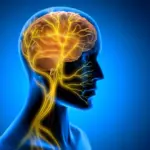
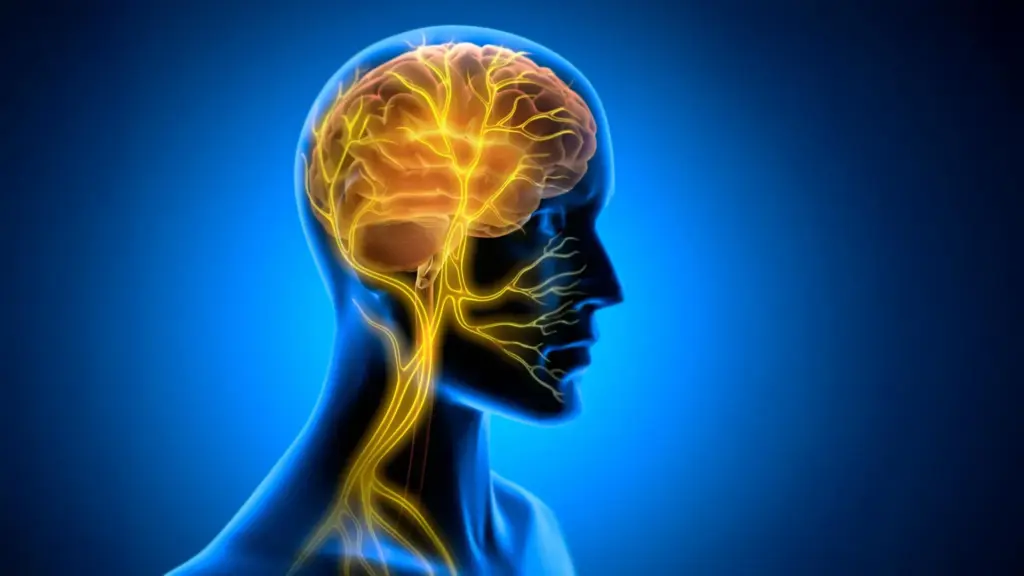
The vagus nerve is one of the most essential components of the autonomic nervous system. Acting as a bidirectional information superhighway, it carries constant streams of data from the internal organs to the brain while simultaneously transmitting regulatory instructions from the brain back to those organs. Because of its vast reach and influence, scientists have long been able to influence this pathway through Vagus Nerve Stimulation (VNS), a clinical technique already approved and widely used for treating various neurological and psychiatric disorders, including epilepsy and treatment-resistant depression.
Historically, the scientific community has viewed VNS primarily as a form of neuromodulation—a way to alter the activity of neurotransmitter systems, such as norepinephrine or acetylcholine, which are known to be involved in attention and arousal. However, this new research suggests that we have been missing a crucial piece of the puzzle. The study indicates that VNS may trigger a secondary, equally important mechanism: the induction of rhythmic changes in the blood vessels within the brain. By modulating the vascular environment, the vagus nerve may be creating a unique physiological "window" that allows the brain to solidify newly acquired information.
To investigate this hypothesis, the researchers developed a specialized, miniaturized cuff electrode, which they surgically attached to the left cervical vagus nerve of their mouse subjects. They then observed how the mice responded to VNS while undergoing a specific training regimen known as the horizontal optokinetic response (HOKR).
HOKR is a classic cerebellum-dependent eye movement task. In this scenario, mice are taught to improve their ability to track moving visual stripes. This task is remarkably similar to the automatic, reflexive eye movements that humans experience when standing on a stationary platform and watching a train move past, or looking out the window of a moving vehicle at the passing landscape. It is a precise, measurable motor skill that provides an ideal model for testing how the brain processes and retains new information.
The Hidden Window of Opportunity
One of the most intriguing aspects of the Tohoku University study is the timing of the intervention. The researchers applied VNS only after each training session concluded, rather than during the learning task itself. When they analyzed the data, they discovered that the stimulation provided no immediate boost to the mice’s performance while they were in the midst of training. A mouse that received VNS performed no better than its peers during the initial acquisition phase of the experiment.
However, the benefits became strikingly apparent in the days that followed. Mice that had received the post-training stimulation demonstrated significantly stronger long-term learning outcomes. This temporal pattern strongly suggests that VNS does not necessarily make the learning process easier, but rather optimizes the consolidation process—the crucial phase that occurs after practice, when the brain is hard at work converting fragile, short-term experiences into durable, long-term neural pathways.
"The key point is that VNS was delivered only after training," explains Professor Ko Matsui, a lead researcher on the project. "Our findings suggest that VNS may open a hidden window of opportunity for enhanced learning by making the brain environment more receptive to long-lasting change." By manipulating the timing, the researchers found that they could effectively "lock in" the motor skills that the mice had just practiced, providing a clearer understanding of why the brain sometimes fails to cement new knowledge despite persistent effort.
Rhythmic Changes in Brain Blood Volume
To understand exactly what was happening inside the brain to facilitate this improved retention, the team monitored the cerebellar flocculus, a specific area of the cerebellum known to be essential for HOKR learning. Using an advanced technique called fiber photometry, the researchers were able to track blood volume activity in this region in real time.
The results revealed a sophisticated two-phase vascular response following a single round of VNS. Initially, the local blood volume in the cerebellar flocculus decreased briefly, followed by a delayed, compensatory rise. When the team repeated the stimulation, they observed that it created distinct, rhythmic oscillations in blood volume.
These rhythmic pulses were not merely a side effect; they appeared to be fundamentally linked to the success of the learning task. The mice that exhibited larger, more pronounced blood volume oscillations during the post-training window generally demonstrated superior learning outcomes by the fifth day of the experiment. This correlation provides compelling evidence that the brain’s vascular environment is not just a passive provider of oxygen, but an active participant in the creation of long-term memory. By tuning the brain’s metabolic environment through these rhythmic vascular movements, the body may be signaling to the brain that a specific experience is worth preserving.
"Our brains may be more strongly influenced by the body than we imagine," says lead author Junyu Chen. "By tuning the brain’s metabolic environment, including rhythmic vascular movements, we may eventually unlock capacities that would otherwise remain latent." This concept shifts the focus of cognitive science from purely neural pathways to a more holistic view of the brain as a system deeply embedded within, and influenced by, the rest of the body’s physiological rhythms.
Future Horizons in Brain-Body Communication
The discovery that vagus nerve stimulation can modulate blood flow to facilitate memory consolidation opens a wide array of possibilities for future research. While the current study focused on a specific motor task in mice, the underlying biological mechanism—the interplay between the vagus nerve, vascular oscillations, and neural plasticity—is likely a fundamental feature of mammalian brain function.
Moving forward, the researchers aim to refine these stimulation protocols. One of the primary goals is to determine the precise timing, frequency, and intensity of VNS required to produce the most effective learning outcomes. Furthermore, the team hopes to better understand the signaling pathways that allow the brain to "interpret" these vascular rhythms as a signal to prioritize the storage of new memories.
As scientists continue to untangle this two-way communication pathway between the brain and the body, the implications for human health and education could be significant. If we can learn to harness or mimic these natural biological signals, we may develop new strategies to help individuals recover from motor impairments, accelerate the acquisition of complex skills, or even combat cognitive decline. By looking beyond the confines of the skull and acknowledging the vital role of the body in cognitive function, researchers are gaining a deeper understanding of how learning becomes lasting, and how that process might one day be enhanced for the betterment of human capability.