








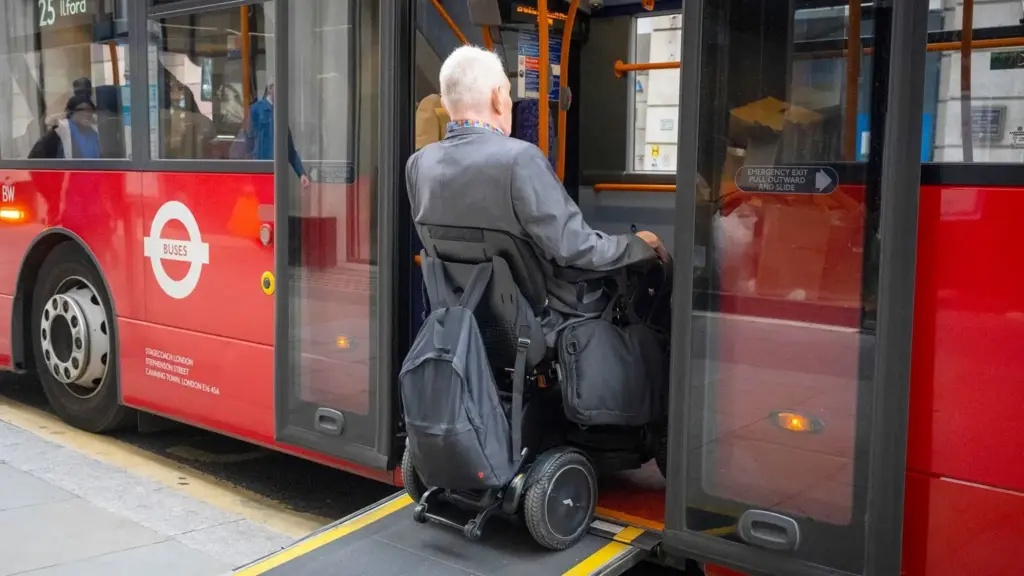
Starting April 1, disabled people across England will be able to travel by bus for free at any time of day, marking a monumental shift in the country’s public transportation accessibility. Previously, free bus passes were strictly restricted to off-peak hours on weekdays—specifically between 09:30 and 23:00. This legacy time constraint created significant barriers for pass holders attempting to commute to standard morning jobs, arrive early for professional commitments, or attend late-night cultural and social events. By removing these time limits, the policy change will benefit an estimated one million people nationwide, effectively transforming the national bus network into a true full-time lifeline for disabled citizens.
The landmark policy follows a highly successful trial period within Greater Manchester’s integrated "Bee Network" and directly responds to years of persistent campaigning by prominent disability rights organizations, including Scope and Transport for All. Advocates have widely celebrated the move, praising it for eliminating an unfair "postcode lottery" where the validity of a concessionary pass previously depended on fragmented local council rules and regional funding variations. However, while disability charities have lauded the sweeping reform, they have also emphasized that this is merely a vital first step, noting that eligibility requirements across different regions still require broader standardization to ensure complete equity.
To make the program permanent and financially viable, the £60 million scheme is being jointly funded through the Department for Transport and the Department for Work and Pensions. Government officials have framed the reform as an essential workforce participation and cost-of-living initiative. This investment integrates seamlessly with existing transit measures, such as the nationwide £2 single-fare cap, while bringing England into alignment with similar 24/7 concessionary transit programs that have already been operating successfully in Scotland and Wales.

Global Takeaways: How Other Countries Can Make Accessible Commuting Possible
Making daily commuting accessible and affordable for disabled citizens requires a careful combination of deliberate policy design, advanced digital systems, and targeted public investment. The UK’s latest reform highlights the intricate ecosystem required to turn concessionary travel into a practical reality for millions of people.
Why Was the UK Able to Do It?
The ability to implement a nationwide 24/7 free bus travel scheme stems from a combination of centralized policy frameworks, coordinated departmental funding, and sustained pressure from advocacy groups. By pooling financial resources from both the Department for Transport and the Department for Work and Pensions, the central government was able to underwrite the £60 million cost required to offset operator revenues. Furthermore, the groundwork laid by regional pilot programs, such as Greater Manchester’s "Bee Network," provided crucial empirical data demonstrating that removing time restrictions could be managed effectively without destabilizing local transit networks. This institutional backing, combined with years of lobbying by organizations like Scope and Transport for All, created the political momentum necessary to push the reform across the finish line.
Does It Depend on Existing Infrastructure?
Yes, heavily. Free transit passes only work if the public transport network is physically and technologically accessible to begin with. Concessionary fares are of limited use if passengers cannot physically board the vehicle or navigate the surrounding environment. A successful transit system requires low-floor buses equipped with functioning wheelchair ramps, audible and visual next-stop announcements, and well-maintained boarding spaces at bus stops. Additionally, technological infrastructure—such as smartcard readers, standardized electronic pass validation systems, and unified ticketing platforms—must be integrated smoothly across regional boundaries to ensure that a pass issued in one jurisdiction is effortlessly recognized and honored in another, preventing administrative friction for daily commuters.
What Is Needed to Make Commuting Affordable for People with Disabilities?
Achieving true affordability and accessibility in public commuting requires a multi-layered approach that goes beyond simply waiving fares. First, governments must provide robust, long-term financial backing to transit operators to compensate for lost farebox revenue, ensuring that expanded access does not lead to service cuts or route cancellations in rural and underserved areas. Second, eligibility criteria must be standardized on a national level to eliminate regional disparities, ensuring that a citizen qualifying for support in one town enjoys the exact same rights and privileges in another. Third, policy design must explicitly account for modern work patterns, removing arbitrary time restrictions that penalize early morning commuters or those working unconventional shifts. Finally, continuous consultation with disability advocacy groups is essential to identify operational bottlenecks, adapt to changing urban environments, and ensure that investments directly reflect the lived experiences of the people they are intended to serve.