








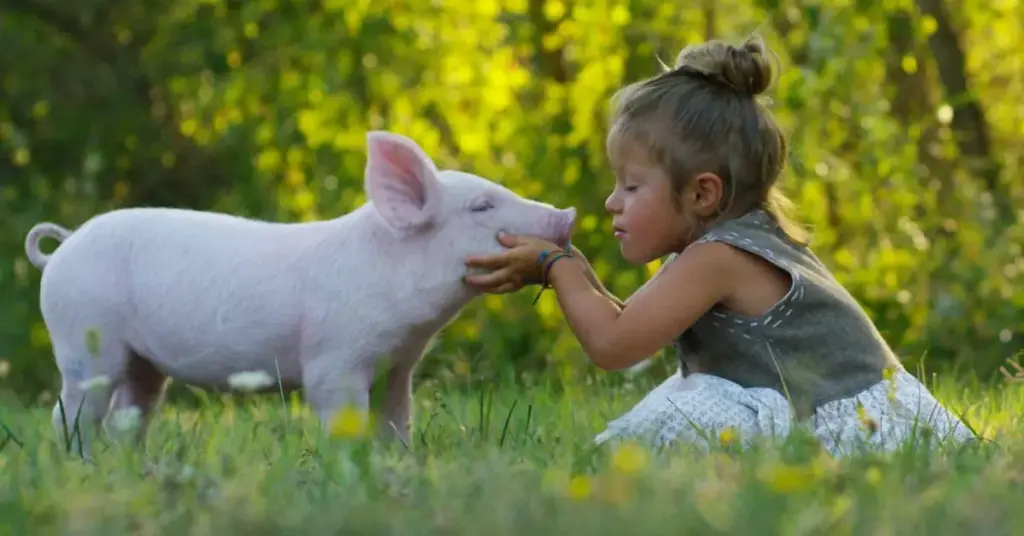
For decades, psychologists and sociologists have grappled with a fundamental tension in human behavior: the "meat paradox." This phenomenon describes the conflict between the widespread love people have for animals and their simultaneous decision to consume them as food. As researchers delve deeper into the cognitive mechanisms that allow this contradiction to persist, a robust body of literature has emerged, shedding light on the ideologies, societal structures, and psychological defenses that sustain the consumption of animals.
At the heart of this inquiry is the concept of "carnism," a term popularized by social psychologist Melanie Joy. Carnism functions as an invisible belief system—or ideology—that conditions people to eat certain animals while viewing others, such as household pets, as companions. This conditioning is so pervasive that it often goes unquestioned, rendering the act of eating meat a "default" choice rather than a conscious moral deliberation.
The Four Ns of Justification
One of the most significant advancements in understanding this behavior comes from research into how individuals rationalize their dietary choices. A seminal 2015 study by Piazza, Ruby, Loughnan, and their colleagues identified the "4Ns"—a framework of justifications that meat-eaters frequently employ to resolve the cognitive dissonance caused by the meat paradox. These justifications serve as a psychological buffer, allowing individuals to align their consumption habits with their moral self-concept.

The 4Ns are as follows:
- Natural: The belief that humans are evolutionarily designed to eat meat.
- Normal: The idea that eating meat is a standard social practice and a cultural tradition.
- Necessary: The assertion that meat is essential for human health, strength, or survival.
- Nice: A fourth category, more recently identified by researchers, which highlights the sensory pleasure and taste satisfaction derived from eating meat.
These justifications are not merely opinions; they are deeply ingrained cognitive strategies. When challenged, individuals often retreat into these categories to defend their habits, effectively silencing the discomfort that arises when the humanity or sentience of an animal is acknowledged.
The Denial of Mind and Categorization
Beyond justification, the psychological process of "dissociation" plays a critical role in maintaining carnism. Research by Bastian, Loughnan, and others has shown that the act of eating meat is facilitated by the systematic denial of mind to animals used for human consumption. By perceiving animals as lacking complex emotions, intelligence, or the capacity to suffer, consumers create a moral distance that makes the consumption of their flesh palatable.
This process is heavily influenced by language and categorization. Studies have demonstrated that simply labeling an animal as "food" significantly reduces an individual’s empathy toward that creature. When an animal is categorized as a meal, its perceived moral standing drops, and the psychological barrier to harming it diminishes. This cognitive flexibility allows society to maintain a clear divide between the "pet" and the "livestock," despite the biological similarities between the two groups.
Beyond the Individual: Ideological Roots and Social Structures
While individual psychology is a vital piece of the puzzle, recent scholarship emphasizes that carnism is also tied to broader ideological structures. Researchers like Dhont and Hodson have explored the link between speciesism—the assumption of human superiority over other species—and other forms of prejudice, such as ethnic or social dominance. Their "Social Dominance Human-Animal Relations Model" (SD-HARM) suggests that the belief systems that justify human hierarchy over animals often overlap with those that justify social hierarchies among humans.
This connection between attitudes toward animals and societal views is further reflected in historical and social critiques. Scholars have noted that the tendency to dehumanize or categorize others—whether animals or marginalized human groups—has long been a tool for maintaining power dynamics. Just as researchers like Henry Herbert Goddard once attempted to codify "feeble-mindedness" to justify social control, modern advocates for animal welfare argue that the systematic exploitation of animals relies on similar mechanisms of exclusion and pathologization. The evolution of our social understanding of morality, such as the de-pathologization of homosexuality as documented by Drescher, serves as a parallel for how societal norms regarding "the other" can shift over time through rigorous scientific and ethical discourse.
The Tangible Costs of the System
The consequences of maintaining this global food system extend far beyond the psychological state of the consumer. The scale of the industry is staggering. According to data from organizations like Our World in Data and the Sentience Institute, billions of land animals are slaughtered for food every year. When aquatic animals are included, as highlighted by recent research from Mood and Brooke, the numbers reach into the trillions, raising profound questions about the sustainability and ethics of such intensive production.
Furthermore, the environmental impact of industrial animal agriculture is a matter of growing public health concern. Reports from the Food and Agriculture Organization of the United Nations have outlined the significant role livestock systems play in greenhouse gas emissions. Simultaneously, localized impacts from concentrated animal feeding operations (CAFOs) have been linked to public health risks and environmental degradation in surrounding communities, as noted in recent scoping reviews by Pohl and Lee.
There are also human costs to consider. Human Rights Watch has documented the hazardous conditions faced by workers in the meat and poultry industry, pointing to a system that often prioritizes output over the safety and dignity of its workforce. This intersection of human rights, environmental health, and animal welfare suggests that the ideology of carnism is supported by a complex, multi-faceted industrial structure that resists change through economic and social inertia.
The Path Forward
The movement toward more compassionate and sustainable consumption is increasingly supported by nutritional and psychological science. The Academy of Nutrition and Dietetics has acknowledged that appropriately planned vegetarian and vegan diets are healthful and nutritionally adequate for all stages of life. As awareness of the environmental and ethical implications of meat consumption grows, the "psychology of eating animals" has become a central topic of academic and public debate.
The rise of the Society for the Psychology of Human-Animal Intergroup Relations (PHAIR) signifies a growing recognition that our relationship with animals is not just a niche interest, but a core component of human social behavior. Through the combined efforts of researchers, advocates, and policy analysts, the conversation is shifting from "why we eat animals" to "how we can build a more sustainable and ethical future."
Whether through technological advancements in plant-based and cultivated proteins or a cultural shift in how we perceive the moral standing of non-human beings, the grip of traditional carnism is being examined with unprecedented scrutiny. By understanding the 4Ns and the psychological mechanisms of dissociation, society is gaining the tools to move toward more conscious, empathetic, and sustainable choices—one meal at a time.