By Michelle Diament | October 16, 2026
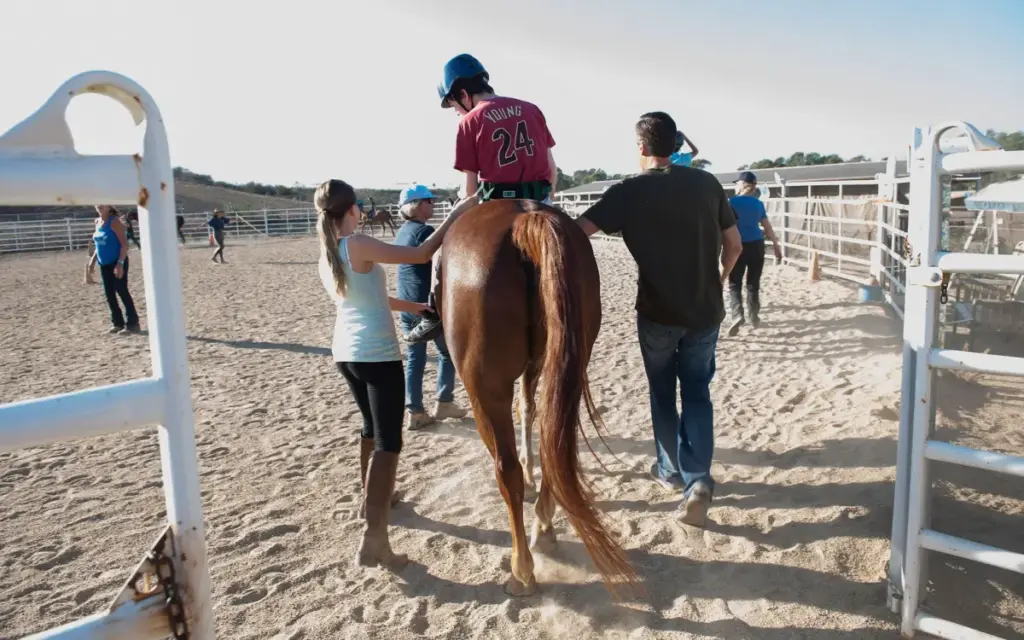
Riding horses and even simply spending structured time around them can make a profound, measurable difference for children with autism, helping to significantly reduce hyperactivity, manage irritability, and boost vital social skills, according to new research published this month.
The study, which examined 236 children diagnosed with autism and co-occurring psychiatric conditions, provides compelling scientific backing for what equine therapy advocates have observed for decades. Researchers found that participating in either a structured therapeutic horseback riding program or engaging in supervised barn activities brought about meaningful behavioral benefits for the young participants, who ranged in age from 6 to 16 years old.
The findings, published in the prestigious journal Pediatrics, offer new insight into how non-traditional, experiential therapies can complement conventional clinical interventions. While horseback riding is not universally suited for every child on the autism spectrum, the study underscores its potential as a valuable, engaging addition to existing treatment frameworks.
To understand the specific impacts of equine-related activities, the research team implemented a carefully controlled study design. Participants were divided into different groups with varying levels of exposure to horses and riding instruction.
Some children were assigned to receive therapeutic horseback riding lessons once a week for a duration of 10 weeks. These sessions involved mounted riding activities guided by trained professionals, focusing on balance, connection with the animal, and following sequential instructions in a dynamic environment.
Meanwhile, children in a second group took part in a designated barn activity program. These participants spent time around the stables, observing and learning about horses, but they did not directly interact with or ride the animals. This distinction allowed researchers to separate the physical and sensory benefits of actually riding a horse from the broader environmental benefits of simply being present in a barn setting.
A third group of children experienced a waiting period before participating in a hybrid format, which involved five weeks of barn activities followed by five weeks of hands-on riding lessons. This methodological approach ensured that all participants ultimately had access to the therapeutic programs while providing researchers with robust comparative data across different exposure levels.
When evaluating the outcomes after the intervention periods, the research team observed notable improvements across multiple behavioral domains. Both the dedicated riding program and the barn activity group led to significant, measurable drops in irritability and hyperactivity among the children. Furthermore, participants demonstrated noticeable enhancements in emotional regulation and social behaviors, skills that are frequently challenging for youth with autism to master in standard classroom or clinical settings.
However, a critical distinction emerged when researchers analyzed the data regarding hyperactivity specifically. While both groups benefited from being in the equine environment, the greatest and most pronounced impact on reducing hyperactivity was observed among the children who actively participated in the riding group.
Robin Gabriels, a professor of psychiatry at the University of Colorado who led the comprehensive study, pointed to the unique physical and sensory nature of riding as a primary driver of these results.
"There is something about riding a horse that is particularly helpful for kids with hyperactivity," Gabriels explained, highlighting the complex neurological and vestibular demands that handling and riding a large animal places on a child.
The rhythmic movement of the horse provides continuous vestibular and proprioceptive input, which can help children regulate their sensory systems, improve focus, and calm their bodies. At the same time, the activity requires intense concentration, coordination, and responsiveness to both the instructor and the animal, engaging the child’s mind and body simultaneously in a way that static, indoor environments rarely achieve.
While the results are encouraging, the study’s authors emphasize that equine therapy should be viewed as a complementary approach rather than a standalone cure or a universal solution. Every child with autism has a unique profile of strengths, sensitivities, and support needs, meaning that what works wonders for one individual may prove overwhelming for another. Factors such as sensory sensitivities to loud noises, fear of large animals, or physical limitations must always be carefully evaluated by parents and healthcare professionals before introducing a child to an equine program.
Nevertheless, for children who are receptive to the experience, working with horses opens up a world of active, dynamic engagement that transcends traditional therapeutic boundaries.
"Working with horses gives these kids a chance to do something active, social and engaging," Gabriels noted. "For some children, that may be a particularly effective way to help them develop skills that can be difficult to teach in a traditional clinical environment."
The publication of these findings in Pediatrics is expected to bolster ongoing advocacy for the integration of animal-assisted therapies into broader treatment plans for youth with developmental disabilities. As families and clinicians continually seek out innovative, evidence-based methods to support children with autism and co-occurring psychiatric conditions, structured therapeutic riding programs stand out as a promising avenue for fostering emotional stability, social growth, and physical regulation.