








For patients suffering from treatment-resistant depression, the search for relief is often a grueling journey through failed medications, intensive therapy, and various experimental interventions. Among the most promising—and complex—of these interventions is deep brain stimulation (DBS), a surgical procedure that involves implanting electrodes to modulate specific neural circuits. Now, a team of researchers at Mount Sinai has reached a significant milestone in understanding why this therapy succeeds for some and fails for others.
In a study published October 1 in the American Journal of Psychiatry, scientists identified three specific white matter pathways in the brain that must be engaged by electrical stimulation to achieve long-term improvement in patients with severe, treatment-resistant depression. This discovery represents the largest multi-site analysis of patients receiving subcallosal cingulate deep brain stimulation (SCC DBS) to date, providing a roadmap that could transform how clinicians approach surgical targeting for mental health disorders.
The Challenge of Precision in Neuromodulation
Deep brain stimulation has long been a subject of intense scientific interest, particularly for conditions that do not respond to conventional psychiatric care. The procedure involves the surgical placement of electrodes within the brain, which then deliver controlled electrical pulses to target circuits implicated in the pathophysiology of depression. However, the efficacy of the treatment is rarely a simple matter of electrode placement.
A primary challenge in DBS is the nature of brain connectivity. Electrical stimulation does not simply affect the localized tissue immediately adjacent to the electrode; rather, it influences vast, complex networks through white matter pathways—the brain’s "wiring"—that connect disparate regions. Consequently, two patients might undergo surgery where electrodes appear to be in identical anatomical locations on a standard scan, yet they experience vastly different clinical outcomes. This discrepancy has long puzzled researchers, leading to the hypothesis that the success of the therapy depends not on the electrode’s coordinate in space, but on the specific neural connections that the electrical field successfully engages.
Identifying the Key Pathways for Lasting Relief
To investigate this phenomenon, the Mount Sinai team analyzed data from several clinical cohorts, including the BROADEN trial and a pioneering group of patients from the University of Toronto, where SCC DBS was first developed. By integrating sophisticated computer models of the electrical fields generated by the implants with detailed maps of brain connectivity, the researchers were able to simulate which pathways were being activated in each patient.
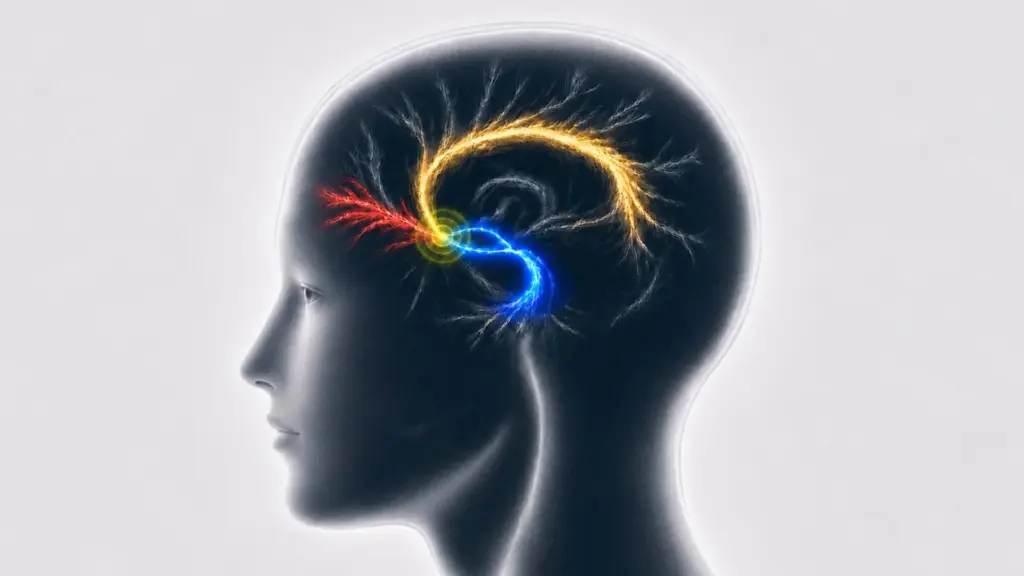
The analysis revealed a consistent relationship between sustained clinical improvement and the stimulation of three specific white matter tracts: the cingulum bundle, the forceps minor, and the medial uncinate fasciculus/ventral amygdalofugal pathways. These pathways appear to be the "keys" to the neural lock, modulating the circuits responsible for mood regulation.
Perhaps most revealing was the observation regarding patients who did not show improvement. Across multiple study sites, researchers found a recurring pattern: patients who remained symptomatic after two years of treatment consistently lacked adequate stimulation engagement with the left cingulum bundle. This finding suggests that even when an electrode is placed in the correct general vicinity, failing to reach these specific pathways can be the difference between remission and persistent illness. While the study did not definitively test whether moving the electrodes to engage these specific paths would resolve the patients’ symptoms, the correlation offers a compelling explanation for the variability in treatment outcomes observed in earlier trials.
Toward a New Paradigm of Connectome-Based Targeting
The findings reinforce a shift in surgical philosophy known as "connectome-based targeting." Rather than relying solely on traditional anatomical landmarks—which can vary significantly from one person to the next—this strategy prioritizes individualized brain connectivity maps to determine the precise positioning of electrodes.
This methodology is already being integrated into contemporary research, most notably in the Abbott TRANSCEND clinical trial. This randomized, controlled study utilizes these personalized maps to guide SCC DBS treatment, representing a move toward a more bespoke form of neurosurgery.
"This study underscores the importance of individualized surgical targeting for achieving optimal outcomes with deep brain stimulation for depression," said Helen Mayberg, MD, the Mount Sinai Professor in Neurotherapeutics and founding Director of the Nash Family Center for Advanced Circuit Therapeutics at the Icahn School of Medicine at Mount Sinai. "In any randomized controlled trial of a neuromodulation treatment, precise lead placement and confirmation that the intended brain target has been engaged are essential first steps. We still have much to learn about which patients are most likely to benefit from stimulation of this particular target, but developing imaging-based signatures that can match patients to their optimal treatment remains a central goal of our research."
Navigating the Future of Personalized Psychiatry
While the identification of these three pathways marks a significant step forward, the researchers emphasize that electrode placement is only one piece of a much larger puzzle. The complexity of depression as a network disorder means that structural placement is unlikely to be the sole determinant of a patient’s recovery.
The study faced certain limitations, particularly regarding the availability of high-resolution imaging. Individual diffusion MRI scans, which provide the most granular view of a patient’s unique white matter architecture, were not available for every participant. In many cases, the team had to rely on generalized connectivity maps. However, in the cohort where researchers were able to compare generalized maps against individual diffusion imaging, the results were consistent, lending significant credibility to the identified pathways.
Moving forward, the goal is to refine the process of patient selection and treatment titration. As Dr. Brian Kopell, Director of the Center for Neuromodulation at Mount Sinai, noted, "This study addresses an important question in DBS: not simply which area of the brain to stimulate, but which connections within that area need to be engaged. For a network disorder such as depression, millimeters can determine whether stimulation reaches the pathways we intend to modulate. Identifying and reproducibly engaging those pathways gives us a more precise surgical target and a framework for understanding why otherwise similar electrode placements may produce different clinical outcomes."
The next phase of this research will involve characterizing abnormal structural and functional brain states along these identified pathways. By doing so, the team hopes to develop more comprehensive models that can guide the adjustment of stimulation parameters—such as pulse width, frequency, and amplitude—on a patient-by-patient basis.
Ki Sueng Choi, PhD, Associate Professor and Imaging Core Leader at the Center for Advanced Circuit Therapeutics at Mount Sinai, summarized the trajectory of the work: "Our findings show precisely engaging these white matter pathways is a critical first step toward sustained response. The next step is to characterize abnormal functional and structural brain states along these pathways to build more detailed models for setting patient-specific stimulation parameters for precision medicine."
As the field of neurotherapeutics advances, the integration of detailed brain mapping with personalized stimulation settings offers a glimmer of hope for those for whom traditional treatments have failed. While further clinical research is required to fully understand the extent to which these methods can improve outcomes across diverse populations, the current study provides a clear, evidence-based direction for the future of neuromodulation.
The research was supported by the National Institutes of Health BRAIN Initiative through grant UH3NS103550, the Hope for Depression Research Foundation, and the DANA Foundation. While Abbott’s Neuromodulation business provided data from the BROADEN clinical trial, it was not involved in the design or analysis of the study. Several of the study’s authors, including Dr. Mayberg, Dr. Kopell, and Dr. Choi, maintain consulting or advisory roles with companies in the field and are listed as co-inventors on patent applications related to these surgical techniques, reflecting the ongoing, close collaboration between academic researchers and industry to translate these findings into clinical practice.