







After reflecting on the collaborative nature of modern healthcare teams over the past few months, it has become increasingly clear that the profession of Occupational Therapy (OT) holds a unique, yet often underappreciated, position in patient care. The discipline occupies a vital niche, yet the profession as a whole frequently struggles to articulate its specific value proposition to the broader medical community. This communication gap is a persistent challenge for many practitioners, who often find themselves explaining their function to doctors, nurses, and families who view health through a strictly clinical or diagnostic lens.
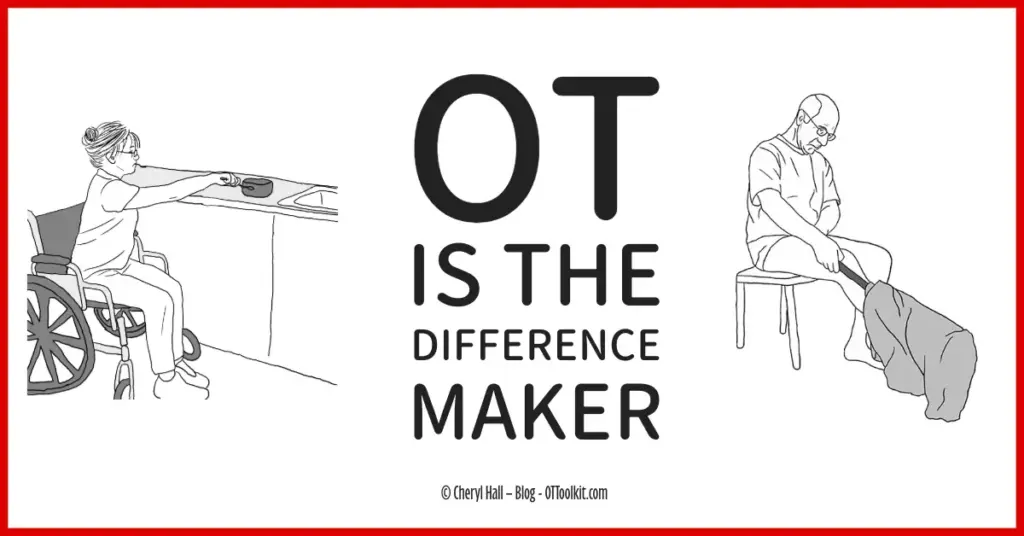
Perhaps the most effective way to address this struggle is to redefine the role of the occupational therapist not just as a support service, but as the "difference maker" on the multidisciplinary team. By grounding this identity in concrete, evidence-based examples of how OTs meet patients exactly where they are in their unique health journeys, the profession can better demonstrate the profound impact it has on the quality of life for those in their care. The stories that linger with a practitioner over a career are rarely those that involve standard, textbook interventions; they are the moments where the OT identified a subtle, often overlooked need and implemented a solution that no other member of the healthcare team would have thought to address.
Terminal Cancer and the Power of Laughter
One of the most poignant examples of this unique perspective involved a 10-year-old patient named "Paul," who was battling terminal cancer. Paul was wheelchair-bound and had gradually become withdrawn and deeply depressed. His prognosis was grim, and his emotional state reflected the heavy burden of his illness. Despite the efforts of the entire medical team—including specialized nursing care, palliative medicine, and psychological support—each daily one-hour OT session would inevitably end exactly as it had begun: with the crushing weight of his condition stifling any potential for joy.
In a moment of inspiration, the decision was made to introduce a simple, non-clinical tool into the room: a reacher-grabber. While Paul’s mother was occupied in the kitchen washing dishes, she momentarily stepped out of the room. The opportunity presented itself to show Paul that he could still engage in a bit of agency and play. The grabber was used to pick up a dish towel, which was then handed to Paul with a whispered instruction to hide it under the table. When his mother returned, she began searching for her missing towel, completely unaware of the interaction that had just occurred.
Paul’s transformation was instantaneous. As his mother searched the room and opened drawers, his eyes lit up, and a genuine, infectious smile spread across his face. When he finally revealed the towel and broke into laughter, the somber atmosphere of the room vanished. The grabber was left with Paul, and he utilized it to engage in playful mischief with his parents and siblings for the final two weeks of his life. Following his passing, his parents specifically reached out to express their gratitude, not for the medical interventions he received, but for the moments of laughter and childhood normalcy that the OT had facilitated during his final days. It was a reminder that in the face of terminal illness, the ability to reclaim one’s personhood through play is a clinical intervention of the highest order.
Restoring Function Through Specialized Adaptation
Occupational therapy often bridges the gap between surgical success and functional independence. Consider the case of "Jack," a patient suffering from severe and uncontrolled diabetes. Following a surgical procedure to address his condition, Jack was left with only his thumbs and half of his dominant index finger. As an occupational therapist, the initial focus was on assisting him with strategies for maintaining independence in Activities of Daily Living (ADLs). However, it became clear that Jack was struggling with a specific, deeply personal limitation that he felt too embarrassed to share with the rest of his medical team.
After some gentle encouragement, Jack admitted that his greatest frustration was not the loss of his major motor skills, but the loss of his ability to perform a simple, private hygienic task. He jokingly referred to it as the loss of his "nose-picking finger." To many, this might seem like a trivial or humorous concern, but for an OT, it represented a vital component of Jack’s autonomy and personal dignity.
The response was to treat the concern with the same rigor as any other physical rehabilitation goal. After assessing the sensation, skin integrity, and circulation in his residual finger, a consultation was held with Jack’s nurse and doctor to ensure the approach was safe. A custom device was then constructed using Velcro and specialized splinting material. Through a series of adjustments and trials, the device allowed Jack to regain control over this specific, private occupation. By addressing a need that Jack felt was too minor or embarrassing to bring up with his physician, the OT restored a sense of normalcy and independence that had been missing since his surgery.
Empowering Patients Beyond Institutional Barriers
The role of the OT often involves acting as an environmental detective, identifying physical barriers in the patient’s home that prevent them from living a full, independent life. "Dorothy," a 75-year-old patient living with severe rheumatoid arthritis, serves as a prime example of how small adjustments can lead to massive quality-of-life improvements. Upon arriving at her home for a scheduled visit, it became apparent that something was amiss when she called for the door to be left unlocked, rather than opening it herself.
Following a thorough evaluation of her physical capabilities and living space, it was discovered that in the ten years she had resided in her apartment, she had never once been able to open her own front door. To compensate for her lack of grip strength and the physical difficulty of the task, she had spent a decade relying on neighbors to open the door for her, leaving it unlocked throughout the day for visitors. This created a significant security and autonomy issue that had been normalized over time.
Upon inspection, it was determined that the apartment’s magnetic door seal was extraordinarily strong, requiring a level of force that Dorothy simply could not exert. A simple, low-cost solution was identified: by applying masking tape to roughly half of the magnetic surface, the resistance was reduced enough for Dorothy to open her door independently for the first time in a decade. Before departing, the building manager was contacted to inspect the modification, and the local fire station was consulted to ensure the door’s fire protection integrity remained within safety standards. Both parties confirmed the adjustment was safe. For Dorothy, this was not just a small home modification; it was the restoration of her freedom to come and go as she pleased.
These three stories—Paul, Jack, and Dorothy—illustrate the core of the occupational therapy profession. While they may appear to be small, singular interventions, they represent the fundamental mission of OT: to identify the barriers to human performance and dignity and to dismantle them, one patient at a time. These are needs that might otherwise go unaddressed in a busy, high-volume healthcare environment, yet they are often the exact moments that define a patient’s perception of their own quality of life.
The next time a healthcare team requires a reminder of the value of occupational therapy, practitioners should look to their own experiences. The stories of being a "difference maker" are not just anecdotes; they are the evidence of the unique, holistic perspective that only occupational therapy brings to the table. By sharing these narratives, OTs can bridge the communication gap, ensuring that their role as vital, essential partners in patient care is clearly understood and fully utilized.