


When people envision modern robotics, the image that typically comes to mind is one of rigid, heavy machinery operating within the confines of a tightly controlled factory floor. These traditional systems demand exhaustive programming, immense computational power, and massive datasets to execute even the most basic physical tasks. If a single variable shifts—if an object is displaced by even a fraction of an inch or the lighting changes unexpectedly—the machine falters and fails. They are powerful, but they are fundamentally brittle.
Yet, a fundamental question has long driven researchers in the field of artificial intelligence and robotics: What if machines could learn the way living organisms do?
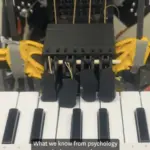
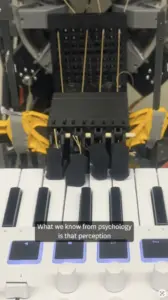
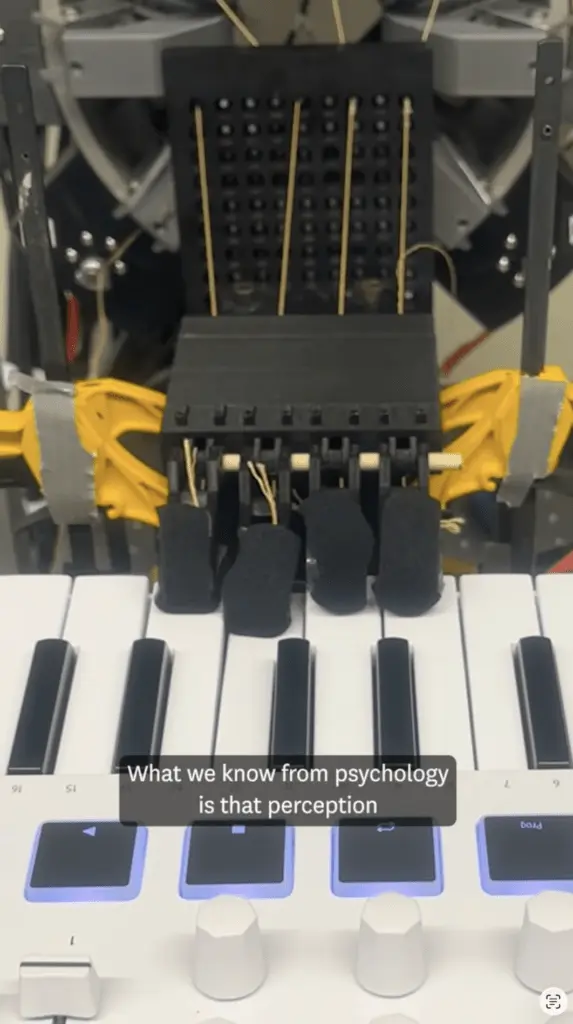
In a recent breakthrough emerging from the USC Viterbi School of Engineering, a team of researchers has developed a novel robotic system known as the "Musician Hand." This remarkably simple, tendon-driven mechanical apparatus achieved a feat that challenges traditional robotics paradigms: after hearing a 30-note musical melody, it played the composition back flawlessly on an electronic piano on its very first attempt.

Crucially, this achievement required no weeks of grueling trial-and-error training, no cloud-scale processing clusters, and no sprawling datasets. Instead, the system relied on just two minutes of self-taught practice to master the dexterity required for the performance.
While watching a robotic hand play a piano melody might initially read as a clever technological parlor trick, the broader implications for the future of assistive technology are profound. This research offers empirical proof that artificial systems can learn effectively from brief, real-world interactions and dynamically adjust to unpredictable environments. In doing so, it opens a compelling new pathway toward the development of highly personalized, responsive assistive devices that can adapt directly to individual human users rather than forcing humans to conform to rigid machine parameters.
How the Musician Hand Works: The Perception-Action Loop
The core mechanism enabling the Musician Hand to master a complex physical task in a matter of minutes is rooted in a biological concept known as the "perception-action loop." Rather than being hard-coded with explicit instructions on how to strike specific keys in a rigid sequence, the robot essentially taught itself how its own physical body operated through exploratory movement.
In living biological systems, infants and animals learn motor control not through millions of lines of pre-written code, but by interacting directly with their environment, observing the results of their movements, and refining their coordination continuously. The USC Viterbi researchers applied a similar philosophy to the Musician Hand. By engaging in a brief period of exploratory motor activity—often referred to in broader robotics contexts as motor babbling—the system mapped its own tendon-driven actuators, understanding tension, response time, and spatial positioning through direct feedback loops.
Once the robot developed an internal representation of its own physical capabilities through this rapid self-exploration, it was presented with the auditory input of the 30-note melody. Translating sound into physical action seamlessly, the system computed the necessary finger movements and executed the performance without hesitation.
This approach marks a sharp departure from conventional AI models, which typically require immense computational infrastructure, consuming megawatts of power and relying on years of historical data to manage complex tasks like autonomous navigation or advanced industrial manipulation. By contrast, the Musician Hand achieved its performance using remarkably efficient, low-power computing hardware—specifically, a standard laptop computer.
Revolutionizing Physical Assistive Tech
Because this perceptual robotics model operates with such high computational efficiency and environmental adaptability, it holds immense promise for the future of physical assistive devices. Traditional prosthetics and robotic exoskeletons often require extensive, tedious calibration periods, and they can struggle immensely when a user transitions from a controlled laboratory setting to the unpredictable friction, angles, and obstacles of the real world.
An adaptive system capable of learning its user’s physical patterns and environmental demands through brief, real-world interactions could fundamentally transform mobility solutions. Rather than requiring patients to undergo lengthy physical therapy regimens designed to match the limitations of a rigid machine, adaptive assistive devices could calibrate themselves to the subtle nuances of an individual’s unique movement profile in real time.
This capability is particularly vital for wearable technologies and prosthetic limbs, where comfort, responsiveness, and intuitive control are paramount. When a device can learn and adapt on the fly, it bridges the gap between human biology and mechanical assistance, creating a more harmonious and natural interaction for the user.
Beyond the Physical: Abstract and Cognitive Applications
The significance of this engineering breakthrough extends well beyond robotic hands and physical mobility aids. The underlying conceptual framework—utilizing efficient perceptual loops to adapt instantly to user inputs—has the potential to reshape how engineers and designers approach software development, interactive learning tools, and cognitive assistance systems.
Traditional digital tools often impose steep learning curves, requiring users to navigate complex interfaces and rigid operational structures. By applying the principles demonstrated by the Musician Hand, future software and digital interfaces could dynamically adjust to a user’s cognitive pace, preferred communication style, or unique workflow requirements.
In educational technology and cognitive support tools, this adaptive capacity could mean the creation of systems that recognize where a user is experiencing friction or difficulty, modifying their approach instantly to provide tailored assistance. Just as the robotic hand learned the dynamics of the piano keyboard through direct feedback, cognitive tools could learn the personalized patterns of human thought and problem-solving, offering support that is both intuitive and deeply contextual.
The Future is Adaptable
For decades, the dominant trajectory of robotics and artificial intelligence has relied on a top-down model: humans must meticulously program, constrain, and adapt to the rigid limitations of the machine. The development of the Musician Hand signals a potential turning point toward an era where technology can efficiently and intuitively adapt to humanity instead.
By shifting the foundational paradigm away from exhaustive, static programming and toward dynamic, perceptual learning, the next generation of assistive technology is poised to evolve beyond simple tools. Instead, they are moving toward intelligent, responsive systems that possess a fundamental comprehension of how humans move, learn, and interact with the physical world around them.
The research from the USC Viterbi School of Engineering underscores a shifting horizon in engineering—one where machines do not merely execute commands, but learn alongside us in real time.