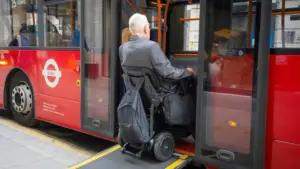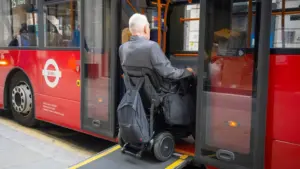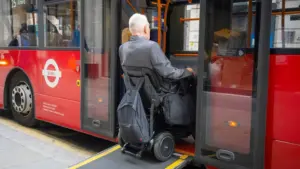









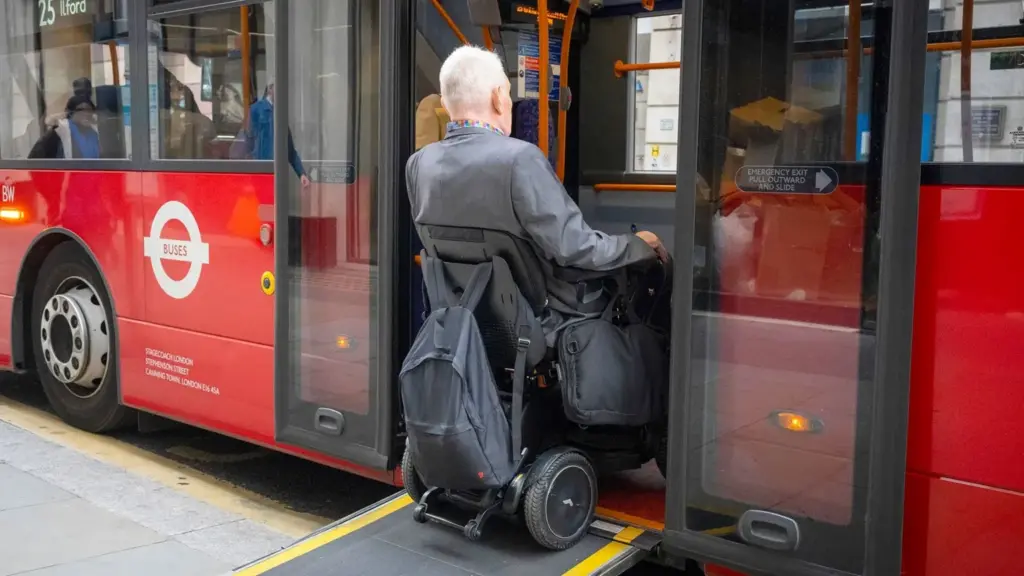
Starting April 1, disabled people across England will be able to travel by bus for free at any time of day, marking a major transformation in public transportation accessibility and daily mobility.
Previously, free bus passes issued under concessionary travel schemes were strictly restricted to off-peak hours on weekdays—specifically limited to the window between 09:30 and 23:00. This historical time restriction created significant barriers for pass holders attempting to commute to standard morning jobs, arrive early for professional responsibilities, or attend late-night events and social engagements. By eliminating these restrictive time limits, the policy change will benefit an estimated one million people nationwide, effectively turning the national bus pass into a true full-time lifeline for disabled citizens seeking greater independence and participation in society.
The nationwide rollout follows a highly successful regional trial implemented through Greater Manchester’s integrated public transport network, known as the "Bee Network." The decision also directly responds to years of persistent campaigning by prominent disability rights organizations, including Scope and Transport for All. Advocates have widely celebrated the government’s move, praising it for helping to eliminate an unfair "postcode lottery," where the practical validity, timing, and rules governing concessionary passes previously depended heavily on localized municipal regulations. However, disability organizations emphasize that while this reform is a monumental victory, it remains only one step in a broader modernization process, noting that baseline eligibility requirements across various regional authorities still require comprehensive standardization.
To establish the program on a permanent footing, the £60 million initiative is being jointly funded through the Department for Transport and the Department for Work and Pensions. Government officials have framed the structural reform as an essential workforce and cost-of-living initiative. This investment aligns with existing national transit measures, such as the nationwide £2 single-fare cap, and successfully brings England into alignment with similar 24/7 concessionary transit programs that have already been operating successfully in Scotland and Wales.
Global Takeaways: How Other Countries Can Make Accessible Commuting Possible
Making daily commuting accessible, equitable, and financially viable for disabled citizens requires a comprehensive combination of thoughtful policy design, modern digital infrastructure, and targeted public investment.
Why Was the UK Able to Do It?
The realization of a nationwide, anytime concessionary bus travel scheme in England rests on a foundation of sustained central government funding, integrated regional transit experiments, and continuous advocacy from civil society. By anchoring the policy in cross-departmental financial support from both the Department for Transport and the Department for Work and Pensions, the UK government demonstrated that expanding transit access is intrinsically linked to broader economic participation, workforce development, and cost-of-living relief. Furthermore, the policy draws upon structural precedents already established in Scotland and Wales, proving that large-scale territorial equity in public transportation is entirely achievable when backed by political will and inter-agency coordination.
Does It Depend on Existing Infrastructure?
Yes, heavily. Free transit passes only truly work if the public transport network is both physically and technologically accessible to begin with. Concessionary access alone cannot overcome structural barriers if vehicles lack step-free boarding, priority seating, functional audio-visual passenger information systems, or well-maintained physical boarding environments at stops and stations. Digital integration is equally vital, as seamless concessionary travel depends on reliable smartcard technologies, standardized electronic ticketing systems, and coordinated operational frameworks between local authorities and private or municipal bus operators. Without these foundational elements of physical and digital infrastructure, removing time restrictions on paper or basic pass systems risks leaving passengers facing ongoing barriers at the curb.
What Is Needed to Make Commuting Affordable for People with Disabilities?
Achieving true affordability and equity in public transportation for disabled citizens requires coordinated structural reforms that extend far beyond simply waiving fares. Policymakers must address systemic financial and regional disparities by establishing uniform national eligibility frameworks, eliminating localized postcode lotteries, and ensuring that concessionary schemes are paired with long-term public funding to guarantee operator sustainability. Additionally, transit authorities must invest continuously in fleet modernization, comprehensive driver disability awareness training, and barrier-free station infrastructure to ensure that financial access is matched by practical, everyday usability across all urban and rural networks.