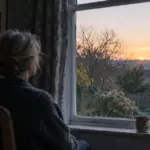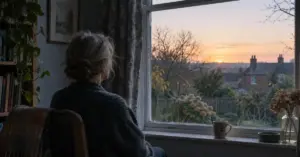





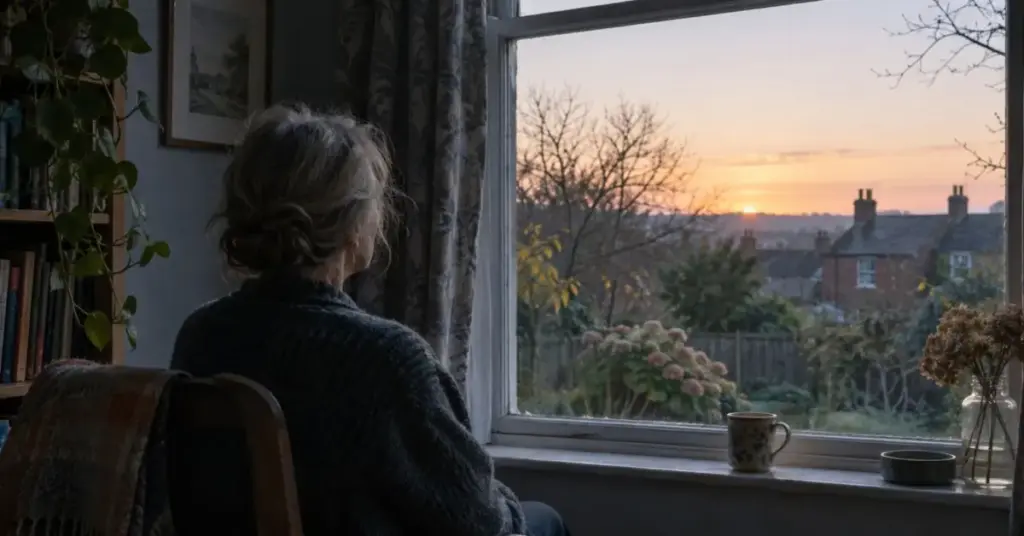
"I saw a beautiful sunrise yesterday morning, acknowledged it, and couldn’t care less if I saw another one," Nina told me. At 72 years old, Nina was describing a quiet, growing sense of detachment—a feeling that she was simply tired of being alive and ready to let go whenever the time naturally arrived.
In reasonably good health and explicitly clear that she did not feel suicidal or depressed, Nina viewed her perspective through a lens of profound acceptance. Living, she explained, had simply become far less appealing than its alternative.
"You know, other people—family and friends—don’t get it," she explained during a conversation about her outlook. "Pero I believe this is actually a positive thing, because it means that I am less and less attached to Earthly things—to being alive."

For families, hearing such sentiments can be jarring, deeply uncomfortable, and difficult to process. In studies examining how relatives respond to an older family member expressing a wish to die, many participants describe actively avoiding the subject altogether. One family member candidly admitted to researchers: "I didn’t want to discuss it. Every time he brought it up, I didn’t want to hear it [so] we never really discussed it." While such reactions are entirely understandable from an emotional standpoint, they risk leaving an older person’s inner perspective completely unheard and isolated.
Understanding Tiredness of Life
As a member of the European Understanding Tiredness of Life in Older People Research Network over the last five years, I have collaborated with a multidisciplinary group of geriatricians, psychiatrists, social scientists, psychologists, and death scholars. Across our fields, we frequently encounter older individuals who express a deep, existential tiredness of life. Our project has sought to better understand and support what remains a remarkably little-understood phenomenon in modern healthcare and society.
Nina’s words leave observers with a profound question that reaches far beyond her individual circumstances: What actually happens when biological life continues to march forward while the relationships, roles, freedoms, and sources of meaning that once made life worth living steadily recede?
Tiredness of life rarely stems from a single, isolated cause. Instead, it appears to emerge when a person’s changing relationship to life intersects with the conditions that contemporary society offers for living it. Examining different dimensions of this complex issue—how people approach the end of life, what modern medicine can indefinitely prolong, the value society places on aging populations, and the painful reality of chronic disconnection—helps shed light on a deeply nuanced human experience.
Turning Out the Lights
Care professor Helena Larsson and her academic colleagues have described a gradual "turning out of the lights" during the later stages of old age. According to their research, some individuals slowly loosen their psychological attachment to life, ultimately reaching a point where they feel psychologically and emotionally ready to turn away from the outside world to face death.
There is something intuitively compelling about this perspective when examining tiredness of life. Could the process of letting go of life be a natural part of how certain individuals approach death? Furthermore, might a person’s readiness to die develop gradually and quietly over time, rather than arriving abruptly in response to an acute medical illness or an acute personal crisis?
Of course, experts emphasize that we must be cautious about treating this transition as universal or inevitable. Many older adults remain deeply, passionately attached to life, even when facing severe losses, chronic pain, and deeply challenging life circumstances.
The Long, Slow Fade
Another critical possibility is that modern societies have become remarkably adept at prolonging biological life, yet lag far behind in supporting the social and existential conditions that make that extended life feel genuinely worth living. Renowned surgeon and writer Atul Gawande has famously described how modern medical interventions can contribute to a "long, slow fade," a trajectory in which pure biological survival is aggressively prioritized while day-to-day quality of life receives considerably less attention and resources.
In some cases, tiredness of life may expose the heavy existential cost of this profound imbalance. This critique does not imply that longer lives are inherently problematic or undesirable. The core concern is not longevity itself, but rather whether the social, relational, and emotional conditions required to sustain a vibrant human life can successfully keep pace with extended lifespans.
A Place in Society
A third major factor is the specific place and value older people are assigned within contemporary society. While many cultures vocally celebrate longevity and old age, they simultaneously offer older individuals diminishing opportunities to actively contribute, to be genuinely heard, or to feel that their daily presence truly matters to their communities. If old age is persistently framed and imagined mainly as a period of inevitable decline and heavy dependence, these cultural narratives inevitably shape how people view and understand their own futures.
The fear of becoming a burden or losing independence can be extraordinarily powerful. So too is the quiet, everyday experience of being treated as though one has little left of value to offer the world. These are not merely private, internal feelings; they are deeply shaped by broader social expectations, economic arrangements, and cultural attitudes toward aging.
Chronic Disconnection
In my own qualitative research involving older adults, participants frequently describe a compounding series of losses—losing romantic partners, lifelong friends, professional careers, familiar social roles, and physical capacities. While these profound losses do not impact every individual in the exact same way, over time they can accumulate to produce a pervasive sense of chronic and profound disconnection. Individuals may feel cut off from other people, from the surrounding world, or even from their own internalized sense of self. When the specific connections that once provided purpose and identity are no longer available, it can become extraordinarily difficult to imagine how personal meaning might be rebuilt.
A recent study focusing on 26 nursing-home residents found that expressions of tiredness of life directly reflected a deeply threatened sense of self. This state was marked by a cascading loss of mattering, social connection, personal agency, and hope for the future. The findings underscore the reality that this experience is layered, emerging at the intersection of vulnerable personal circumstances and unsupportive social conditions.
Taken together, these various dimensions suggest that tiredness of life emerges when the relational bonds, social roles, personal freedoms, and societal recognition that make life feel meaningful become increasingly difficult to sustain, even as biological life itself continues. It is neither simply a private failure of personal resilience nor an inevitable, mandatory feature of the aging process. While a wish to die should never be casually explained away as a natural and unquestioned part of growing older, the experience can and should prompt us to ask whether the relationships, agency, and sense of mattering that human beings need remain genuinely available to them in their later years.