





Every night, as the world slips into stillness and we drift into the depths of slumber, a silent, critical operation begins within the human brain. While we remain oblivious to the process, our brains are hard at work performing essential maintenance, clearing away the biological debris accumulated during our waking hours. This metabolic waste—a byproduct of our cells consuming energy throughout the day—includes substances like lactic acid and various proteins that, if left unchecked, can compromise cognitive health. Now, researchers at the Massachusetts Institute of Technology (MIT) have developed a groundbreaking technique to amplify this restorative process using nothing more than gentle, precisely timed pulses of sound.
The study, published in the journal Science Translational Medicine, reveals that researchers have successfully utilized "pink noise"—a soft, balanced sound reminiscent of distant rainfall or steady, rhythmic water—to boost the brain’s cleansing mechanisms. By delivering these brief auditory pulses at specific moments during deep sleep, the team was able to amplify the brain’s slow electrical waves, which in turn triggered more robust, powerful waves of cerebrospinal fluid (CSF). This discovery not only provides a deeper understanding of how the brain maintains its own hygiene but also opens up a new frontier in the potential treatment of neurodegenerative diseases.
The Critical Role of Cerebrospinal Fluid
Cerebrospinal fluid (CSF) is more than just a protective cushion for the brain and spinal cord. It is a vital, transparent liquid that acts as the brain’s primary waste management system. By transporting essential nutrients like glucose to neurons and flushing away the cellular waste products that accumulate during periods of intense activity, CSF plays a non-negotiable role in maintaining optimal brain function.

In 2019, Laura Lewis, the Athinoula A. Martinos Associate Professor of Electrical Engineering and Computer Science at MIT, pioneered a method for observing this process in real-time. Utilizing functional magnetic resonance imaging (fMRI), Lewis and her team were able to visualize the rhythmic movement of CSF as it pulsed into and out of the brain during sleep. Crucially, they discovered that these fluid movements are synchronized with slow electrical brain waves—rhythmic oscillations that are most prominent during the deepest, most restorative stages of sleep.
Building upon that foundational work, the researchers began to ask a fundamental question: If the movement of CSF is so closely tied to these slow electrical waves, could we manipulate the waves to increase the flow of the fluid? The hypothesis was that by strengthening the electrical signals, they might effectively "power up" the brain’s cleaning cycle.
The "Swing" Analogy and the Challenge of Timing
The methodology behind this discovery draws on a simple but effective physical analogy. Dr. Lewis likens the process to pushing a child on a swing. "You can make more of these electrical slow waves through an auditory stimulus, if it comes at just the right time," she explains. "Similar to a child on a swing, if you push them when they’re at the right moment in their movement, you can make that swing go farther. The challenge is: How do you find just the right time?"
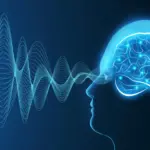
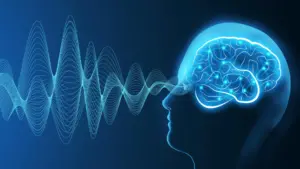
To achieve this, the researchers turned to pink noise—a sound frequency profile that balances high and low tones in a way that is less jarring than white noise. The team utilized extremely short, 50-millisecond bursts of this sound, designed to be quiet enough to avoid waking the sleeping participant while still providing the necessary auditory stimulus to the brain.
The technical hurdle, however, was immense. To synchronize the sound with the peak of a slow electrical wave, the team needed to monitor brain activity in real-time. They used electroencephalography (EEG) to track electrical signals while simultaneously using fMRI to measure fluid movement. The challenge lay in the fact that the powerful magnetic fields generated by an fMRI machine typically create massive interference with EEG recordings, making high-precision, millisecond-by-millisecond data nearly impossible to collect.
To overcome this, the MIT team engineered a specialized method to remove the fMRI interference from the EEG signals in under 100 milliseconds. Furthermore, they developed a predictive algorithm capable of anticipating the next peak of a slow electrical wave, compensating for the inherent processing delays in the hardware. This sophisticated synchronization allowed the researchers to deliver the pink noise pulses at the exact, optimal moment required to maximize the electrical response.
Amplifying the Brain’s Nocturnal Cleaning
In a study involving 14 healthy volunteers, the team demonstrated that their approach was not only feasible but effective. The precisely timed pink noise consistently increased the amplitude of both the brain’s slow electrical waves and the corresponding CSF flow. Crucially, the sounds were delivered at a volume that did not disturb the subjects’ sleep, proving that it is possible to intervene in the brain’s internal maintenance cycles without compromising the quality of rest.
The scans provided a window into the mechanics of the process. The team observed that slow electrical waves are intrinsically linked to the rhythmic narrowing and widening of blood vessels. This "pumping" effect creates a pressure gradient that helps drive the cerebrospinal fluid through the brain’s tissues, effectively flushing out the waste products of the day. By bolstering these electrical waves, the researchers successfully amplified the volume and intensity of this natural drainage system.
While the study confirmed that the fluid movement could be enhanced, the researchers are careful to note that they have not yet established a direct causal link between these stronger waves and a measurable increase in waste clearance or long-term cognitive improvement. Those questions remain the focus of the next phase of their research.
A New Horizon for Alzheimer’s and Dementia Research
The implications of this technology are far-reaching, particularly for the medical community’s ongoing battle against neurodegenerative conditions like Alzheimer’s disease. These diseases are characterized, in part, by the toxic accumulation of abnormal proteins—such as amyloid-beta and tau—which form plaques in the brain. If the brain’s natural waste-clearing system is operating at suboptimal levels, these proteins are more likely to build up over time, eventually causing the cellular damage associated with dementia.
"Brain waste clearance is really important for Alzheimer’s and other forms of dementia, which are caused, in part, by the buildup of molecules like amyloid and tau in the brain," says Joshua Levitt, the study’s lead author, who recently completed his PhD at Boston University and worked as a visiting graduate student in Dr. Lewis’s lab. "If we can improve brain waste clearance, we may be able to help prevent the buildups of these plaques that lead to disease."
Dr. Lewis expressed enthusiasm about the potential for future clinical applications, stating, "We found that we were able to increase the size of the CSF flow wave during sleep, which as far as we know, there hasn’t been a method to do before. Now that we can enhance CSF flow during sleep in healthy adults, we’re really excited to bring this technology to clinical populations to see what effects we can have."
Future Directions and Home-Based Technology
Looking ahead, the researchers are eager to determine whether this method could improve the restorative quality of sleep for individuals suffering from chronic insomnia or other sleep disorders. If increasing the brain’s cleansing capacity results in more refreshing sleep, the potential benefits for public health could be significant.
The technology is already moving beyond the realm of theoretical research. Recognizing the potential for widespread application, Levitt has founded a company dedicated to translating these findings into a practical, consumer-facing device. The goal is to develop a wearable, such as a headband, capable of monitoring electrical brain activity and delivering perfectly timed auditory stimuli in the comfort of a patient’s own home.
While the prospect of a "smart" headband that cleanses the brain during sleep is compelling, the researchers emphasize that they are still in the early stages of understanding the long-term impacts of this intervention. Whether this method can ultimately sharpen memory, prevent neurodegeneration, or significantly slow the progression of dementia remains to be proven. For now, the MIT study stands as a significant milestone, proving that a simple, non-invasive auditory intervention can effectively influence one of the most mysterious and vital processes of the human brain.
The research was made possible through the support of several institutions and funding bodies, including a McKnight Scholar Award, a Sloan Fellowship, a Pew Biomedical Scholars Award, the Simons Foundation Collaboration on Plasticity in the Aging Brain, the MIT EECS Transformative Research Fund, the National Institutes of Health, the Corundum Convergence Institute, and the Panasonic Well Fellowship for AI and Wellness. As the scientific community continues to digest these findings, the path forward promises to explore whether we can, quite literally, listen our way to a healthier brain.