






The human brain is an evolutionary masterpiece, finely tuned to detect threats and ensure survival. For generations, the prevailing scientific wisdom suggested that fear acted as a biological filter, sharpening our ability to distinguish between harmless environments and life-threatening encounters. However, groundbreaking new research from the Douglas Research Centre at McGill University and the University of Toronto-Scarborough suggests that this assumption may be fundamentally flawed. Instead of creating distinct boundaries between safety and danger, fear appears to blur them, a discovery that offers a profound new perspective on the neural origins of anxiety and post-traumatic stress disorder (PTSD).
The findings, published in the prestigious journal Nature Neuroscience, reveal that rather than refining our mental maps of the world, the brain’s fear response may prioritize speed over precision. This mechanism, while effective for immediate survival in the wild, may lie at the heart of the debilitating, intense fear responses observed in those suffering from trauma-related disorders.
Challenging Conventional Wisdom on Fear
For years, the consensus in neuroscience held that the brain maintained separate neural "representations"—distinct patterns of activity—for safe environments versus dangerous ones. It was believed that the more refined these representations were, the better an individual could navigate their surroundings. The research team, led by senior author Mark Brandon, an Associate Professor in McGill’s Department of Psychiatry and a researcher at the Douglas, set out to test this hypothesis. What they found, however, challenged the very foundation of how we understand memory and fear.

In experiments involving mice, researchers trained the subjects to associate specific environments with safety and others with danger. By tracking neural activity, the team expected to see the brain’s map of a safe space diverge from the map of a dangerous one as the training progressed. Instead, they observed the opposite: as the mice learned to fear the dangerous environment, their neural representations of the two settings began to overlap. The brain activity associated with "safety" and "danger" became increasingly indistinct, effectively muddling the two memories in the hippocampal region.
"Our findings suggest fear may blur the boundary between danger and safety rather than sharpen it," says Brandon. "This could reshape how scientists think about anxiety and PTSD."
Monitoring the Brain in Real-Time
To achieve this level of insight, the research team employed an innovative experimental methodology that combined augmented reality with high-resolution, real-time brain imaging. By creating a specialized arena, researchers could "teleport" the mice between environments associated with either safety or threat without moving the animals physically. By manipulating the visual and auditory inputs surrounding the mice, the researchers simulated different settings, allowing for a seamless transition between contexts.
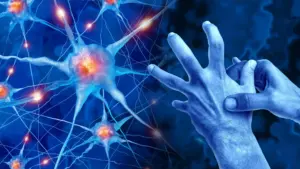
Simultaneously, the team used miniature, head-mounted microscopes to monitor the activity of hundreds of neurons within the hippocampus. As a critical hub for learning and memory, the hippocampus provided the ideal window into how the brain encodes and retrieves spatial and emotional information.
"That gave us something conventional fear conditioning experiments cannot easily provide: a moment-by-moment view of the brain switching between competing maps of dangerous and safe memories," explains Robert Rozeske, an Assistant Professor in the University of Toronto’s Department of Psychology and the study’s lead author. This real-time observation proved crucial, as it allowed the team to pinpoint the exact moment the brain transitioned from a state of calm recognition to an anticipatory fear state.
The Evolutionary Trade-Off: Speed Over Precision
While the blurring of memories might seem like a cognitive failure, the researchers argue that it is likely a highly evolved survival strategy. In the natural world, the cost of failing to identify a predator is significantly higher than the cost of a false alarm. By prioritizing speed, the brain sacrifices the accuracy of the memory, effectively choosing to react first and analyze the details later.
The study points to the ventral hippocampus—a region known to be heavily involved in processing emotions, including fear and anxiety—as the likely conductor of this survival orchestra. In this region, overlapping memory representations appear to facilitate a rapid, almost instantaneous, shift into a defensive state. This "better safe than sorry" approach is a logical evolutionary adaptation, yet it creates a significant psychological burden in modern life.
"The ventral hippocampus may be part of a system that prioritizes a rapid ‘better safe than sorry’ response," says Rozeske. "In other words, the brain may sacrifice precision for speed when danger matters." This mechanism ensures that an organism is primed for flight or fight the moment a cue associated with past trauma appears, but it also creates the persistent, irrational fear responses that characterize modern anxiety disorders.
Implications for PTSD and Anxiety Research
The discovery that this blurring is a fundamental, perhaps even healthy, survival mechanism provides a fresh, non-pathological framework for understanding PTSD. For individuals living with trauma-related disorders, mundane sights, sounds, or physical environments can act as powerful triggers, evoking memories of past trauma that feel immediate and overwhelming.
Often, these reactions are framed as a "broken" system or a failure of the brain to properly separate distinct memories. However, the McGill and University of Toronto team suggests a different perspective: these intense reactions may not represent a breakdown of the system, but rather an overactive version of a normal, highly efficient survival mechanism. If the brain is "wired" to prioritize speed, it may be shifting into "danger mode" far too easily or with too little provocation.
"Our study suggests that’s not necessarily a broken pattern-separation system, but possibly an overactive version of a normal survival mechanism gone into overdrive," says Brandon. "That reframing could guide therapeutic approaches to address an overly fast transition to ‘danger mode’." By shifting the focus of research from "repairing" a broken memory system to modulating an "over-responsive" one, clinicians may eventually develop new ways to help patients regulate the speed at which their brains transition into fear, potentially easing the burden of chronic anxiety.
Future Directions in Neuroscience
While these findings offer a compelling explanation for how and why fear distorts memory, the researchers emphasize that this is a starting point. As the experiments were conducted using mouse models, further research is required to confirm whether these same neural mechanisms operate in the more complex human brain. Nonetheless, the study provides a robust, evidence-based foundation for understanding the intricate dance between memory, emotion, and survival.
By demonstrating that fear serves as a catalyst for memory overlap, this research bridges a critical gap between cognitive neuroscience and clinical psychology. It invites a broader conversation about how we treat trauma: not as a failure of the mind to store information correctly, but as a byproduct of a biological system doing exactly what it was designed to do—perhaps a little too well.
The study, titled "Overlapping representations in the ventral hippocampus support rapid fear memory retrieval," represents a significant step forward in the study of neurobiology. It was made possible through the support of the Canadian Institutes of Health Research and the Natural Sciences and Engineering Research Council of Canada, marking a significant milestone in the ongoing efforts to decode the biological mysteries of human fear. As research continues, the hope is that these insights will translate into more effective therapeutic interventions, offering relief to those for whom the brain’s "better safe than sorry" switch has become permanently stuck in the "on" position.