








The human brain possesses a remarkable, highly refined ability to recognize and respond to environmental threats—a skill essential for survival. However, new research suggests that this very mechanism, designed to keep us out of harm’s way, may also hold the key to understanding why individuals often feel intense, irrational fear in situations that are objectively safe. This discovery provides a compelling new framework for understanding the neurological underpinnings of anxiety and post-traumatic stress disorder (PTSD), suggesting that the brain’s quest for survival may come at a significant cost to its precision.
For decades, the prevailing scientific consensus held that fear functioned as a sharpening tool for the mind. Researchers long believed that the presence of a threat helped the brain distinguish more clearly between dangerous and harmless experiences, effectively "tuning" our memory to avoid future peril. However, a groundbreaking study led by researchers at the Douglas Research Centre at McGill University and the University of Toronto-Scarborough has challenged this fundamental assumption. Published in the journal Nature Neuroscience, the findings suggest that fear may actually have the opposite effect: rather than clarifying our experiences, it may blur the boundary between safety and danger.
The Overlapping Neural Map
To understand how the brain processes these conflicting emotions, the research team conducted a series of sophisticated experiments involving mice. The researchers trained the animals to associate specific environments with safety and others with danger. Under traditional theories of memory, one would expect the brain to create distinct neural "maps" for these two locations, allowing the animal to clearly differentiate between where they might be attacked and where they can relax.
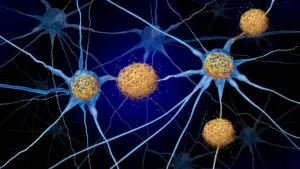
Instead, the results were startling. As the mice navigated these environments, their brain activity began to exhibit overlapping patterns. Rather than developing increasingly separate neural representations of the safe and dangerous zones, the brain’s activity patterns became increasingly similar. In essence, the neural signature of a "safe" space began to look more and more like the neural signature of a "dangerous" space.
"Our findings suggest fear may blur the boundary between danger and safety rather than sharpen it," explained senior author Mark Brandon, an Associate Professor in McGill’s Department of Psychiatry and a researcher at the Douglas Research Centre. "This could reshape how scientists think about anxiety and PTSD, shifting our focus from the idea of a ‘broken’ system to a system that is functioning exactly as it was designed to—perhaps just a little too enthusiastically."
Observing the Brain in Real-Time
Investigating the microscopic machinery of fear required a novel experimental setup. The team pioneered a technique that combined augmented reality (AR) with high-resolution, real-time brain imaging. By constructing a specialized arena, the researchers were able to "teleport" mice between environments associated with either safety or threats. This was achieved by manipulating the sights and sounds surrounding the animals, effectively changing their environment without the physical requirement of moving the subjects.
While the mice experienced these rapid shifts, the researchers utilized miniature microscopes to monitor hundreds of individual neurons within the hippocampus—a brain region widely regarded as the command center for learning and memory. This provided an unprecedented, moment-by-moment window into how the brain transitions between competing neural maps.
"That gave us something conventional fear conditioning experiments cannot easily provide: a moment-by-moment view of the brain switching between competing maps of dangerous and safe memories," said Robert Rozeske, an Assistant Professor in the University of Toronto’s Department of Psychology and the lead author of the study. This granular look at hippocampal activity allowed the team to pinpoint exactly when the brain ceased to distinguish between the two states and began to treat them as part of a single, urgent survival narrative.
The Evolutionary Trade-Off: Speed Over Accuracy
While the blurring of memories might initially seem like a cognitive error, the researchers propose that it serves a vital evolutionary purpose. The brain is an organ shaped by the pressures of survival, and in the wild, the luxury of contemplation is often outweighed by the necessity of immediate action.
The study suggests that by allowing memory representations to overlap, the brain can retrieve information about previous threats with significantly greater speed. When an animal encounters a potential hazard, it cannot afford to spend precious seconds analyzing the nuances of the situation; it must react immediately to ensure its survival. By "pre-loading" the brain with information about danger, the overlapping neural patterns allow the animal to trigger a fight-or-flight response before it is too late.
However, this survival strategy comes with an inevitable trade-off: the loss of accuracy. By prioritizing speed over precision, the brain becomes prone to "false alarms." It may react to a benign situation as if it were a life-threatening crisis because the neural pathways for "danger" have been primed to fire at the slightest provocation.
"The ventral hippocampus may be part of a system that prioritizes a rapid ‘better safe than sorry’ response," Rozeske noted. "In other words, the brain may sacrifice precision for speed when danger matters." The ventral hippocampus is particularly crucial in this process, as it is the region most heavily involved in processing emotionally charged experiences, including fear and anxiety. By facilitating a rapid shift into a defensive state, the ventral hippocampus ensures that the organism is always prepared for the worst-case scenario.
Implications for PTSD and Anxiety
This discovery offers a profound shift in how clinicians and researchers might view the pathology of anxiety and trauma-related disorders. For individuals living with PTSD, the world can often feel like a minefield where harmless stimuli—a loud noise, a specific scent, or a familiar setting—can trigger an overwhelming, involuntary fear response.
Previously, these responses were often attributed to a failure in the brain’s "pattern-separation" system, suggesting that the brain had simply lost the ability to distinguish between past trauma and present safety. The new findings from the McGill and University of Toronto team suggest a different, perhaps more nuanced, perspective: these responses may not represent a breakdown of the system, but rather an overactive version of a perfectly normal, high-speed survival mechanism.
In the case of PTSD, the brain’s "danger mode" may be stuck in a state of high sensitivity, shifting into a defensive posture far too quickly. "Our study suggests that’s not necessarily a broken pattern-separation system, but possibly an overactive version of a normal survival mechanism gone into overdrive," Brandon said. "That reframing could guide therapeutic approaches to address an overly fast transition to ‘danger mode’."
If the brain is indeed working as designed—simply with a hair-trigger mechanism—therapeutic interventions could potentially focus on helping patients modulate the speed of this transition. By understanding the neural mechanics that favor survival over precision, clinicians may be better equipped to develop strategies that help patients "re-calibrate" their brain’s alarm system.
While the current research was conducted in mice, the fundamental role of the hippocampus in memory and fear processing across mammalian species suggests these findings have significant implications for human health. The researchers emphasize that further studies will be necessary to confirm how these mechanisms translate into the human brain. However, the study already provides a groundbreaking lens through which to view the interplay between fear, memory, and survival. It reminds us that our most intense anxieties are often the echoes of a protective system that, in its commitment to keeping us safe, sometimes struggles to recognize that we are no longer in danger.
The study, titled "Overlapping representations in the ventral hippocampus support rapid fear memory retrieval," represents a collaborative effort between the Douglas Research Centre and the University of Toronto. It was supported by the Canadian Institutes of Health Research and the Natural Sciences and Engineering Research Council of Canada, marking a significant step forward in our understanding of the complex, often paradoxical nature of the human brain’s response to fear.