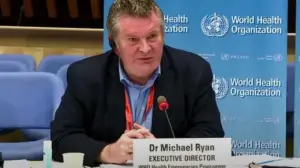





In a sobering address delivered on behalf of World Health Organization (WHO) Director-General Dr. Tedros Adhanom Ghebreyesus and WHO Regional Director for the Eastern Mediterranean Dr. Ahmed Al-Mandhari, international health officials have issued an urgent appeal for sustained support in Yemen. Describing the nation as the site of the most complex humanitarian operation on the planet, the WHO highlighted the harrowing intersection of a protracted war and the compounding catastrophe of the COVID-19 pandemic.
The address, delivered before an assembly of distinguished delegates and international stakeholders, sought to bring the grim realities of the Yemeni health sector into sharp focus. For years, the country has been teetering on the edge of total collapse, with medical infrastructure decimated by conflict and the population battered by successive waves of disease. The WHO officials underscored that the situation in Yemen is not merely a political crisis, but a profound human tragedy where the basic right to health has been systematically stripped away.
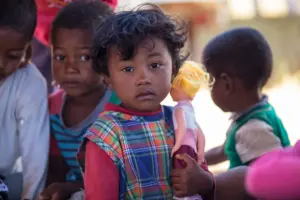
Reflecting on the firsthand observations of Dr. Al-Mandhari during his mission to Yemen last year, the WHO representatives painted a visceral picture of the suffering endured by families. The accounts included parents desperately navigating a broken system to secure help for their dying children, the sight of elderly patients passing away in clinical settings while doctors lacked the means to intervene, and the poignant story of a physician who lost his own son to cholera—a disease that claimed the child even as the father worked to save others. These anecdotes serve as a microcosm of the daily reality for millions of Yemenis who remain trapped in a cycle of preventable death and systemic neglect.

Despite these overwhelming odds, the WHO and its humanitarian partners have maintained a consistent, life-saving presence in Yemen for the past five years. This resilience has been a critical bulwark against total societal collapse. When the world faced the largest cholera outbreak in history, the coordinated efforts of the WHO and its partners managed to reverse the trajectory of the disease, successfully protecting more than 10 million people from infection. Similarly, when the specter of measles threatened the nation’s youth, a massive vaccination campaign was mobilized, reaching over 12 million children and averting a secondary disaster.
The organization’s footprint in Yemen is substantial and vital. Currently, the WHO and its partner, MED-COM, provide critical support to 80 percent of all therapeutic feeding centers in the country, a program that has seen a 91 percent success rate in saving children suffering from severe acute malnutrition and its associated medical complications. Furthermore, the WHO and its network of partners are currently facilitating 70 percent of all medical consultations occurring across the country. These achievements, while significant, have been entirely contingent upon the generous and sustained support of the international community.
However, the arrival of COVID-19 has fundamentally altered the landscape, pushing an already fragile system over the brink. The pandemic has not only introduced a new, highly lethal pathogen but has also served to demoralize the remaining health workforce, who were already operating in a state of exhaustion. The WHO relayed the words of a physician based at the Kuwait Hospital in Sana’a, whose sentiment reflects the collective burnout of the nation’s medical professionals. He described himself as “exhausted by war and politics, exhausted by rumors and ignorance, and exhausted by greed and poverty.”
This exhaustion is not merely physical; it is a manifestation of the psychological toll taken by years of working within a system that lacks the basic tools required for modern medicine. Yet, in spite of these enormous, multi-layered constraints, this physician and countless other courageous individuals continue to show up to work every day. Their commitment to their patients remains the backbone of the Yemeni health response, and the WHO has pledged to stand with them in this ongoing struggle.
Looking forward, the WHO has outlined a strategic response to combat the dual threats of COVID-19 and existing health emergencies. The organization plans to continue the rapid expansion of isolation centers, with a target of 59 facilities across the country. Efforts to strengthen the command-and-control structure of the health system are also underway, with the establishment and equipping of Emergency Operations Centers (EOCs). Recognizing that the response must be localized and rapid, the WHO is committed to scaling up the number of rapid response teams from 300 to over 900 in the coming weeks, while simultaneously enhancing training for front-line health care workers.
Beyond direct clinical care, the strategy involves an intensified focus on community education and the expansion of testing capacity. Crucially, these efforts are being balanced with the need to ensure the continuity of other essential health services, such as routine vaccinations and maternal care, which remain at high risk of disruption.
The logistical challenges of operating in a conflict zone during a global pandemic are immense, yet the WHO has demonstrated an ability to navigate them through strategic partnerships, most notably with the World Food Programme (WFP). Just last week, through the COVID Supply Chain Platform, the two organizations successfully airlifted over 34,000 kilograms of medical supplies into the country. This shipment included more than 6.5 tons of personal protective equipment (PPE) and essential laboratory diagnostics, which are critical to maintaining the functional labs currently responsible for COVID-19 testing. The supply chain efforts are continuing, with preparations for another round of deliveries—comprising over 7 tons of PPE and 18 tons of medicines—already in motion.
While the WHO remains steadfast in its commitment to serving the people of Yemen, the officials were clear that the current level of operation is insufficient to meet the magnitude of the need. A massive, coordinated scale-up of both COVID-19 response efforts and the maintenance of non-COVID health operations is required. The organization acknowledged the difficulty of this request in a global environment where every nation is currently grappling with its own domestic health crisis. However, they argued that there is a moral imperative to distinguish between the challenges faced by stable nations and the existential threats facing the most vulnerable populations in the world.
The plea for assistance was framed not merely as a matter of policy, but as a test of the international community’s values. The WHO representatives asserted that the global response to the Yemeni crisis would ultimately be the metric by which the international community is judged. They emphasized that history will evaluate the world’s leaders based on how they treated those who had the least, how they moved to ease the suffering of the most marginalized, and how they assisted those who are effectively helpless in the face of conflict and pandemic.
In concluding the address, the WHO provided a final, poignant reflection on the relationship between stability and human health. They stated that the world requires peace to ensure health, and, conversely, that if peace can be achieved, the health sector can serve as a vital platform for delivering stability. The message was clear: for Yemen, health and peace are inextricably linked, and without an urgent, collective effort to stabilize the country, the human cost will continue to mount, leaving an indelible mark on the collective conscience of the global community.