





Geneva — In a significant demonstration of commitment to international health security and humanitarian relief, France has formalized a new series of funding agreements with the World Health Organization (WHO). The announcement, confirmed at a high-level meeting in Geneva, sees the French government pledging €25.5 million to support a broad spectrum of health initiatives ranging from immediate emergency response to long-term systemic strengthening.
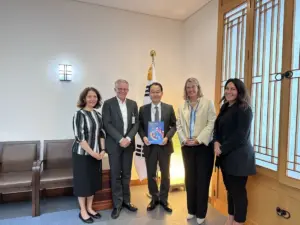
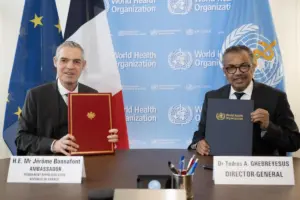
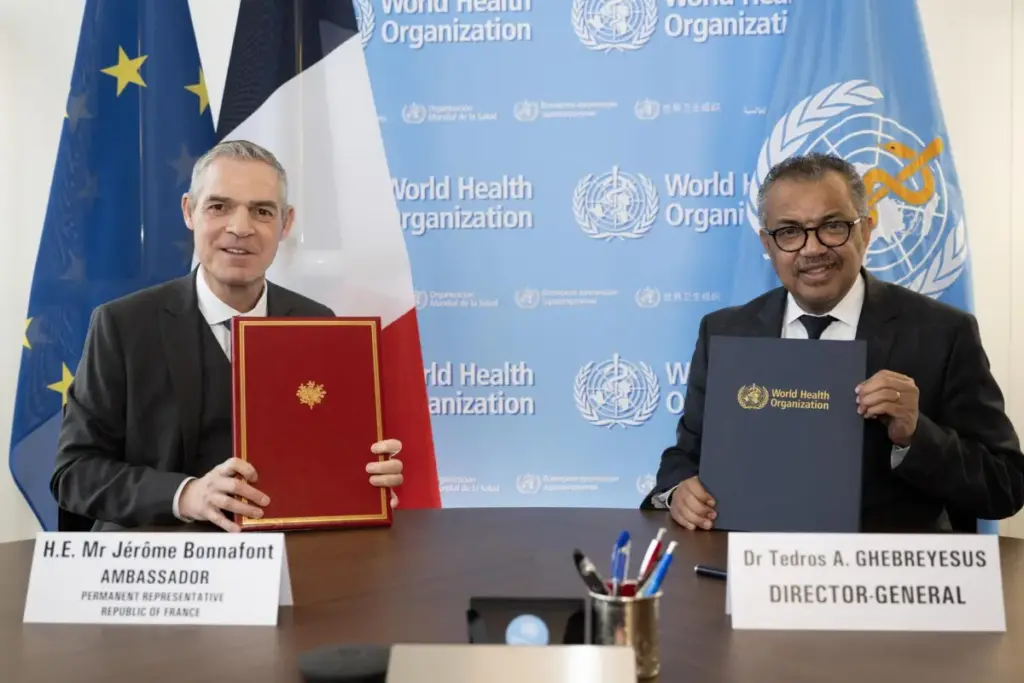
The funding agreements were signed by His Excellency Jérôme Bonnafont, the Permanent Representative of France to the United Nations in Geneva, and Dr. Tedros Adhanom Ghebreyesus, the Director-General of the WHO. This financial injection arrives at a critical juncture for the global health architecture, as the international community grapples with the dual pressures of persistent disease outbreaks and the need for more resilient, universal health systems.
A Strategic Allocation of Resources
The €25.5 million package is structured to provide both the agility required for rapid crisis response and the stability needed for foundational health development. A key component of the contribution is the allocation of €4.5 million to the WHO’s Core Voluntary Contribution Account (CVCA). These funds are categorized as "fully flexible," a designation that holds immense value for the organization. Unlike earmarked funding, which restricts resources to specific projects or regions, flexible contributions allow the WHO to direct capital toward the most pressing priorities identified in its General Programme of Work. This ensures that the agency can pivot quickly when unforeseen health challenges arise, preventing critical gaps in funding during global health emergencies.
Beyond the flexible contributions, the agreements include a substantial €15 million commitment dedicated to specific, high-priority health mandates. These funds are slated to bolster several critical areas, including the advancement of Universal Health Coverage (UHC) and the strengthening of primary health care systems. By focusing on these pillars, France aims to help countries build health infrastructures that are capable of delivering equitable care, a cornerstone of the WHO’s mission to achieve health for all.
Furthermore, this portion of the funding will support the "One Health" approach—a collaborative, multisectoral strategy that recognizes the interconnectedness of human, animal, and environmental health. Additionally, resources are earmarked for combating both communicable and noncommunicable diseases, advancing medical countermeasure initiatives, and enhancing country-level readiness. Much of this operational work will be supported through the WHO’s office in Lyon, a hub that plays a pivotal role in training and preparedness efforts.
Addressing Humanitarian Crises
A significant portion of the total commitment—€6 million—is explicitly reserved for humanitarian response efforts in regions facing acute crises. The geographic and thematic distribution of these funds underscores the complexity of the modern humanitarian landscape.
A notable €2 million of this amount is dedicated to enhancing mental health initiatives in Ukraine. As the conflict in the region continues to take a heavy toll on the civilian population, the provision of mental health support has become an essential, yet often underfunded, component of the health response. By prioritizing psychosocial and mental health services, France is addressing the long-term trauma and wellbeing of those affected by the ongoing war.
In response to the devastating cholera outbreak in Malawi, France has committed €0.35 million to support immediate containment and treatment efforts. Cholera, a waterborne disease that thrives in environments where clean water and sanitation are compromised, requires a rapid, coordinated response; this funding will bolster the WHO’s ability to provide the necessary medical supplies and epidemiological expertise to curb the spread of the infection.
The situation in Gaza remains a major focus of international concern, and this funding package reflects that urgency. France has pledged €1 million to support the WHO’s direct humanitarian response in the territory. Additionally, a further €2 million has been allocated to strengthen the technical and human resource capacity of the WHO Office in the occupied Palestinian territory. This investment is aimed at ensuring that the WHO can maintain its operational continuity, providing critical health services and coordinating the international response amidst extremely challenging logistical and safety conditions.

To round out the humanitarian aid, €0.65 million has been directed to the WHO’s Contingency Fund for Emergencies (CFE). This fund acts as a financial safety net, allowing the WHO to release funds within hours of an emergency being declared, ensuring that life-saving interventions are not delayed by the time-consuming processes of traditional grant cycles.
Strengthening the WHO-France Partnership
During the signing ceremony, Dr. Tedros Adhanom Ghebreyesus praised France’s enduring commitment to global health. "As one of the world’s largest economies, France has a critical role to play in global health," Dr. Tedros stated. "France’s financial contributions and agreements, signed today, provide flexibility and align well with WHO’s priorities to promote, provide, protect, power and perform for health."
This latest contribution is anchored in the broader France-WHO Framework Agreement for 2020-2025, a multi-year instrument designed to provide sustainable, predictable funding for priority health programs. The partnership is a central pillar of France’s Global Health Strategy 2023-2027, which was published in October 2023. The strategy outlines France’s vision for a more robust global health governance system, with a particular emphasis on health equity and international cooperation.
The collaborative priorities between France and the WHO for 2022-2023 have been wide-ranging. They include the development of the WHO Academy in Lyon, which serves as a center for excellence in health workforce training; efforts to strengthen health systems to reach universal health coverage; and a deep focus on health security. This last point includes bolstering the International Health Regulations (IHR), the binding legal instrument that guides how countries report and respond to health threats with the potential to cross borders. By investing in the IHR, France is helping to fortify the global "early warning" system against future pandemics.
Jérôme Bonnafont echoed these sentiments, highlighting the moral imperative behind the funding. "Committed to global health, France supports the WHO’s action in crises and for the benefit of the most vulnerable," he remarked.
A Proven Track Record of Flexible Support
The current funding announcement is a continuation of a long-standing pattern of cooperation. Between 2020 and 2021, the Republic of France contributed over US$ 143 million to the WHO. Notably, 76% of these contributions were provided in the form of flexible and thematic funds. This emphasis on flexibility is a key aspect of France’s health diplomacy, as it grants the WHO the freedom to assign resources where they are needed most, rather than dictating how every euro must be spent.
In the context of the WHO’s General Programme of Work, this agile funding model is essential. It enables the organization to respond to the shifting landscape of global health, where priorities can change rapidly due to climate change, political instability, or the emergence of new pathogens. By empowering the WHO with flexible resources, France is effectively strengthening the organization’s ability to act as a decisive leader in international health policy.
As the international community continues to navigate the post-pandemic era, the partnership between France and the WHO serves as an example of how state-level commitment can facilitate both immediate relief and structural progress. Through this combination of immediate humanitarian aid and long-term investments in primary care, health systems, and pandemic preparedness, France’s latest contribution reinforces a commitment to a safer, healthier future for all.