





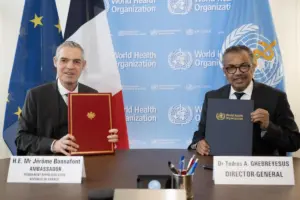
LYON, France – In a significant move to reinforce its commitment to international health security and equity, the French government officially launched its Global Health Strategy for 2023-2027 today in Lyon. The unveiling, which took place against the backdrop of the World Health Organization’s (WHO) 75th-anniversary celebrations, signals a renewed focus on multilateralism and the urgent need to rebuild global health infrastructure in the wake of recent systemic shocks.
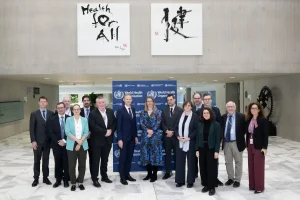
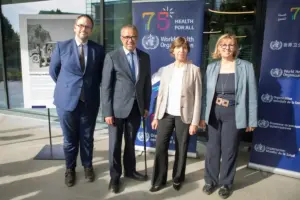
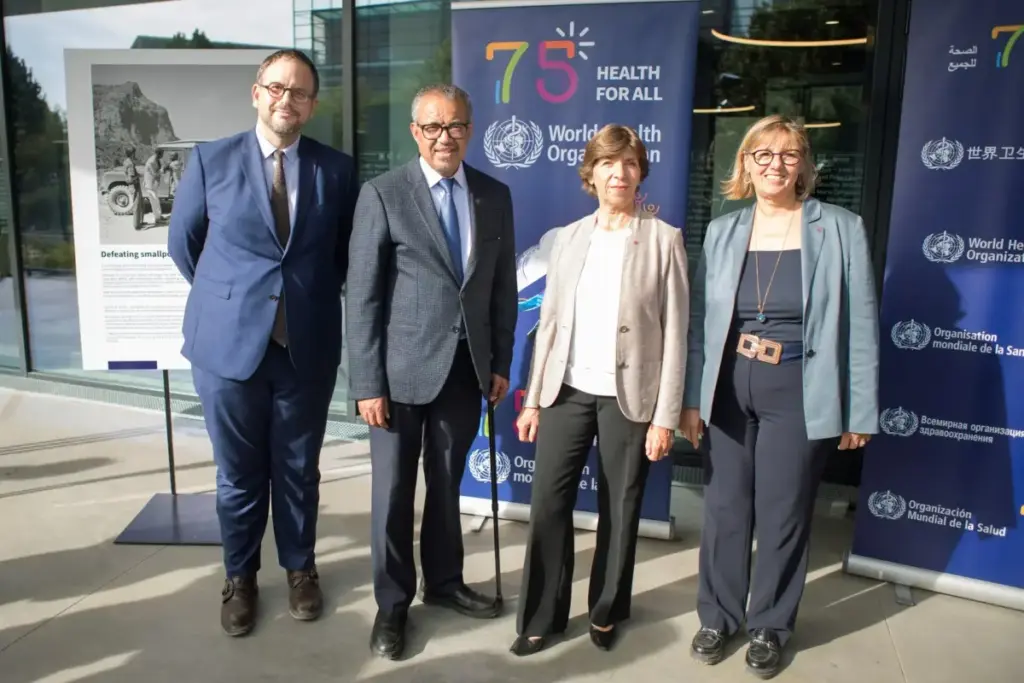
The high-profile event saw the participation of three key members of the French government, underscoring the cross-sectoral importance of the strategy: Catherine Colonna, Minister for Europe and Foreign Affairs; Aurélien Rousseau, Minister of Health and Prevention; and Sylvie Retailleau, Minister of Higher Education and Research. Their presence, alongside WHO Director-General Dr. Tedros Adhanom Ghebreyesus, highlighted the collaborative spirit that France intends to champion over the next four years.
As a preeminent player in shaping global health policy, France has used this launch to issue a clarion call to both national and international stakeholders. The objective is to foster a new global health architecture that is capable of delivering on the Sustainable Development Goals (SDGs), with a primary focus on SDG3—the commitment to ensuring healthy lives and promoting well-being for all individuals at all ages.

The strategy arrives at a critical juncture, as the international community grapples with the lingering effects of the COVID-19 pandemic and the escalating threats posed by climate change. The French government’s new roadmap aims to address deep-seated health inequalities and to institutionalize the "One Health" approach, a holistic framework that recognizes the interconnectedness of human, animal, and environmental health. By integrating these disciplines, France hopes to better prevent, prepare for, and respond to future global health emergencies, while simultaneously addressing the profound health consequences of a changing climate on global health systems.
Dr. Tedros Adhanom Ghebreyesus, who traveled to Lyon specifically to commemorate the launch and celebrate the long-standing partnership between the WHO and France, lauded the strategy’s alignment with global priorities. "France was a founding member of the WHO in 1948 and has been a strong friend to the organization throughout the 75 years since then," Dr. Tedros stated during the event. "As one of the world’s largest economies, France has a critical role to play in global health, and this new strategy will significantly enhance that contribution. It aligns perfectly with the WHO’s core priorities: to promote health, provide essential services, protect against emergencies, empower populations, and perform at the highest levels of institutional excellence."
The French government’s approach is fundamentally rooted in a crosscutting philosophy, prioritizing Universal Health Coverage (UHC) as a cornerstone of the 2030 Sustainable Development Agenda. This commitment is not merely rhetorical; it is backed by tangible support for transformative WHO initiatives. During their visit to Lyon, the French ministers toured the WHO Academy and the International Agency for Research on Cancer (IARC), two institutions where France plays a vital, ongoing role.
Minister for Europe and Foreign Affairs, Catherine Colonna, emphasized the necessity of a strong, central WHO in an increasingly fragmented world. "The World Health Organization, whose 74th anniversary we are celebrating today, must continue to play a central and driving role," Minister Colonna said. "France remains steadfast in its support for the WHO, particularly regarding the organization’s ambitious governance and financing reforms, which are essential for its continued effectiveness on the global stage."
The integration of research and education remains a central pillar of France’s approach. Sylvie Retailleau, the Minister of Higher Education and Research, highlighted the symbiotic relationship between French academic institutions and global health initiatives. "France is deeply committed to the success of the WHO Academy," she remarked. "We are fostering several partnerships with universities, research institutes, and public health institutions to ensure that the Academy benefits from the highest caliber of expertise. Our goal is to enrich the learners’ experience through a highly diversified training portfolio that reflects the latest scientific advancements."
Looking ahead, the strategy aims to move beyond policy and into concrete action. Minister of Health and Prevention, Aurélien Rousseau, used the platform to announce a major upcoming milestone in this endeavor. "The launch of this Global Health Strategy provides the perfect opportunity to mark the 75th anniversary of the WHO," Rousseau stated. "The organization remains the heartbeat of global health, and we must continue to support its mission. To that end, I am pleased to announce that France intends to host the first international financing conference for the fight against meningitis in the first quarter of 2024, in close partnership with the WHO."
The development of the 2023-2027 Strategy was not the work of the government alone; it was the result of an extensive consultative process involving a vast array of French stakeholders. This collaborative effort brought together public agencies, civil society organizations, higher education and research bodies, scientific institutions, private foundations, and specialists across human, animal, and environmental health sectors. Even local government bodies and the private sector contributed to the strategy’s formation, ensuring a comprehensive and inclusive approach.
To maintain momentum and transparency, the government has established a monitoring committee tasked with tracking the implementation and progress of the strategy throughout its five-year lifespan. This committee will ensure that the various stakeholders remain engaged and that the goals set out today are translated into measurable outcomes.
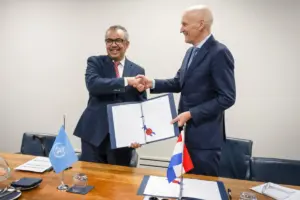
As the launch event concluded, the images of the ministers and Dr. Tedros together in Lyon served as a visual testament to the strength of the alliance between France and the international health community. By focusing on systemic resilience, climate-conscious health planning, and equitable access to care, France has positioned itself to remain a central architect of global health for the remainder of the decade. The commitment demonstrated today suggests that France is not only planning for the next four years but is actively laying the groundwork for a more sustainable and equitable global health future, ensuring that the lessons of the past are not forgotten in the face of tomorrow’s challenges.