









For millions of people worldwide living with chronic low back pain (cLBP), the daily reality is often defined by a pervasive, nagging discomfort that can escalate into a sudden, debilitating surge of agony with even the simplest of movements. For these patients, the pain is not merely a physical sensation—it is an unpredictable intruder that dictates the boundaries of their lives. Now, groundbreaking research from the University of California San Diego School of Medicine suggests that these painful episodes trigger a surprising and previously overlooked part of the brain: the network responsible for our sense of identity and self-reflection.
The study, published on October 5, 2026, in the British Journal of Anaesthesia, offers a radical new perspective on why persistent back pain remains so difficult to treat. Researchers discovered that when patients with chronic back pain experience a movement-triggered flare, the brain’s "Default Mode Network" (DMN)—a system typically associated with internal thought, personal memories, and self-identity—actually activates. This is a sharp departure from how the brain processes ordinary, acute pain, where the DMN usually goes quiet to allow for external focus.
The Science of the "Self Network"
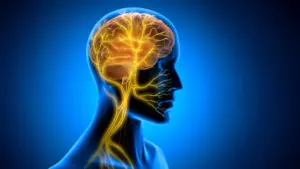
The Default Mode Network is a collection of interconnected brain regions spanning the frontal, parietal, and temporal lobes. It is colloquially known as the "self network" because it is most active when our attention turns inward. When we reflect on our past, contemplate our future, or consider our own personality and emotions, the DMN is at work. Conversely, when we focus our attention on the outside world—such as performing a task or responding to an immediate physical threat—this network typically becomes less active.
For decades, clinicians have struggled to identify the precise neural circuits that govern the movement-triggered pain that plagues chronic sufferers. While the World Health Organization identifies low back pain as the leading cause of disability globally—with "chronic" status defined as pain persisting for more than 12 weeks—the underlying brain mechanisms have remained elusive. This new research suggests that in the case of chronic back pain, the brain is not just processing a signal of physical harm; it is integrating that pain into the very fabric of the individual’s sense of self.
Decoding the Brain During a Flare-Up
To investigate this phenomenon, the UC San Diego research team recruited 114 patients suffering from chronic low back pain. The participants underwent a standard clinical procedure known as a "leg raise test," which is specifically designed to provoke a controlled flare of back pain. Throughout the test, researchers utilized a sophisticated neuroimaging technique called arterial spin labeling—a form of functional MRI that tracks blood flow in the brain without the need for an injected contrast agent—to monitor real-time neural activity.
For comparison, the researchers subjected the same participants to a different, non-clinical pain stimulus: a harmless but uncomfortable heat applied to the calf, mimicking the sharp, acute sting of touching a hot surface.
The results were stark. When the participants experienced the brief, acute heat pain, their brains responded in a predictable, traditional manner: the DMN became less active, allowing the brain to focus on the immediate, external source of the discomfort. However, when the movement-triggered chronic back pain flare occurred, the DMN did the exact opposite—it lit up.
"In every pain study, when you’re experiencing pain, the DMN deactivates," explained the study’s corresponding author, Fadel Zeidan, PhD, a professor in the Department of Anesthesiology and director of the Pain Health and Mindfulness Laboratory at the UC San Diego School of Medicine. "What we show for the first time ever is that when you have a pain flare, it turns on instead. You start to identify the experience with who you are."
The "Contamination" of Daily Life
This neural activation suggests that chronic pain is not merely a sensory experience; it is a cognitive and emotional one. Because the DMN is linked to self-reflection, the pain becomes "contaminated" by the patient’s personal history. The brain begins to weave the physical sensation of pain together with memories of previous flare-ups, fears about future limitations, and the emotional toll of embarrassment or frustration regarding one’s inability to perform normal activities.
For a patient, this means the pain is never truly "just" physical. The anticipation of a flare, the dread of moving, and the internal dialogue about one’s limitations become a persistent, looping cycle. "The moment-to-moment experience is contaminated not only by the feeling of pain, but by the anticipation of it and recovery from it," Dr. Zeidan noted. "It’s contaminated by past experiences like embarrassment about not being able to participate in normal activities and fear of movement when trying to avoid the pain."
This deep-seated connection to the self may explain why traditional, symptom-focused treatments—such as opioids or anti-inflammatory medications—often yield limited results for chronic sufferers. While these drugs attempt to dull the physical pain signal, they do nothing to address the network that has integrated the pain into the patient’s sense of identity.
Toward a New Paradigm in Pain Management
The realization that chronic back pain is embedded in the brain’s "self network" points toward a shift in how medical professionals might approach treatment. If the problem is not just a damaged disc or muscle, but a brain network that has become fixated on the pain, then the solution may require addressing the brain’s relationship with that sensation.
Dr. Zeidan and his colleagues are currently exploring non-traditional therapies, such as mindfulness meditation and the use of the psychedelic compound psilocybin, as potential tools to "reset" or alter this relationship. Both interventions are being studied for their capacity to help patients experience physical sensations without the subsequent "binding" of those sensations to their identity.
Mindfulness, in this context, is not a simple relaxation technique; it is a clinical practice designed to cultivate a non-judgmental awareness of the present. By observing pain as a raw sensation rather than a personal tragedy, patients may be able to decouple the physical signal from the emotional and cognitive loops that sustain chronic suffering. Similarly, emerging research into psilocybin suggests it may help "restart" neural systems that integrate trauma and past experiences, potentially allowing the brain to break its fixation on the pain.
"These types of mind-body and psychedelic medicine approaches target the whole person," said Dr. Zeidan. "They’re not a silver bullet—you’re not necessarily getting rid of the pain, but you’re changing the relationship you have with that pain so it doesn’t contaminate your everyday life."
As the research team continues its work, including ongoing clinical trials that use brain imaging to track these neural changes, the focus remains on long-term outcomes. The goal is to develop treatments that move beyond the outdated model of simply suppressing symptoms and toward a future where patients can live with a diminished, or at least reorganized, relationship with their pain.
The study was supported by the National Institutes of Health’s National Center for Complementary and Integrative Health and the UC San Diego Sanford Institute for Empathy and Compassion. Additional contributors to the research include Morgan Gianola, Jon Dean, Conan Chen, Daniel Barrows, Gabriel Reigner, and Thomas Liu. While the science is still evolving, the findings provide a crucial roadmap for understanding why chronic back pain is so uniquely stubborn, and why healing it may require a far more holistic approach than medicine has traditionally provided.