







The leaders of major United Nations agencies and international humanitarian organizations have issued an urgent warning regarding the severe threat posed by the COVID-19 pandemic to the world’s most vulnerable countries. With international donors having pledged only a fraction of the US$2 billion requested by the UN in its Global Humanitarian Response Plan, humanitarian chiefs are calling for an immediate injection of funds to establish and maintain critical global logistics networks.
The appeal, released as an open letter from top officials including the heads of the World Health Organization (WHO), the World Food Programme (WFP), UNICEF, and the UN Refugee Agency (UNHCR), emphasizes that humanity is facing its most daunting challenge since the Second World War. Highlighting the global and indiscriminate nature of the coronavirus, the signatories noted that with experts estimating the world is at least 12 months away from a widely available vaccine, nations are locked in a critical race against an invisible enemy.
However, humanitarian leaders stress that while all countries must fight back against the pathogen, they do not all begin from the same starting line. In regions where the world’s most vulnerable populations rely heavily on humanitarian aid and vital supplies to survive, widespread flight cancellations and heavily disrupted supply routes are hitting disproportionately hard. The open letter underscores that it remains in the collective interest of the entire global community to stop the virus from spreading unchecked, preventing it from devastating fragile economies, destroying human lives, and continuing to circle the globe unabated.
The alarm comes in the wake of a major initiative launched on March 25 by the UN Secretary-General, who introduced the COVID-19 Global Humanitarian Response Plan and appealed for US$2 billion to supercharge the international response. While international donors have responded with considerable speed and generosity—extending essential lifelines to populations already trapped in war zones, severe poverty, and the compounding effects of climate change, even as their domestic populations grapple with the impacts of the virus—the financial gap remains vast.
According to the humanitarian agencies, approximately $550 million has been made available to implement the response plan so far, alongside significant additional resources currently being mobilized and pledged. Furthermore, the UN Central Emergency Response Fund (CERF) has released $95 million to jump-start the pandemic response, aid in containing the spread of the virus, protect supply chains, and deliver critical assistance to vulnerable demographics, including women, girls, refugees, and internally displaced persons.
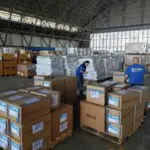
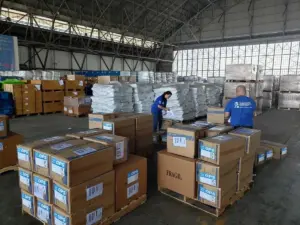
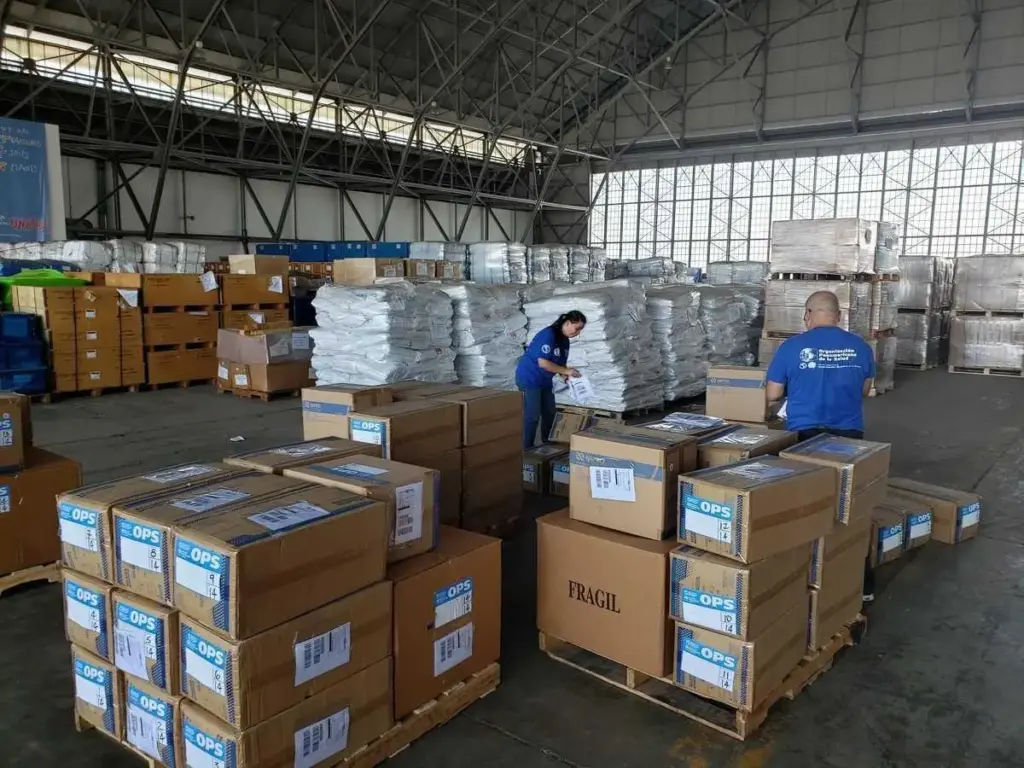
Despite these contributions, the leadership coalition insists that much more must be done to avert a compounding catastrophe. To facilitate the movement of essential goods and personnel, the UN World Food Programme is spearheading the establishment of a vital logistics backbone designed to save lives and halt transmission rates. The WFP urgently requires additional financial backing to set up necessary transport hubs, charter sea vessels, and provide dedicated cargo and passenger aircraft for health workers and other indispensable personnel.
While humanitarian organizations acknowledge that every element of the Global Humanitarian Response Plan is crucial and requires continuous financial support, they warn that without robust logistics common services, the entire global response risks grinding to a sudden halt. Emphasizing that now is not the time to slow down operations, the agency heads reiterated the foundational principle that no one is safe until everyone is safe.
Consequently, humanitarian organizations from across the globe are formally urging the international donor community to urgently support this critical global emergency supply system with an initial $350 million. This specific injection of capital is deemed essential to enable a rapid and expansive scale-up of logistics common services. These centralized services, which the WFP administers on behalf of the broader global humanitarian community, are designed to facilitate a swift and efficient operational response to COVID-19 for the populations most at risk. The signatories caution that any delay in these coordinated actions could severely undermine global efforts to bring the pandemic under control.
The planned scale-up of these specialized COVID-19 operational services encompasses a wide range of critical logistical interventions. These include the establishment, equipping, and management of international consolidation hubs and regional staging areas to streamline the flow of medical and humanitarian goods. It also involves expanding dedicated air and shipping cargo services, alongside passenger air services equipped with the necessary health and safety protocols to prevent the further dissemination of the virus.
Additionally, the funding will support crucial medical evacuation services for frontline healthcare and humanitarian workers, fund the infrastructure and construction of dedicated treatment centers, and facilitate real-time remote data collection to track the trajectory of the crisis. Finally, the investment will target critical areas required to safely deliver operations and services under high-risk field conditions.
Reaffirming their commitment, the humanitarian leaders stated that regardless of the obstacles, they remain fully determined to meet the urgent needs of populations worldwide. They emphasize that the upscaling of shared common services is the linchpin required to fulfill this mandate, as every nation on earth faces the same mortal threat.
The signatories conclude that because the COVID-19 pandemic presents a uniquely complex global challenge, it can only be countered by a uniquely unified global response. They call on international partners to step up collectively to prevent needless suffering and uphold the promise of a stable future, noting that every operational step that accelerates delivery directly translates to lives saved.
The open letter was signed by a coalition of high-ranking international officials and humanitarian leaders, including Mr. Mark Lowcock, Emergency Relief Coordinator and Under-Secretary-General for Humanitarian Affairs at OCHA; Mr. Filippo Grandi, United Nations High Commissioner for Refugees; Ms. Henrietta H. Fore, Executive Director of UNICEF; Mr. David Beasley, Executive Director of the WFP; Mr. Achim Steiner, Administrator of the UNDP; Dr. Tedros Adhanom Ghebreyesus, Director-General of the WHO; Mr. Qu Dongyu, Director-General of the FAO; Mr. António Vitorino, Director-General of the IOM; Dr. Natalia Kanem, Executive Director of the UNFPA; and Ms. Michelle Bachelet, High Commissioner for Human Rights at OHCHR.
Additional signatories include Mr. Gareth Price-Jones, Executive Secretary of the Steering Committee for Humanitarian Response; Mr. Ignacio Packer, Executive Director of the International Council of Voluntary Agencies; Mr. Sam Worthington, President and CEO of InterAction; Ms. Cecilia Jimenez-Damary, Special Rapporteur on the human rights of internally displaced persons at OHCHR; and Mr. Jagan Chapagain, Secretary General of the International Federation of Red Cross and Red Crescent Societies.